New Bridge Transforms Dubai Traffic Flow
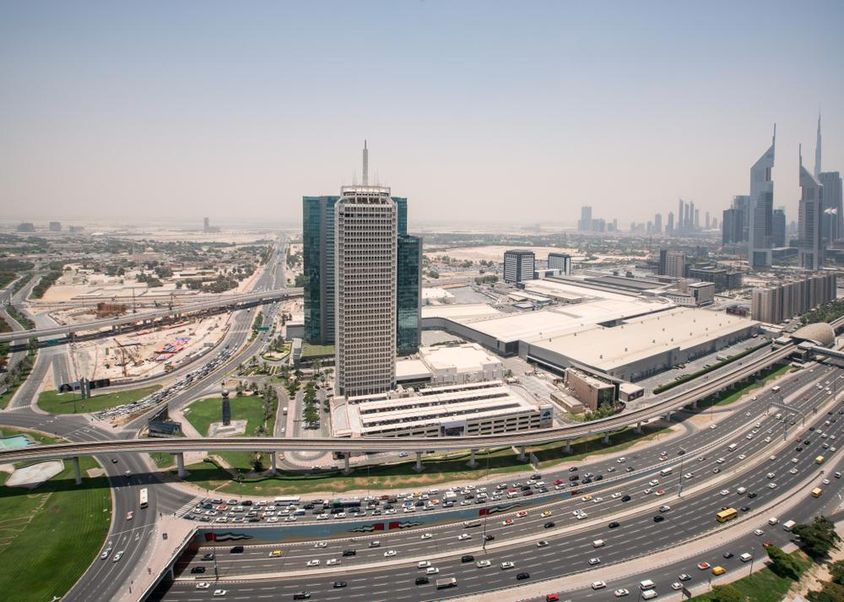
New Bridge Eases Traffic at Dubai World Trade Centre Roundabout
Dubai’s transport infrastructure has seen a significant upgrade with the opening of a new 500-meter-long bridge at the World Trade Centre roundabout as part of a development project. The purpose of this new crossing is not only to reduce congestion but also to make urban travel faster, more efficient, and more predictable in an area that handles the movement of tens of thousands of vehicles daily.
The project demonstrates Dubai’s continued focus on modernizing its road network as the city’s population and economic activity continue to grow. The area surrounding the World Trade Centre is one of the city’s busiest junctions as it connects directly to Sheikh Zayed Road, one of Dubai’s most important and heavily trafficked thoroughfares.
Strategically Located New Bridge
The new bridge assists traffic moving from the Al Bada’a area towards 2nd December Street, and from there provides quicker access to Sheikh Rashid Road and Al Mustaqbal Street. This development is particularly important for those commuting daily between the city’s various business and residential zones.
For a long time, the area around the World Trade Centre has been a critical point in urban traffic. During peak morning and evening hours, slowdowns were common, especially at intersections connecting to Sheikh Zayed Road. However, with the opening of the new bridge, traffic distribution is expected to significantly improve.
According to traffic experts, such developments not only reduce travel time but also contribute to reducing fuel consumption and urban emissions. In recent years, Dubai has placed increasing emphasis on supporting sustainable urban development with smart transportation solutions.
Dramatic Reduction in Travel Time
The new single-lane bridge can handle approximately 1,200 vehicles per hour. While this may not initially seem like a particularly high number, it plays a crucial role in alleviating city traffic.
The most significant change is expected in travel time. For motorists coming from the Al Bada’a direction, the previous travel time of approximately eight minutes can be reduced to as little as two minutes towards Sheikh Rashid Street and Al Mustaqbal Street. In a city where daily commuting takes up a significant portion of people’s lives, this represents a major improvement.
Dubai’s transportation system has been under intense development for years. The emirate’s leadership has recognized that the traffic growth accompanying rapid urbanization can only be managed with massive infrastructure developments. As a result, new bridges, overpasses, tunnels, and intelligent traffic management systems are continually being constructed.
Freer Flow in Place of Signalized Intersection
As part of the project, one of the signalized intersections on 2nd December Street will also be altered. Instead of the previous stop-and-go intersection, a so-called free-flow system will be implemented, allowing vehicles to continue without stopping in the direction of Sheikh Rashid Street and Al Mustaqbal Street.
This solution is especially important for Dubai as the city increasingly integrates the rapid transit systems used in American and Asian megacities into its road network. The goal is to have traffic pass through key routes with as few interruptions as possible.
The benefits of the free-flow system include shorter waiting times, less congestion, smoother speeds, and reduced driver stress. Additionally, more continuous movement can also reduce fuel consumption, which can result in economic benefits over the long term.
Massive Project Includes New Development
The newly unveiled bridge is just one element of the gigantic World Trade Centre Roundabout Development Project. The entire project includes the construction of six bridges with a combined length of 5,000 meters.
The aim is to create a complex transportation system capable of handling current traffic while accommodating growth in the coming years. Dubai continues to be one of the fastest-growing cities in the Middle East, with new residential areas, business centers, and tourist developments continuously generating new transportation demands.
Earlier phases of the project have already brought about significant changes in local traffic. In February 2026, a new bridge opened, providing a direct link between Sheikh Zayed Road and Sheikh Khalifa bin Zayed Street.
Previously, in December 2025, two additional bridges were also completed, directing traffic from 2nd December Street towards Sheikh Rashid Road, Al Majlis Street, and Al Mustaqbal Street. These crossings measure a total of 2,000 meters and are capable of handling approximately 6,000 vehicles per hour.
Dubai Continues Building the City of the Future
Over recent decades, Dubai has constructed an extremely modern transportation infrastructure virtually from scratch. For the emirate’s leadership, mobility is not just a transportation issue but an economic and quality of life strategy.
The city's goal is to be one of the world’s most livable and accessible metropolises. To achieve this, fast and efficient transportation for residents, tourists, and businesses alike is essential.
The area around the World Trade Centre is particularly sensitive in this regard. With nearby exhibition centers, office buildings, hotels, and business quarters, the area's daily traffic is extremely high. Each new bridge or overpass, therefore, can impact the entire city's transport system.
Experts predict that Dubai may begin even more intensive infrastructure developments in the coming years, particularly to support autonomous vehicles, intelligent traffic management, and electric transport. The new 500-meter bridge that just opened shows that the city is not slowing down but speeding up the modernization of its transportation network.
For motorists, the most notable outcome will be readily visible: shorter travel times, less congestion, and quicker movement in one of Dubai’s busiest areas.
If you find any errors on this page, please let us know via email.


