Saudi Arabia Successfully Closes 2026 Hajj Season
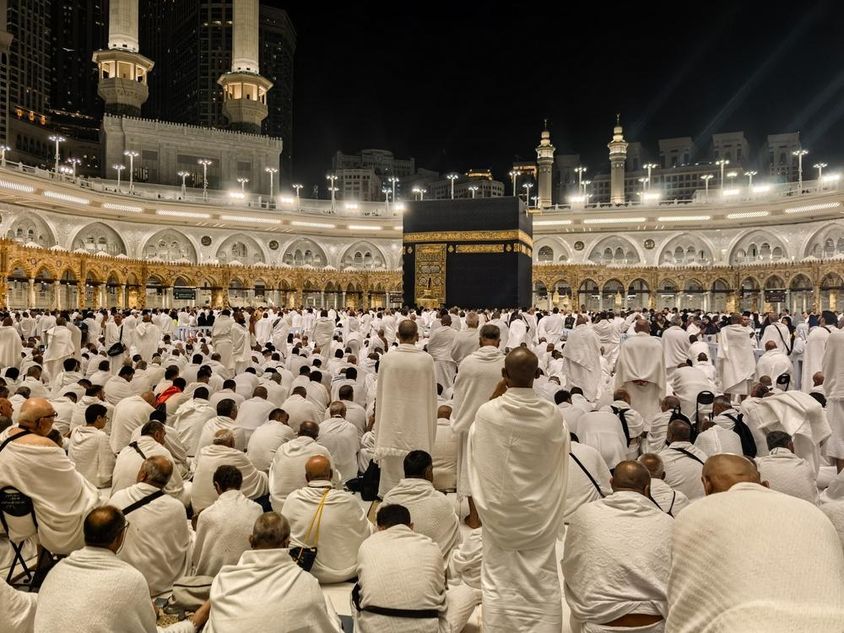
Saudi Arabia Concludes 2026 Hajj Season: 1.7 Million Pilgrims Gathered in Mecca
One of the world's largest religious events mobilized massive crowds again
Saudi Arabia has officially concluded the 2026 Hajj season after more than 1.7 million pilgrims arrived in Mecca from 165 countries around the world. This significant event in the Muslim world once again posed enormous organizational, security, and logistical challenges for Saudi authorities, especially with the pilgrimage being overshadowed by extreme heat, regional tensions, and the deterioration of the security situation in the Middle East.
Hajj is one of the pillars of Muslim faith, which every believer who is physically and financially able must complete at least once in their lifetime. It is not simply a journey but a profound religious, spiritual, and communal experience where pilgrims perform specific rituals in and around Mecca. The 2026 season was distinctive not only due to the vast crowds but also because Saudi Arabia had to ensure the peace and security of the pilgrims in a much tenser regional environment.
The leadership of the Mecca region declares a successful season
Prince Saud bin Mishaal bin Abdulaziz, the Deputy Governor of the Mecca Region, announced the successful closure of the Hajj season for 1447 AH. In his statement, he emphasized that pilgrims were able to fulfill their religious obligations smoothly and safely due to extensive security measures, organized management, and the coordinated functioning of services.
In his announcement, he particularly noted that the execution of the pilgrimage took place under conditions worthy of the sacred place and the significance of the event. This was an especially important message since hundreds of thousands, even millions, of people move simultaneously along the same routes and religious points in Mecca during Hajj, often in extreme weather conditions.
Prince Saud bin Mishaal bin Abdulaziz extended congratulations on behalf of himself, the governor of the Mecca region and Chairman of the Hajj and Umrah Permanent Committee, Prince Khalid bin Faisal bin Abdulaziz, as well as the Interior Minister and Chairman of the Supreme Hajj Committee, Prince Abdulaziz bin Saud bin Naif bin Abdulaziz, to King Salman bin Abdulaziz Al Saud, the Custodian of the Two Holy Mosques, and Crown Prince and Prime Minister Mohammed bin Salman bin Abdulaziz Al Saud.
Masses Depart Home After Pilgrimage
On Friday, thousands of pilgrims began leaving Mecca after completing this year's Hajj rituals. The city gradually empties over days as believers from all over the world return to their countries via flights, buses, and other modes of transportation or continue their journey to other religious sites in Saudi Arabia.
The departure itself requires massive organization. It's not just about many people leaving simultaneously, but also about ensuring the continuous functioning of airports, bus stations, accommodations, roads, and checkpoints by the authorities. Therefore, the conclusion of Hajj is not a single moment but a multi-day process where the coordinated functioning of transportation, healthcare, security presence, and administrative procedures plays a crucial role.
In 2026, this task was particularly sensitive due to the presence of war tensions in the region during the pilgrimage. Nevertheless, the authorities emphasized that pilgrims were able to carry out the rituals in calm circumstances.
The Heat Presented a Serious Challenge
One of the biggest physical challenges of this year's Hajj was the scorching heat. In Mecca and its surroundings, extremely high temperatures can develop during the summer, which is particularly strenuous for those walking for long hours, waiting in crowds, or participating in outdoor rituals.
The Hajj rituals are not convenience programs but strictly defined religious acts that often require great patience and physical endurance. Pilgrims must pay attention to their fluid intake, rest, health status, and ensuring they do not lose their group in the crowd.
In recent years, Saudi authorities have implemented significant improvements to ensure safer conduct of Hajj. Cooling areas, shaded routes, health points, water distribution, traffic control, and digital systems all aim to make the pilgrimage as risk-free as possible. In the 2026 season, these systems were particularly crucial.
The Event Took Place in the Shadow of Regional Tensions
This year's Hajj season was difficult not only due to the heat but also because of the tense security situation in the Middle East. The region was shaped by conflicts following the U.S. and Israeli strikes against Iran during the pilgrimage. Reports indicate that since the war erupted in February, Tehran has responded with waves of drone and missile attacks affecting infrastructure and energy facilities in the Persian Gulf region, including in Saudi Arabia itself.
This backdrop made the execution of this year's Hajj particularly sensitive. Mecca's religious significance places it at the center of attention not only for Saudi Arabia but the entire Muslim world. Ensuring the safety of such an event is not only a local issue but also an international matter, as pilgrims from 165 countries arrived.
For Saudi Arabia, successfully concluding the 2026 Hajj was both a political and organizational message. The kingdom wanted to demonstrate its ability to ensure the operation of one of the world's largest religious mass events despite a tense regional environment.
Fewer Iranian Pilgrims Due to Wartime Situation
One of the important figures of this year's Hajj is that more than 30,000 Iranian pilgrims reached Mecca, although around 86,000 Iranian participants were initially expected. This represents a significant decline, explained by the Iranian IRNA state news agency as due to the wartime situation.
The decrease in the number of Iranian pilgrims illustrates that regional conflicts can directly impact religious journeys as well. Hajj, although a religious obligation and deeply personal spiritual journey, depends on many practical factors: flight possibilities, visas, security conditions, diplomatic relations, and the internal situation of the given country.
Nonetheless, the participation of over 30,000 Iranian pilgrims also shows that many people have undertaken the journey, even under challenging conditions. For them, Hajj is not just an international journey but one of the most important religious events of their lives.
Saudi Arabia's Mass Organizational Capability in the Spotlight
After concluding the 2026 Hajj, one of the main messages from the Saudi leadership was that the kingdom is capable of efficiently managing enormous crowds. This statement is not accidental. Conducting Hajj is one of the world's most complex logistical operations, requiring religious sensitivity, transportation organization, healthcare preparedness, security coordination, and technological support.
In Mecca during the pilgrimage, every minute matters. The sequence of rituals, the flow of the masses, accessing accommodations, catering, transportation, and medical interventions are all part of a single system. Any disruption in this system can quickly escalate into a larger problem. Therefore, a successful season means not only that the pilgrims carried out their religious obligations, but also that the state, security, and service structures behind the scenes managed to endure the pressure.
In 2026, handling more than 1.7 million participants was considered a particularly great achievement, as the event did not take place in a peaceful, predictable regional environment but in a period filled with conflicts.
The Significance of Hajj Extends Beyond Numbers
While much discussion around the current season focuses on the 1.7 million participants, the involvement of 165 countries, the reduction in the number of Iranian pilgrims, and security measures, the significance of Hajj is actually much deeper. For Muslim believers, the pilgrimage symbolizes purification, humility, equality, and approaching God.
People arriving in Mecca come from different countries, social backgrounds, and cultures, but during Hajj, they become part of the same rituals. This unity is one of the strongest messages of the event. The white pilgrimage garment, joint prayers, shared routes, and common goals express that believers are part of a larger community.
Thus, the 2026 Hajj was not only about Saudi Arabia's organizational performance but also about the religious communal experience that could be fulfilled despite political and security tensions.
Successful Conclusion in a Tense Period
Saudi Arabia has declared the 2026 Hajj season a success, and official messages indicate that pilgrims were able to complete their religious rituals in secure, organized conditions. More than 1.7 million people arrived in Mecca from 165 countries, demonstrating the event's international significance.
The season received particular attention due to conflicts in the region. Strikes against Iran by the U.S. and Israel, followed by Iranian responses, created a security backdrop that made organizing Hajj an even greater responsibility. Despite this, according to Saudi leadership, pilgrims could fulfill their obligations in peace and with adequate provision.
For pilgrims returning home from Mecca, this year's Hajj represented both spiritual fulfillment and a physical challenge. For the world, it conveyed that religious traditions, communal faith, and organized state function can meet even under extremely challenging circumstances in such a significant event.
If you find any errors on this page, please let us know via email.


