UAE Rail Revolution: A New Travel Era
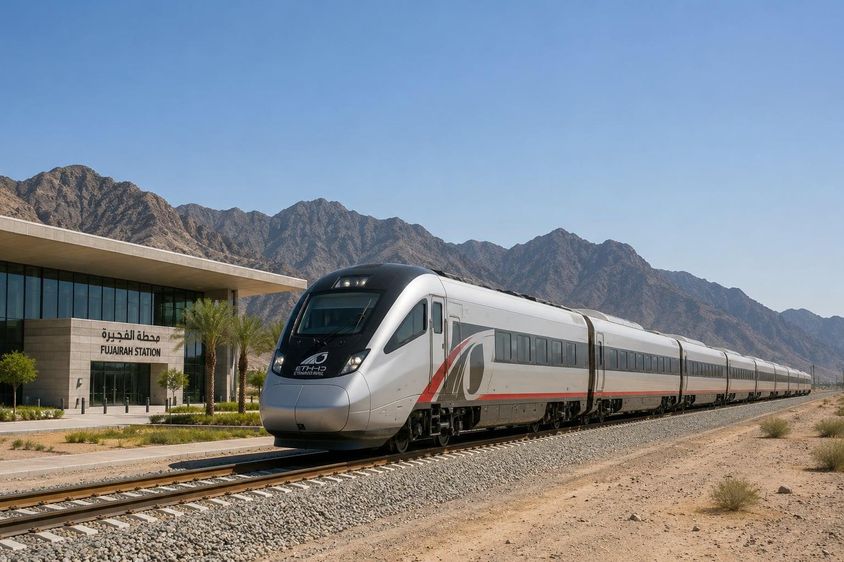
Etihad Rail Passenger Trains: UAE's New Travel Era
UAE's transportation system is on the brink of a historical transformation: in 2026, the Etihad Rail passenger trains will gradually launch, potentially ushering in a new era of travel between the Emirates. The project is particularly significant because the country has so far relied primarily on highways, flights, buses, taxis, and urban rail systems, while national railway passenger transport has remained a missing element for a long time. Etihad Rail fills this gap by offering a more comfortable, predictable, and sustainable transportation alternative for those wishing to travel between Abu Dhabi, Dubai, Fujairah, and other stations.
The recent demonstration journey started from Fujairah station and headed toward the Hajar Mountains, reaching the area of the Al Bithnah Bridge. This short test trip already showcased what the experience of departing the eastern part of the country by rail might be like, as passengers can view not only urban sights but also mountainous, desert, and coastal landscapes through the window. The service introduction will occur in stages, with the initial routes focusing on connecting Abu Dhabi, Dubai, and Fujairah. According to Etihad Rail's official information, the entire passenger network will involve several stations, which will gradually become available.
Phased Launch, Not a Simultaneous Network Opening
Passenger transport via Etihad Rail will not commence with all stations simultaneously opening to travelers. The introduction is planned cautiously and gradually because launching a national railway network involves significant safety, technical, and passenger service tasks. The objective of the phased launch is to provide reliable service from day one and ensure that every station, train, staff process, passenger information system, and safety check functions properly.
The stations set to operate first include Mohamed bin Zayed City station in Abu Dhabi, Jumeirah Golf Estate station in Dubai, and Fujairah station. These three points are also strategically significant as they begin to interconnect the country's western, central, and eastern transportation links. Dubai's role is particularly important, as the city is one of the nation's busiest business, tourism, and residential centers, thus the railway connection could become a real alternative to driving for many commuters, families, tourists, and business travelers.
Fujairah Station is the First Completed Passenger Station
Fujairah station is the first completely finished passenger station in the Etihad Rail network. The facility covers an area of approximately 51,900 square meters and is located close to several important points in Fujairah, including the international airport, the Sakamkam Fort area, and the Umbrella Beach. This is important because the station does not appear as an isolated railway stop but as a transportation hub that is connected to local transit, tourism, and daily urban movements. The completion of Fujairah station is a milestone in the national rail passenger project, indicating that the service is no longer just a plan but is preparing for launch with tangible infrastructure.
The interior design of the station is modern, bright, and clear. The cream and gray shades, large glass surfaces, clear signage, and automated entry gates create an environment that is orderly like an airport yet easily usable as an urban transit hub. This is especially important in a country where many residents will have their first genuine rail travel experience. Therefore, the station experience needs to be not only quick but also calming and straightforward.
What Will Stations Offer Passengers?
At Etihad Rail stations, the focus will be on easy navigation, comfortable waiting, and barrier-free use. According to plans, stations will feature well-visible directional signs, comfortable passenger areas, helpful staff, accessibility solutions, and parking opportunities. This is crucial because the UAE population is extremely diverse: passengers of different ages, languages, cultural backgrounds, and travel habits will need to use the same system easily.
A national railway system works well if a passenger feels right from the station entrance that they know exactly where to go. The transparency familiar from airports could also be key here. For those arriving with family, children, luggage, or elderly relatives, it is particularly important that the route to the platform, ticket verification, waiting, and boarding are not complicated. The Etihad Rail station concept aims to ensure that rail travel is not an alien or cumbersome experience but a natural part of domestic transit.
Comfort Onboard the Trains
Based on the train ride showcased around Fujairah, the interior of the trains focuses on practical comfort. Passengers can expect comfortable seats, ample legroom, Wi-Fi connectivity, and a power source at each seat. This is a fundamental expectation given current travel habits, as many people work while traveling, send messages, consume online content, or simply wish to charge their phones, laptops, tablets.
Seats also come with a foldable table, which can be useful for working, eating, or traveling with children. Onboard, there will also be overhead luggage storage and dedicated spaces for larger baggage. This is particularly important in the UAE, where travelers often do not set out with just a small bag: family outings, weekend plans, airport transfers, or multi-day domestic trips make luggage capacity significant.
Family-Friendly Travel Option
One of Etihad Rail’s key promises is offering a convenient solution for families. Family seating arrangements enable parents and children to sit together rather than scattered across the car. This might seem minor, but in practice, it can make a big difference. During a longer trip, families find it crucial that children are safe, within reach, and the journey is spent in comfortable togetherness rather than stress.
The railway could be especially attractive to those who do not wish to undertake long car journeys or want to avoid traffic jams, parking difficulties, and the fatigue of driving. Many people regularly travel by car between Dubai and Abu Dhabi, or in the direction of Dubai and Fujairah. In this environment, the train can be more than just a means of transport; it can be an improvement in quality of life, where the passenger can rest, work, chat, or simply enjoy the view without having to focus on the road.
Planned Station Network
The passenger network is expected to connect several important cities and regions. Listed stations include Abu Dhabi, Dubai, Sharjah, Fujairah, Al Dhaid, Al Dhannah, Al Faya, Madinat Zayed, Mezaira’a, Al Mirfa, and Al Sila. This list shows clearly that Etihad Rail does not exclusively focus on the most well-known major cities but also aims to integrate the country’s more remote areas into the transportation network. According to Etihad Rail, these stations will gradually become operational, and the network will expand as planned.
This could have a significant impact on UAE’s internal mobility in the long run. Cities and towns that have so far been accessible mainly by road can gain new development opportunities with railway connections. Employment, education, tourism, the real estate market, and the local economy could all benefit from having different parts of the country become more predictably and comfortably reachable.
A New Experience for UAE Travelers
Etihad Rail passenger trains don't just introduce new vehicles, but they could bring a new travel culture to the country. Many in the UAE are accustomed to intercity travel by car. In contrast, the train requires a different mindset: a schedule-based, station-connected, communal yet comfortable travel form. One key to success will be how simple and reliable people find the system.
Onboard Wi-Fi, power supply per seat, ample legroom, luggage spaces, and family-friendly designs all demonstrate that Etihad Rail is not merely constructing transportation infrastructure but also crafting a passenger experience. If the timetable, pricing, ticket purchasing, and station access all work well, the service could quickly become popular among residents and visitors alike.
Why is it a Big Change for Dubai?
Dubai's transportation system is already advanced, but the national railway connection could add a new dimension to it. The role of the Jumeirah Golf Estate station is particularly interesting, as it connects to one of Dubai’s well-known urban areas while having the potential to become an important rail hub in the future. Linking intra-city transit and the national railway network could reduce car dependency in the long run and provide new opportunities for those who regularly travel to other emirates.
For Dubai, Etihad Rail could be not only a transportation development but also an economic and tourism advantage. The journey towards Fujairah, for example, shows a completely different side of the country: mountains, coastal areas, historical sites, and less crowded destinations could become more accessible. This can also strengthen domestic tourism, as a comfortable train ride could encourage many to take weekend trips to places they previously only drove to.
A National Project Beyond Transportation
Etihad Rail’s passenger service is noteworthy because it doesn’t just introduce a new travel mode but connects the country's various economic, population, and tourism centers. In the long run, the railway might affect where people live, where they work, how often they travel to other emirates, and how they perceive distances within the UAE.
Therefore, the 2026 launch will not just be a scheduling event but the beginning of a new chapter. With Fujairah's first completed station, the planned first connections towards Dubai and Abu Dhabi, comfortable onboard services, and the gradually expanding station network, the UAE is seriously preparing for the era of railway passenger transport. Etihad Rail trains could simultaneously offer a practical alternative to driving, a more comfortable travel experience for families, and a new impetus to inter-emirates relationships.
Those who view Fujairah station’s finished interiors, glass surfaces, automated gates, and the trains heading towards the mountains today aren’t seeing a distant plan but an impending reality. The UAE's new railway service will gradually commence in 2026, and if the system performs as expected, within a few years, it could become natural for passengers to travel between Abu Dhabi, Dubai, Fujairah, or Sharjah by train instead of by car.
If you find any errors on this page, please let us know via email.


