Gold Prices Soar in Dubai's Market
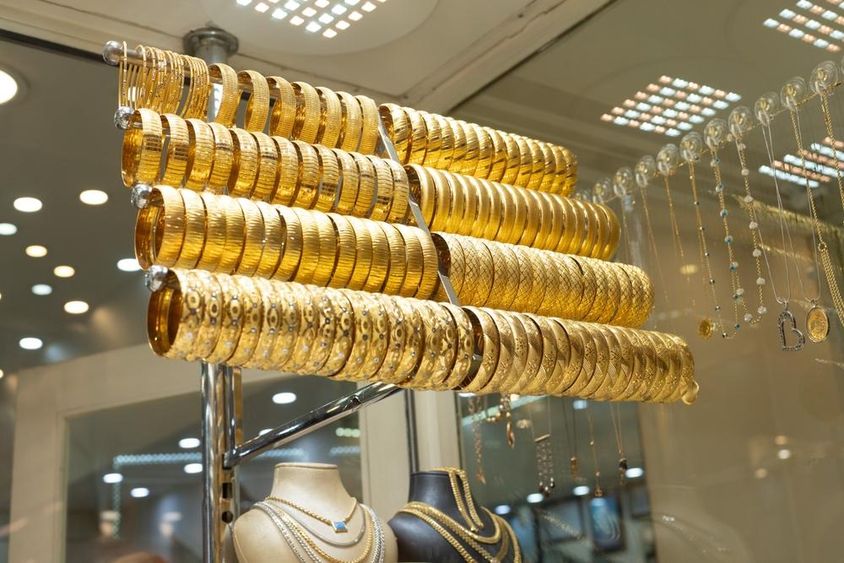
Gold Price Surge in Dubai Market
The price of gold has once again taken center stage after experiencing a significant rise in a short period in Dubai. The price of 24-karat gold approached the 550 dirham per gram level, which is not only a psychological threshold but also a signal of how strongly global economic and geopolitical processes impact the precious metals market. The surge is driven by several factors, which together paint a picture extending beyond daily price movements.
Rapid Rise and Market Reaction
During the recent rise, the price of gold increased by several dirhams in a single day, demonstrating the market's sensitivity. The Dubai gold market is particularly important as an indicator, given the region's traditionally strong demand for physical gold, whether as an investment or for jewelry purchases.
The price of gold products of various purities also increased, indicating that it is not merely speculative movements but a broader demand underlying the rise. Both investors and retail buyers are reacting to uncertainties, with gold emerging as a classic safe haven.
Impact of Geopolitical Tensions
One of the most significant factors is the evolving situation in the Middle East. When tensions are present in the region, investors tend to move their capital into safer assets. Gold has been a stable choice in this role for decades.
The uniqueness of the current situation is that it is not a single event driving the market, but a complex geopolitical environment. Even when uncertainty occasionally eases, demand remains steadily high. This type of fluctuating tension often has a more substantial impact on prices than a short, intense crisis.
Inflation and Monetary Policy
The price of gold is always closely influenced by inflation and central bank policy. When inflation is high, the allure of gold increases as it is seen as a value-preserving asset. However, rising interest rates may reduce demand for gold, as other investments become more attractive.
Currently, an interesting duality can be observed: while inflationary expectations persist, the direction of monetary policy is not entirely clear. This uncertainty contributes to gold's price fluctuating, yet remaining on an upward trajectory.
Oil Prices and Economic Outlook
Energy prices also play a key role. High oil prices increase inflationary pressure, indirectly supporting the price of gold. However, rising energy costs can slow economic growth, steering investors towards safe assets.
This dual effect is particularly pronounced in the global economy. If growth slows while prices rise, a so-called stagflation environment may develop, historically favoring gold's performance.
Investor Behavior and Market Sentiment
The gold market does not solely respond to economic data but also to investor sentiment. When the market is uncertain, demand for gold generally increases. Nonetheless, short-term corrections may occur, especially when investors realize profits.
In the recent period, a minor decline was observed, after which prices began to rise again. This suggests that many investors took advantage of lower prices to buy, giving new momentum to the market.
Central Banks and Institutional Influences
The role of central banks should not be overlooked. Increases in some countries' gold reserves support prices in the long term, while sales can exert short-term pressure. Recent central bank activity also contributed to market movements.
Moreover, institutional investors, such as funds and ETFs, significantly impact prices. Capital outflows from these can weaken the market, while inflows strengthen it. Recently, a mixed picture has been observed, further increasing uncertainty.
Short and Long Term Outlook
In the short term, gold prices remain sensitive to economic data and geopolitical news. Important announcements or events can cause rapid price movements. However, the longer-term trend is more influenced by inflation, interest rates, and global economic growth.
If the current environment persists, gold prices may stabilize at a high level or even reach new peaks. However, potential risks that could lead to short-term corrections should not be ignored.
Dubai's Role in the Global Gold Market
Dubai is not only a regional but also a global player in gold trading. Prices and trends developing here often reflect international processes, while local demand peculiarities also shape the market.
The city's gold market is particularly sensitive to tourism and consumer spending. When the economic environment is uncertain, the proportion of investment-driven purchases increases, providing further support to prices.
Summary
The rising gold prices in Dubai are not the result of a single factor but rather a consequence of several interconnected processes. Geopolitical tensions, inflationary expectations, monetary policy, and energy prices all contribute to bringing the precious metal back into the spotlight.
The current situation suggests that gold continues to play a key role in investment strategies. While short-term fluctuations are expected, prolonged uncertainty supports prices in the long term. As a global trading center, Dubai remains a significant player in this process.
If you find any errors on this page, please let us know via email.


