EU Leader Blasts Iran's Aggression Towards UAE
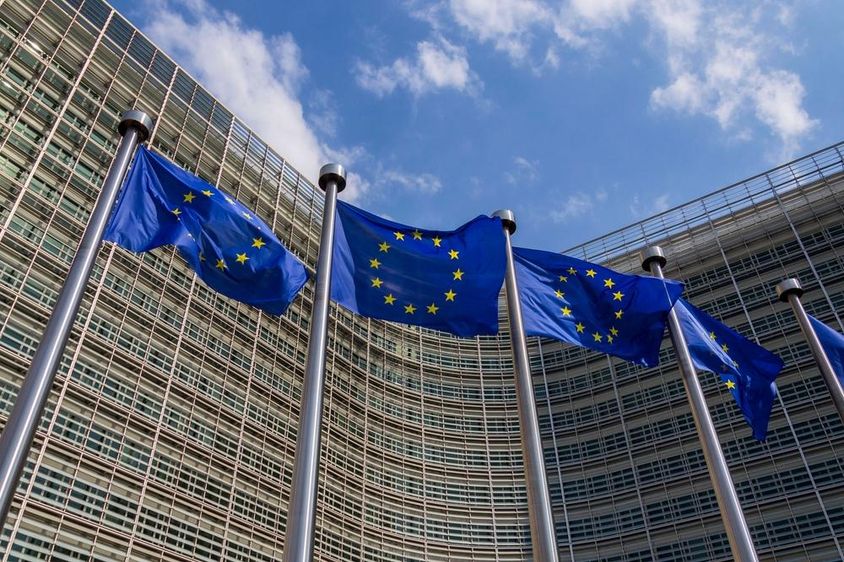
EU Leader Condemns Iran's 'Unjustified Attacks' on UAE
The head of the European Union has issued a strongly worded statement condemning Iran’s 'unjustified attacks' on the United Arab Emirates, emphasizing that stability in the region is not just a regional, but a global interest. The statement declared that any action, directly or indirectly threatening the UAE’s sovereignty and security, is unacceptable and jeopardizes international trade, energy security, and civilian protection.
The diplomatic reaction is not merely a political gesture but also a clear signal: Europe does not intend to idly witness further destabilization in the Middle East. In recent decades, the UAE has become a center of economic openness, regional cooperation, and technological development, particularly through Dubai, which is a key player in the financial, logistics, and tourism sectors. An attack on such a target goes beyond bilateral conflict.
The Geopolitical Background of Tensions
The geopolitical balance in the Middle East has long been fragile. Conflicts in the region are often not isolated events but chains of reactions building on each other. According to the EU's stance, the spiral of violence only breeds further instability while diplomatic channels narrow. Such attacks can provoke not just military responses but economic and political consequences as well.
The UAE is especially vulnerable given its position as a hub for global trade routes. The Persian Gulf region is crucial for energy exports, and any military escalation prompts immediate market reactions. Therefore, European leadership emphasized that respecting international law and protecting sovereign states' territorial integrity are fundamental requirements.
The Strategic Role of UAE in the Region
In recent years, the UAE has deliberately sought to play a mediating and stabilizing role in the region. Through economic diversification, technological investments, and diplomatic openness, it has built a position that extends beyond the traditional oil exporter status. Dubai has become a pivotal location in the global business world, where international companies establish regional headquarters.
An attack on such a country is not just a military act but also a crisis of confidence. For investors, multinational companies, and financial markets, stability is a primary concern. If this is shaken, its impact spreads beyond the borders of the affected country. Thus, EU leadership emphasized collective responsibility in maintaining peace.
Europe's Message: Diplomacy Above All
One of the most crucial elements of the EU's statement was the call for diplomatic solutions. The EU made it clear that dialogue is needed instead of escalation. Resolving conflicts through armed means never brings lasting stability in the long run. The region's population is already bearing significant economic and social burdens.
European leadership believes that the international community must act in coordination against actions that undermine security. This does not necessarily mean military responses but rather political pressure, economic measures, and mediating roles. The goal is for the parties to return to the negotiating table.
Economic Consequences and Market Reactions
Every military incident in the Persian Gulf region triggers immediate market waves. Energy prices, insurance costs, and shipping fees quickly respond to uncertainty. Dubai, as a financial center, is particularly sensitive to geopolitical risks, yet recent experiences show that the emirate can adapt flexibly.
A key question for investors is whether the conflict will remain localized or escalate regionally. In this context, the EU's statement is a stabilizing message: Europe is monitoring the events and is committed to defending international law. This type of political support can reduce the likelihood of panic reactions.
Security Policy Dimension
The attacks pose not only economic but also security policy challenges. The UAE has advanced air defense systems and regional partnerships, but the asymmetric nature of modern warfare has brought new types of threats to the surface. The rapid development of drone technology and missile systems means conflicts are no longer restricted to traditional front lines.
Therefore, EU leadership highlighted the importance of international cooperation in curbing armed threats. Sharing intelligence, technological collaboration, and diplomatic coordination can be critical in preventing future incidents.
The Role of the Population and the International Community
While political decisions are in the hands of leaders, it is primarily the civilian population that feels the impact of conflicts. Residents of the UAE, including members of Dubai's expatriate community, are accustomed to a stable and predictable environment. Such situations can create uncertainty and concern, even if daily life remains undisturbed in the short term.
The international community has a responsibility to support peaceful solutions and avoid rhetorical escalation. The EU’s stance is clear in this regard: law-violating attacks cannot go without response, but responses must be proportionate and peace-serving.
Prospects for the Upcoming Period
The coming weeks could be decisive for the future of the region. If diplomatic channels remain open, there is a chance to alleviate tensions. However, if rhetoric and military steps increase, it could quickly lead to unpredictable consequences.
The EU's condemnatory statement is a clear political position expressing solidarity with the UAE. The question now is whether the international community will be able to act unitedly to prevent further escalation. The stability of Dubai and the entire Emirati economy is not only a regional but also a global interest, as it is one of the world’s most dynamically developing centers.
History shows that conflicts can only be resolved in the long term through negotiations. Hence, the EU’s message goes beyond current events: maintaining peace and stability is a shared responsibility. Condemning the attacks on the UAE is part of this responsibility and also a warning that the cost of geopolitical games is always higher than it appears at first.
Source: EU Diplomatic Channels
img_alt: EU flags waving in the wind.
If you find any errors on this page, please let us know via email.


