UAE's Non-Oil Trade Achieves Record Milestone
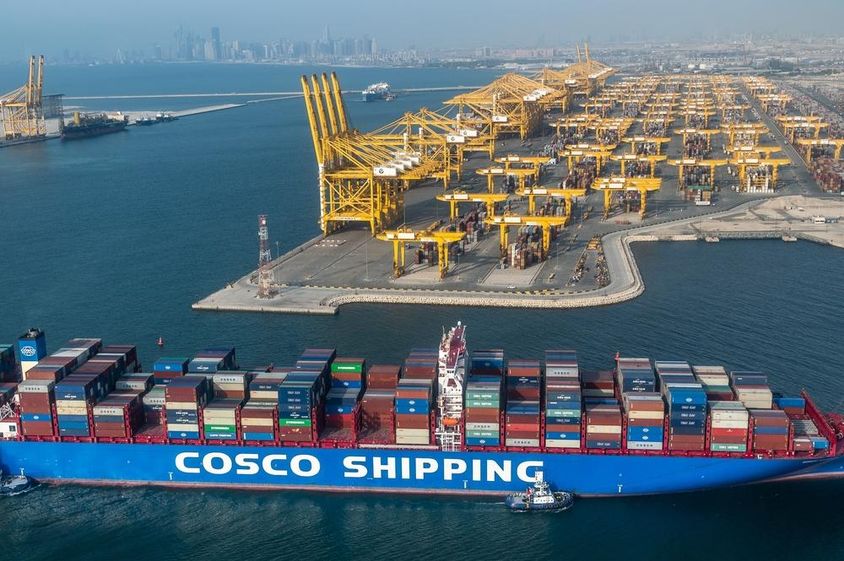
Record Non-Oil Foreign Trade Surpasses 3.8 Trillion Dirhams
The United Arab Emirates' economy has reached a historic milestone: for the first time, the country's non-oil foreign trade has exceeded 3.8 trillion dirhams, equating to more than one trillion US dollars. This achievement is not only outstanding in numbers but also highlights the UAE's deliberate, long-term economic strategy that has positioned the country at the forefront of the global trade and investment map.
Non-Oil-Based Economic Model: The Dawn of a New Era
The UAE has been working for more than a decade to diversify its economy and reduce its reliance on oil revenues. The foreign trade volume exceeding 3.8 trillion dirhams marks a significant breakthrough in this process. According to the latest statistics, the value of non-oil exports has crossed 813 billion dirhams, representing a 45% increase compared to the previous year.
This astounding growth far exceeds the objectives set by the UAE three years ago for 2031. Ninety-five percent of these goals have already been met by early 2026, five years ahead of the planned deadline.
Drivers of Growth: Investments, Partnerships, Trust
Behind these results are not just numbers but also substantial actions and strategic measures. The UAE's investment environment has matured, recognized by numerous international partners. The country has recently forged numerous bilateral trade and economic agreements—especially with Asia, Europe, and Africa—opening new markets for Emirati companies.
Strengthening collaboration with the private sector also played a key role. Legal, financial, and infrastructural support provided to businesses enabled them to quickly adapt to changing global challenges, particularly in the fields of logistics, digital services, and manufacturing.
Beyond the Numbers: What Does the UAE Export Without Oil?
While oil remains one of UAE's main resources, non-oil exports include gold, jewelry, aluminum, machinery, electronic devices, pharmaceuticals, and food products. The country is among the world's leading exporters in several of these segments, especially through Dubai, which plays a key role in re-exporting.
Re-exporting—marketing goods from other countries further afield—is also a significant part of foreign trade volume. The ports of Dubai, Abu Dhabi, and Sharjah have been transformed into modern logistics centers that facilitate seamless trade between the Middle East, Africa, Europe, and Asia.
What to Expect in the Future?
According to the latest report, development will not stop here. The UAE leadership articulates new goals: in the coming years, further investments are planned in industrial production, artificial intelligence, green energy, and digital infrastructure. The vision for the country is a sustainable economy that is competitive both in the region and globally.
It has also become clear that growth will not occur solely under state management. The government continues to strengthen close collaboration with the private sector, as has already borne fruit in recent years. Industrial parks, free cities, and one-stop licensing systems are all aimed at enabling businesses to quickly and efficiently enter the market.
Dubai's Role in Foreign Trade
Dubai will remain the country's commercial hub. The city boasts one of the world's busiest airports and harbors, providing extraordinary advantages for foreign trade as a re-export hub. The free zone areas in the city—like the Jebel Ali Free Zone or the Dubai Multi Commodities Centre—have been attracting investors and entrepreneurs for decades.
It is no coincidence that Dubai has become a flagship of economic diversification. The digital economy, tourism, healthcare, and logistics all show significant growth, contributing to the expansion of non-oil exports.
Summary: A Historic Achievement Elevating the UAE to a New Level
The non-oil foreign trade exceeding 3.8 trillion dirhams is not just an economic statistic but a symbol of a paradigm shift. The UAE's new economic model is clearly working, goals are being met ahead of time, and global confidence in the country is further strengthening.
The task for the future is no less than to stabilize this result, expand into new directions, and take on a global leadership role in more areas. The UAE not only learns from the past but consciously builds the future—a diversified economy that is open to the world and capable of responding to changing global challenges.
Source: index.hu img_alt: Cosco Shipping Lines container ship from China at Dubai's Jebel Ali port.
If you find any errors on this page, please let us know via email.


