UAE's Bold Vision: Shaping Space Futures
The UAE Plans Long-Term in Space – A New Era Begins in the Arab World
The United Arab Emirates is proud not only of launching the first Arab astronaut but also aims to set a new standard in long-term, autonomous space missions. In the coming years, the ambitions stretching from Dubai to the Moon and Mars could shape the future of not only the region but the global space industry as well. The goal is clear: to prepare the young generation of the Arab world for a future where artificial intelligence, international cooperation, and technological independence become crucial.
Beyond Earth's Orbit: The Lunar Gateway and Mars 2117 Strategy
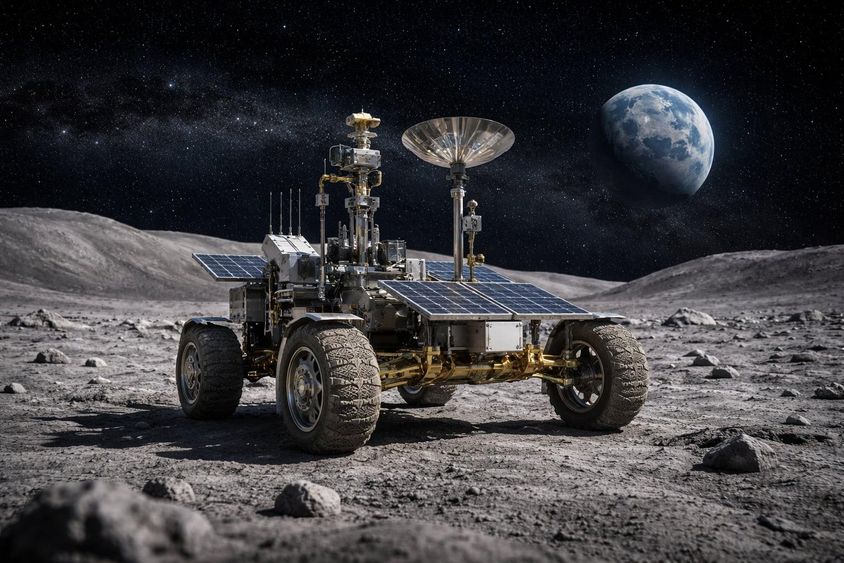
The UAE has committed to the Lunar Gateway program, which involves building an international space station around the Moon, and the Mars 2117 strategy, which aims for human colonization of the Red Planet over a century. This strategy fundamentally differs from current space travel concepts, which are dominated by short-term missions in low Earth orbit. The Lunar Gateway will be approximately 450,000 kilometers from Earth, demanding astronauts who are not only physically prepared but also extremely autonomous in psychological and technological terms.
A New Breed of Astronaut: Leadership Skills and Artificial Intelligence
Long-term space residency introduces new requirements: because of the physical and temporal distance from ground control centers, astronauts must be able to make independent, immediate decisions. Artificial intelligence plays a key role in this. Even now, during experiments on the International Space Station, AI-based systems assist astronauts in decision support. In the future, this competency will be indispensable, incorporating the learning of AI 'language' and the interpretation of machine learning results into astronaut training.
Oman's Response: A Commercial Spaceport in Development
While the UAE works on establishing the scientific and strategic basis for its space presence, neighboring Oman is not idle. In the city of Duqm, the country is developing the Arab world's first commercial spaceport, the Etlaq Spaceport. The aim is not only to launch rockets but also to create a complete industry ecosystem. The launching pad’s geographic location near the Equator provides a strategic advantage for launch trajectories.
But the ambitions stretch further: the zone called 'Space Valley' will offer opportunities for downstream industries, ranging from data processing to logistics services and space-quality fuel production. Thus, Oman intends to offer an alternative to satellite developers struggling with long waitlists by exploiting the global launch market congestion.
A Common Regional Ecosystem is Being Built
The strategies of the two countries are evolving to strengthen rather than compete with each other: while the UAE focuses on the scientific and human aspects of space exploration, Oman is working on building commercial infrastructure and supply chains. This combination creates an opportunity to form a comprehensive, self-sufficient Arab space industry value chain that can enter the multi-trillion-dollar global space economy.
Cooperation is essential, and it includes responsible contributions: trained astronauts, technological expertise, launch platforms, and services. Such a system based on common grounds not only offers opportunities but also long-term inspiration for new generations.
The Arab World's Space Future: More Than a Symbol
The region's current endeavors go far beyond symbolic presence. This is no longer just about launching rockets or sending flags to the Moon. The goal is creating a sustainable, knowledge-based space industry recognized as an international player. Independent decision-making, the application of artificial intelligence, and building the industrial vertical mark the threshold of a new era.
Today’s question is no longer whether the Arab world will have a place in space, but what role it will play: passive participant or active shaper. Based on the examples of the UAE and Oman, the answer increasingly leans toward the latter. And when the first rocket leaves Duqm's launch pad, the message will be clear: the Arab world is not just dreaming of space—it’s shaping its future.
If you find any errors on this page, please let us know via email.