UAE Embraces a New Banking Era
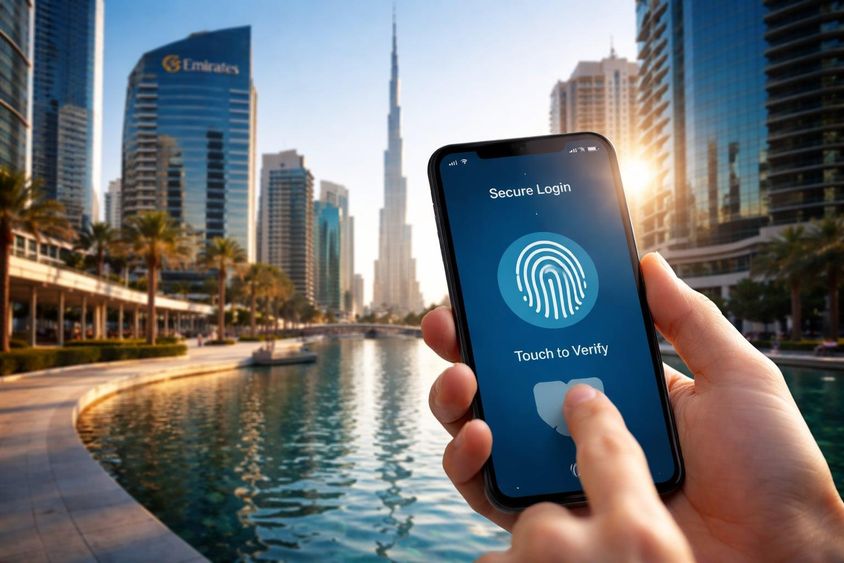
New Era in Banking: SMS Codes Disappear in UAE
Digital Security Reaches a New Level
The financial system of the United Arab Emirates is once again on the verge of a significant change. The traditional one-time codes sent via SMS or email, known as OTPs, are gradually disappearing from everyday banking operations. The goal is clear: to introduce safer, faster, and more modern authentication solutions that meet global cybersecurity challenges.
Behind the decision are central bank guidelines that require all licensed financial institutions to completely eliminate SMS and email-based authentication by the end of March 2026. This is not just a technical update but a complete paradigm shift in the world of digital banking.
Why Has the Elimination of OTPs Become Necessary?
In recent years, there has been a drastic global increase in online fraud. While SMS-based authentication was long considered secure, it has become vulnerable in several aspects today. SIM swap frauds, phishing attacks, and malicious applications can all bypass this line of defense.
Therefore, the Dubai banking system is transitioning to a stronger, multi-factor authentication model that relies not only on a code but also on the user’s device, biometric data, and behavioral patterns. This approach significantly reduces the chances of unauthorized access to an account.
The Rise of In-App Authentication
One of the most important innovations is the so-called in-app security code. This means that users receive the approval code not via SMS, but it is generated or displayed directly within the bank's mobile app.
This system is advantageous in several ways. Firstly, it is faster as it does not depend on the mobile network. Secondly, it is more secure because the authentication takes place in a closed environment. Thirdly, it is more convenient, as all approvals occur within a single app.
Feedback from Dubai banks shows that customers have quickly adapted to this new solution. A significant portion of users is already actively using in-app authentication, demonstrating that digital maturity levels are exceptionally high in the region.
Mass Transition in Record Time
The largest financial institutions have already migrated millions of customers to the new system. The majority of digitally active cardholders no longer use SMS codes but conduct transactions with in-app approval.
This transition did not happen overnight. Banks gradually rolled out the new systems to ensure a seamless experience for customers. The aim was not only to be more secure but also to make the new solution more user-friendly.
Experience has shown that the strategy worked. More than four-fifths of customers have already registered for the new authentication system, an outstanding ratio for such a large-scale technological shift.
Explosive Growth in Digital Payments
Behind the scenes, an even larger trend is unfolding: the rapid spread of digital payments. In the UAE, the value of online and mobile payments is significantly increasing year over year, and it is expected to multiply in the coming years.
However, this growth also comes with increasing risks. The more transactions happen digitally, the larger the attack surface for fraudsters. This is why implementing an authentication system that can keep pace with this development has become essential.
In this respect, the Dubai financial sector also leads, not only responding to challenges but proactively shaping future security standards.
Biometrics and Intelligent Protection
One of the key elements of the new systems is biometric identification. Fingerprints, facial recognition, and other technologies are playing an increasingly significant role in banking authentication. These solutions are not only more secure but also much faster.
Additionally, more banks are employing what's known as risk-based authentication. This means that the system continuously analyzes the user's behavior, such as login habits or transaction patterns, and only requests additional confirmation when something unusual is detected.
This invisible protection is almost unnoticeable to users but extremely effective.
What Does This Mean for Users?
The change might initially seem unusual to those who have relied on SMS codes for years. However, the new system is quickly adaptable and significantly improves the user experience in the long run.
Transactions become faster, approvals simpler, and security reaches a higher level. All users have to do is download and use their bank's mobile app and activate the new authentication features.
However, it is important to also pay attention to device security. In-app authentication provides full protection only if the phone is properly secured, such as with a passcode or biometric identification.
Deadline and Future Vision
The deadline for the complete transition is the end of March 2026, meaning all banking operations in the UAE will soon be on a new foundation. Banks are already progressing well and are expected to meet the requirements ahead of the deadline.
This step not only represents progress for the UAE but also sets a direction on a global scale. The era of traditional OTPs is slowly coming to an end, giving way to a smarter, more secure digital ecosystem.
Summary: The Future Has Already Arrived
Once again, the Dubai banking system has proven its ability to rapidly adapt to the changing environment. Phasing out SMS-based authentication is not only a technological shift but an important step into the new era of digital security.
For users, this means a safer and smoother banking experience while making the financial system more resilient against modern cyber threats. The question is no longer whether such changes are necessary, but who can implement them the fastest and most efficiently.
In this race, the UAE is clearly at the forefront.
If you find any errors on this page, please let us know via email.


