Emirates Defies Turbulence With Strategic Stability
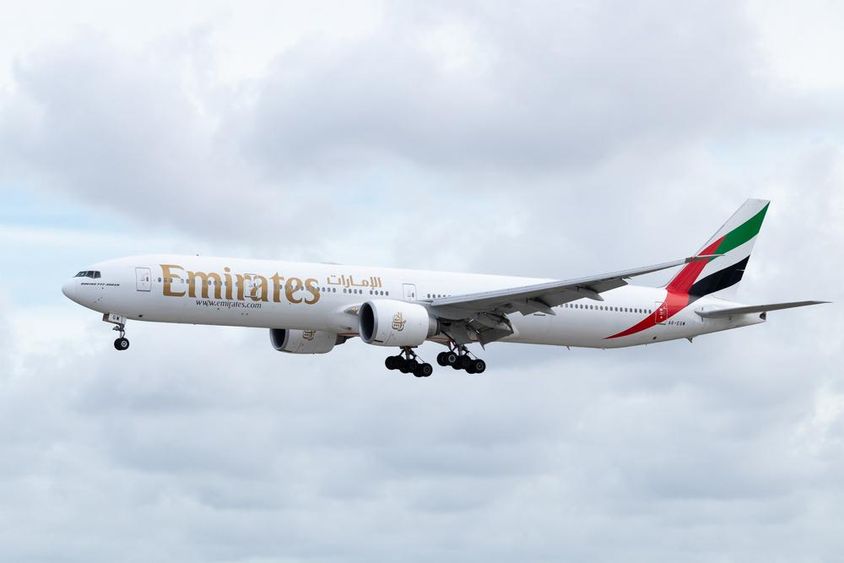
Emirates Stands Strong Amid Regional Uncertainties
Emirates is not planning to reduce its flight capacity despite the pressures from Middle Eastern conflicts, airspace usage restrictions, fuel costs, and route planning challenges. The Dubai-based company has made it clear that it intends not to retreat but to maintain its current operations and even expand opportunities in certain markets.
Emirates President Tim Clark stated that the company does not intend to cut back or reduce capacity. This message is particularly important at a time when many airlines have become more cautious due to regional tensions. War situations, changing routes, risk management, and higher operational costs might prompt many players to operate fewer flights or temporarily modify certain routes. However, Emirates follows a different strategy: it aims to demonstrate stability and continuity to both passengers and the market.
Dubai's Role Remains Central
One of the key elements of Emirates' operations is Dubai's role as a global transit hub. The airline continues to transport passengers through Dubai to major destinations like India and Australia. These routes are particularly important as they handle significant passenger traffic, with Dubai serving as a convenient connection point between Europe, Asia, Africa, and Oceania for many travelers.
The company is maintaining this model even in the current environment but is proceeding with increased caution. One such measure is that some flights carry more fuel. This not only represents additional costs but also requires significant planning from an operational perspective. Extra fuel can offer greater flexibility if a detour, waiting time, or alternative airport becomes necessary. This decision shows that Emirates considers not just the cost aspect but prioritizes operational safety and predictable passenger travel.
Additional Costs Do Not Stagnate the Company
According to Tim Clark, Emirates' leadership is not particularly frightened of the additional costs. In aviation, any such extra expense can sensitively affect profitability, especially when it comes to long-haul flights. Fuel is one of the largest cost factors, and detour routes can increase flight time, crew workload, and operational risks.
Nevertheless, Emirates' message is clear: capacity reduction is not on the agenda. This can be reassuring for passengers, as any cutbacks in flights from a major international network airline could trigger a chain reaction. If an important connection is lost or becomes less frequent, it could affect connecting passengers, business travelers, those visiting family, and tourism traffic.
Dubai's economy also significantly benefits from Emirates continuing with a robust schedule. The airline is not just a transportation company but a cornerstone of Dubai's international connectivity. The city's tourism, business relations, conference market, and premium service sector all benefit from Emirates operating with a stable and wide route network.
Berlin Remains a Key Destination
Emirates has long sought greater access to Berlin and has again indicated its desire to expand its presence in Germany. According to Tim Clark, Emirates already has slots at Berlin airport, but still lacks the required approvals to operate. This means that while the airline has the intention and certain airport capacity, political and regulatory approvals remain an obstacle.
The issue of Berlin access is not new. Emirates has been campaigning for years to fly to more German cities. The airline argues that new long-haul capacity would not only benefit Emirates but also passengers, tourism, trade, and the airport economy. Berlin is a particularly interesting market, as the German capital is a significant business, cultural, and tourist hub with potentially expandable direct long-haul connections.
Emirates believes that greater access would create a broader choice, stronger competition, and better connection opportunities. A passenger departing from Berlin could conveniently reach Indian, Southeast Asian, African, or Australian destinations via Dubai. This network logic is one of Emirates' strongest assets: it doesn't just connect two cities but provides access to an entire global system via Dubai.
German Economic Arguments and Old Disputes
Emirates often emphasizes that its presence also contributes to the local economy. The airline previously argued that its significant aircraft orders have secured jobs in Germany. A past Airbus A380 order, for example, was important for thousands of German jobs. This argument fits well with Emirates' communications in Germany, where it aims to present itself not as an external challenger but as an economic partner.
On the other side of the debate, Lufthansa has long criticized Gulf airlines. The German carrier believes these companies enjoy regulatory advantages in Europe, which could distort competition. Tim Clark sharply rejected this approach, stating that a publicly listed company should protect its business interests independently rather than seeking shelter behind the government.
This statement illustrates the intensity of the conflict between traditional European airlines and major Gulf players. In the background are not just flight rights but also how international aviation competition should evolve in the coming years. Emirates, Qatar Airways, and Etihad have, in the past decades, redefined the long-haul travel market. Several European airlines perceive this as a threat, while passengers often see greater choice, better transfer options, and higher service quality.
Starlink Onboard
Emirates aims to stay competitive not just with its route network and capacity but also with its onboard services. The company is working to provide free Starlink connection on as many aircraft as possible. This could be a significant enhancement to the passenger experience, especially on long-haul flights where a reliable internet connection is increasingly expected.
Onboard internet has long been a slow, expensive, or restricted service on many airlines. The advent of Starlink could change this by promising faster and more stable connections. However, the pace of Emirates' rollout is also influenced by available hardware. The company aims to equip as many aircraft as possible, but the process is not solely a business decision but also a supply and technical issue.
This development shows that Emirates is not shifting to a defensive mode despite regional uncertainties. While other companies might primarily cut costs in such times, the Dubai airline continues to focus on service development and long-term competitive advantage.
What Does This Mean for Passengers?
The most important message for passengers is that Emirates does not currently plan to reduce flights. This does not mean that regional situations won't pose operational challenges, but the company's strategy prioritizes maintaining a stable schedule. Routes may be modified, flight times could be longer in some cases, and more security reserves might be needed in the background, but the airline does not plan to narrow its network.
This is especially important for those traveling further to Asia, Australia, or other long-haul destinations through Dubai. Emirates' model is based on Dubai functioning as a major international hub where passengers can efficiently transfer. If this system remains stable, it strengthens Dubai's position as one of the world's most important aviation centers.
Emirates' Message to the Market
Emirates' current communication targets passengers, competitors, regulators, and the investor environment. To passengers, it conveys that the airline continues to operate reliably. To competitors, it signals that it does not retreat under pressure. To regulators, it expresses readiness to expand in new markets like Berlin. For Dubai, it reinforces that the city's global aviation role remains of strategic importance.
Middle Eastern conflicts, airspace usage risks, and economic pressure pose real challenges. However, Emirates' response is not capacity reduction but adaptation. More fuel, more careful route planning, technological development, a desire to expand in Germany, and strong market presence all outline the company's current strategy.
It will be particularly interesting to see if progress is made in the Berlin ambitions and at what pace Starlink is introduced in the fleet. It is already apparent that Emirates does not intend to take a defensive position. The company continues to build its global network through Dubai, and despite regional uncertainties, commits to growth, stability, and competition.
If you find any errors on this page, please let us know via email.


