Traffic Surge Returns Between Dubai and Sharjah
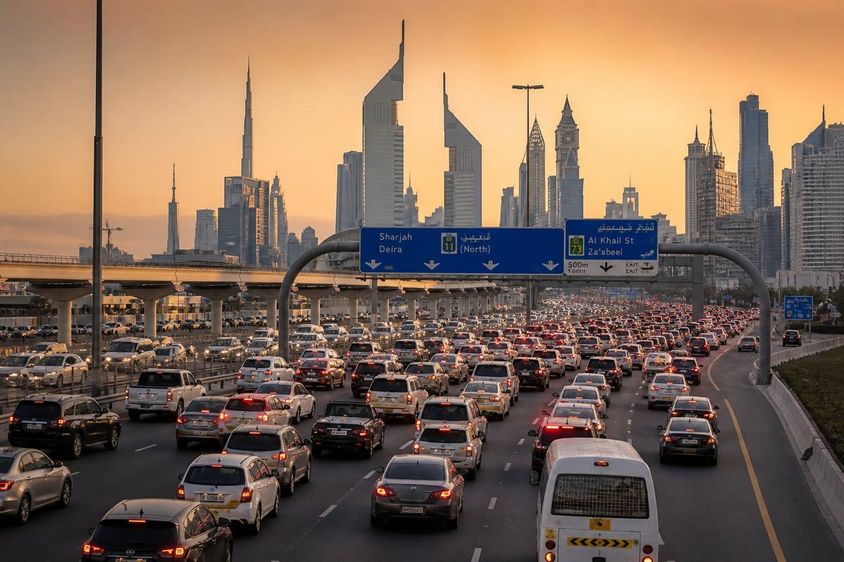
Traffic Builds Up Again Between Dubai and Sharjah
In recent times, many sighed with relief as the transportation between Dubai and Sharjah became noticeably smoother. Cars moved more steadily, commuting became more predictable, and travel became a part of daily routine with much less stress. However, this situation did not last long. In recent weeks, there are increasing signs that traffic has returned to the previously familiar, often nerve-wracking levels.
Morning Rush Hour Once Again Critical
The most noticeable change is observed during the morning hours. As early as around 7:30 AM, traffic slows down over long sections, and navigation app maps turn red again. This doesn’t affect just one stretch of road, but several key routes that connect the two emirates.
The Sheikh Mohammed bin Zayed Road and Al Ittihad Road are particularly affected. These roads have been the backbone of daily commuting for decades, and now significant congestion is once again forming on them. Roads that used to be covered in 30–40 minutes now easily take an hour or more.
Return of the "Stop-and-Go" Experience
One of the most frustrating phenomena is the so-called "stop-and-go" traffic, which means a continuous stopping and starting. This doesn’t mean a complete traffic jam, but rather slow, jerky progress which requires continuous attention and patience.
This phenomenon is particularly common around densely populated areas like Al Nahda, where even exiting residential areas has become more time-consuming. Moving towards the city, the traffic often remains slow all the way to major junctions.
Increased Travel Times on All Routes
Not just a single route is affected. Those opting for alternative routes face similar problems. The Al Khail Road, the Oud Metha area, and the surroundings of Infinity Bridge are becoming increasingly congested.
On these routes, where it was previously possible to travel relatively quickly, congestion is now common. Travel times have often doubled, which significantly impacts daily scheduling. For commuters, this means not only inconvenience but also makes balancing work and personal life more challenging.
Traffic Increase Felt All Day
Previously, congestion was primarily limited to morning and evening rush hours. Now, however, the increase in traffic is felt at various times throughout the day. Those on the road all day – such as drivers, couriers, or service providers – find that they can complete fewer routes in the same amount of time.
This is especially true for service providers following longer routes, hitting multiple stops. Every delay adds up, potentially creating significant backlogs by the end of the day.
What Might Be Behind It?
Several factors can contribute to the increase in traffic. One of the most important factors is the presence of road renovations and expansion works. Developments are underway at numerous locations, aimed at increasing long-term capacity, but in the short term, these often involve narrowing and diversions.
Intensive work is particularly noticeable on sections leading towards Al Mamzar, which slows down traffic at several points. Lane narrowings and merging traffic lanes often cause congestion, especially during peak hours.
Impact of Urban Growth
The continuous growth of the region should not be overlooked. The population of Dubai and Sharjah is rising year by year, and parallel to this, the number of cars on the roads is increasing as well. New residential neighborhoods, business centers, and industrial areas all contribute to the growing traffic.
Infrastructure development is ongoing, but it is often difficult to keep pace with the rate of growth. As a result, problems that had previously been mitigated periodically return.
What Does This Mean for Everyday Life?
The current situation forces commuters to rethink their daily routines. Many leave earlier, others seek alternative routes, or even turn to public transportation.
At the same time, it is becoming increasingly common for employers to offer more flexible working hours or partial remote work to reduce peak period load. This could help balance traffic in the long term, but in the short term, the impact of changes remains limited.
Recurring Challenge, Ongoing Adaptation
The evolution of traffic between Dubai and Sharjah clearly shows that in a rapidly developing region, transportation challenges are continually changing. What seems resolved one month can become a problem again the next.
For commuters, this means they must adapt to the current conditions, whether it involves changing departure times, altering routes, or even lifestyle changes. Long-term, the development of the cities could improve the situation, but in the meantime, patience and flexibility remain key.
Based on current trends, it’s clear: the traffic has not only returned, but once again has become a defining factor in daily life between Dubai and Sharjah.
If you find any errors on this page, please let us know via email.


