Revolutionary Bridges Enhance Dubai's Traffic Flow
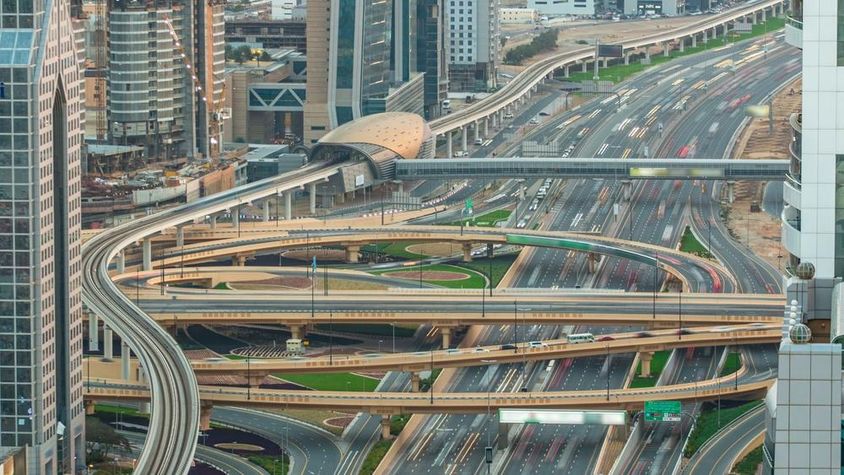
New Bridges Elevate Dubai Traffic Flow: Revolutionary Development at Trade Centre Roundabout
Dubai has reached another milestone in the development of its transportation infrastructure. Known globally for its futuristic architectural solutions and extremely efficient road network, the city has once again proven that it not only keeps up with growing traffic demands but also plans ahead. As part of the transformation of the Trade Centre roundabout, two new bridges have been opened, significantly reducing travel times and easing congestion at one of the city's busiest junctions.
Two New Bridges, 2-Minute Crossing
The recently unveiled bridges feature two traffic lanes in each direction, stretching a total of 2,000 meters and are capable of handling approximately 6,000 vehicles per hour. The new road sections allow drivers to reach Al Majlis Street, Al Mustaqbal Street, or even Zabeel Palace Street from the 2nd December Street in just two minutes. This is a significant improvement from the previous average travel time of 10 minutes.
With the opening of the new bridges, traffic congestion at the Trade Centre roundabout, which has been a critical point in the city for many years, has significantly decreased. This development not only reduces travel times but also enhances road safety by making the flow of traffic more even.
Ahead of Schedule, Exemplary Pace
The Dubai Roads and Transport Authority (RTA) announced the construction of five bridges in October 2024, totaling 5,000 meters in length. The aim was clear: to alleviate congestion at the Trade Centre roundabout and improve connectivity among the area’s major routes. However, the opening of the first two bridges happened not only as planned but even ahead of schedule—several weeks earlier than promised in official communications.
According to experts overseeing the project, construction is advancing faster than planned. The overall investment's current completion status exceeds 50%, and the further phases are expected to be gradually opened. The next major milestone is anticipated in March when the bridge connecting Sheikh Zayed Road to Sheikh Khalifa bin Zayed Street will open. Following that, in October 2026, two more bridges will be completed to aid traffic flow from Al Majlis Street and Sheikh Rashid Road towards 2nd December Street.
Time Savings and Efficiency
Upon the entire project's completion, the average crossing time over the roundabout will drop from 12 minutes to 90 seconds, while travelers can reach Sheikh Khalifa bin Zayed Street from Sheikh Zayed Road in just one minute—previously, this took six minutes.
As part of the development, a 1,000-meter-long, two-lane second-tier bridge will also be constructed, connecting Sheikh Zayed Road with Sheikh Khalifa bin Zayed Street towards Deira. This bridge will accommodate approximately 3,000 vehicles per hour.
Not Just Roads, Communities Evolve
The investment’s impact will not be confined to transportation. The development will serve residents and visitors of the Dubai World Trade Centre, Dubai International Financial Centre (DIFC), and neighborhoods like Zabeel, Al Satwa, Al Karama, Al Jafiliya, and Al Mankhool. Estimates suggest that this project will simplify the daily lives of over half a million people.
This development is an integral part of a comprehensive urban planning scheme, which includes the expansion of Al Mustaqbal Street. This route extends from Zabeel Palace Street to Financial Centre Street. The project's final completion date is expected in 2027.
Plans include the construction of three tunnels totaling 1,100 meters, along with a new 400-meter bridge, which will service the intersection of Al Mustaqbal Street and Zabeel Palace Street from the direction of the Dubai World Trade Centre.
Capacity Increase and Traffic Mitigation
The capacity of Al Mustaqbal Street will rise from the current 9,000 vehicles per hour to 12,000 vehicles per hour as the road is widened from three to four lanes in both directions. This stretch is essential for the smooth movement of downtown traffic, and post-development, the previous eight-minute travel time could decrease to as little as three and a half minutes.
With the help of new tunnels and bridges, urban traffic can advance to a new level: not only faster but also much more predictable. This is particularly important in a city where the pressure on the road network is constant due to a dense array of business centers and tourist attractions.
Conclusion: Urban Mobility Reaches New Heights
Dubai has once again proven its capability to build forward-looking and complex transportation systems. The transformation of the Trade Centre roundabout and the inauguration of new bridges are not only engineering feats but also stand out for their social utility. Thousands of hours of time savings, reduced environmental impact, and diminished frustrating traffic jams demonstrate that city leaders are thinking long-term and taking concrete steps toward sustainable, livable, and efficient urban transportation. Based on this, Dubai's transportation future is not only impressive but also consciously planned.
(Based on a statement from the Roads and Transport Authority (RTA).)
If you find any errors on this page, please let us know via email.


