Resilience: DIFC's Swift Action Amid Economic Strains
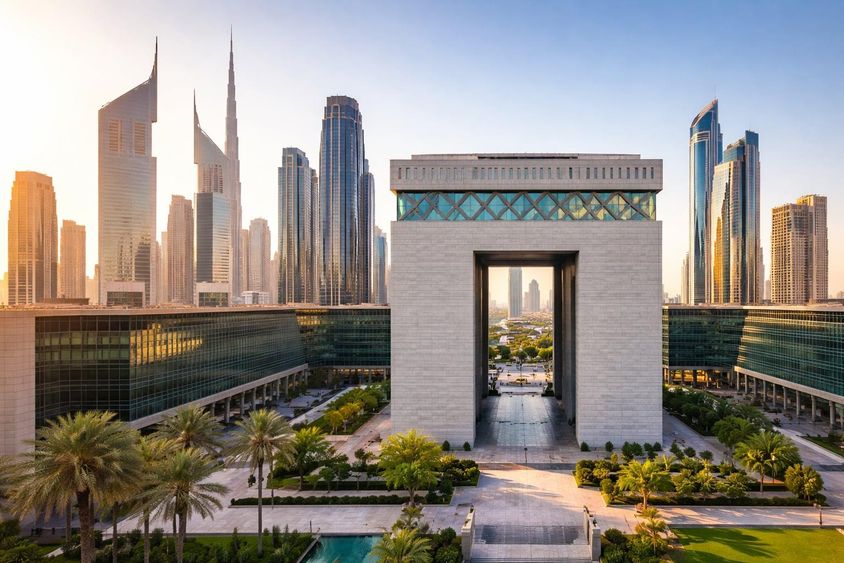
Stability and Trust: DIFC's Swift Response to Economic Pressure
Dubai's financial center has once again proven that it is not just a spectacular business district, but a consciously built, flexible, and crisis-resistant ecosystem. The latest announcement by the Dubai International Financial Centre (DIFC) about a comprehensive support package is not just short-term assistance, but also a strategic move that strengthens Dubai's global financial role in the long term.
The timing of the decision is no accident. At a time when the region faces economic and geopolitical challenges, predictability and liquidity become key issues for companies. DIFC recognized this precisely and introduced a set of tools that provide immediate relief to operating companies while encouraging new entrants.
Immediate Assistance: Liquidity and Flexibility
One of the most important elements of the announced measures is payment flexibility. The introduction of grace periods related to rental contracts and installment payment options are clearly aimed at preventing companies from facing short-term financial pressures.
This is particularly important for companies operating in the retail and service sectors, where cash flow often responds sensitively to market changes. The option of installment payments for license renewal fees is also a significant relief, as these costs often arise simultaneously and in larger amounts for many companies.
With this, DIFC is practically buying time for companies. Time to adapt, reorganize their operations, and stabilize their financial position.
Regulatory Reliefs: Faster Entry, Fewer Obstacles
The support package is not only financial in nature. The Dubai Financial Services Authority (DFSA) has also introduced temporary regulatory reliefs aimed at facilitating market entry for new companies and supporting already operating regulated companies.
This step is especially important in an environment where innovation and quick adaptation represent a competitive advantage. If a fintech or AI company receives a license faster, it can respond to market demands sooner, increasing the dynamism of the entire ecosystem.
In this regard, Dubai is not waiting, but acting. It does not react late to changes but proactively shapes conditions.
A Strong Ecosystem in Numbers
The significance of DIFC is not only measured in political or economic decisions but also in numbers. More than 8,800 active companies operate here, including over 1,000 regulated financial institutions. Alongside asset managers, banks, insurers, and brokerage firms, innovative companies are playing an increasingly important role.
It is particularly noteworthy that there are more than 1,600 companies focusing on artificial intelligence, fintech solutions, and innovation within the center. This is no accident but the result of a conscious strategy: Dubai not only follows global trends but seeks to shape them.
DIFC has become one of the world's leading fintech centers and consistently ranks in the global forefront. However, this position does not sustain itself—it requires continuous development and support.
Message to the Market: Trust and Stability
One of the most important messages of the newly announced support package is trust. Not only towards current companies but also global investors and potential new entrants.
With this, Dubai communicates that businesses are not left alone during difficult times. This attitude distinguishes truly strong economic centers from those that operate efficiently only during good times.
Trust, on the other hand, is measurable in money. Where the environment is stable, capital arrives. Where regulation is predictable, long-term decisions are made.
Short-Term Relief, Long-Term Strategy
Although at first glance the introduced measures may seem like short-term assistance, they are actually part of a longer-term strategy. The aim is not only to help companies weather the current period but also to emerge from it strengthened.
This is especially important in a global competition where financial centers constantly compete for investments, talent, and innovation. Dubai cannot afford uncertainty in this race.
DIFC's steps show that the city's leadership fully understands this dynamic and acts accordingly.
Dubai's Position on the Global Financial Map
Dubai has long ceased to be just a regional player. The city increasingly positions itself as a global financial center, with DIFC playing a key role in this.
Such support measures contribute to Dubai not only being an attractive entry point but also retaining companies in the long term. This is the difference between a fast-growing market and a mature, stable economic center.
The current measures also indicate that Dubai is not only focusing on growth but also on sustainability. An economic model is being built capable of handling external shocks while remaining attractive to international players.
Summary: Conscious Crisis Management, Strong Vision
The support package announced by DIFC is much more than an economic relief. It is a clear signal of how Dubai thinks about the future: rapid reaction, flexible solutions, and a long-term strategic perspective.
For companies, this means stability and security. For investors, it means a predictable environment. And for the city, another step towards the global financial elite.
Dubai has once again demonstrated that it can not only grow but also handle challenges—and that is what truly defines the strength of an economic center in today's world.
If you find any errors on this page, please let us know via email.


