Abu Dhabi Schools Hire More Emirati Teachers
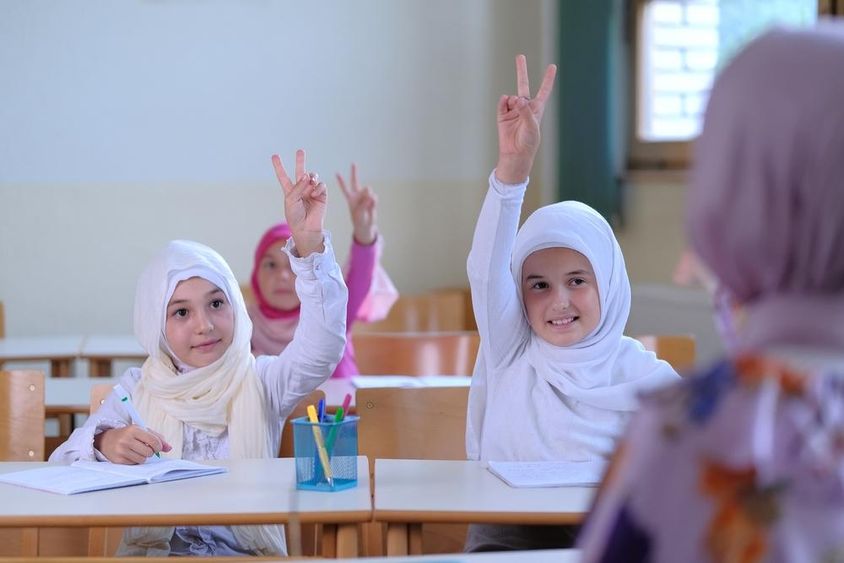
Abu Dhabi's private schools are increasingly hiring Emirati teachers.
The educational system of the United Arab Emirates has undergone remarkably rapid development in recent years, particularly in Abu Dhabi, where the number of international schools and private educational institutions continues to rise. The city aims to make education attractive not only with modern infrastructure and advanced technological support but also by emphasizing the active involvement of the country's own citizens in school operations. One of the newest and most important steps in this direction is the strategic cooperation between Aldar Education and the Abu Dhabi Department of Education and Knowledge, or ADEK.
The goal of the new partnership is to significantly increase the number of Emirati employees and educators in schools operated by Aldar Education. As part of the program, the employment of over 300 Emirati workers is planned, including more than 100 teachers who have not previously worked in the education sector. This is one of the largest Emiratization initiatives within the UAE's private education system.
Emiratization reaches a new level in education.
Emiratization has become one of the most important economic and social objectives in the UAE in recent years. The program's goal is for the country's own citizens to have a greater presence in the labor market, especially in sectors traditionally dominated by foreign workers.
Education is a particularly sensitive area in this regard. The country's leadership increasingly considers it important for students to learn not only from foreign teachers but also from educators familiar with the UAE's culture, traditions, and social values. This is particularly true for social studies subjects, where national identity and cultural background play a significant role.
Under the agreement, Aldar Education has committed to having all social studies positions filled by Emirati educators in their institutions within three years. This could bring a significant change in school operations and, in the long run, set a new direction for the education system in Abu Dhabi.
More Emiratis are choosing the teaching profession.
Previously, the teaching profession in the UAE was not particularly popular among local young people. However, this situation has significantly changed recently. The government is trying to make the educational career path more attractive with scholarships, professional support, and long-term career opportunities.
One of the key elements of the cooperation between ADEK and Aldar Education is the Kon Moallim program, which offers a postgraduate pedagogical diploma. The program is operated in collaboration with the Emirates College for Advanced Education and aims to train a new generation of Emirati educators for modern education.
The program may be particularly interesting for those coming from other fields who wish to work as teachers. The education system thus aims to involve not only fresh graduates but also professionals seeking a new career path.
Focusing on shortage areas.
The cooperation does not solely focus on social studies subjects. Plans include special attention to areas currently experiencing a serious shortage of specialists in the UAE.
These include professionals assisting students with special educational needs, early childhood and preschool educators, and teachers of key subjects determined by the Ministry of Education. Supporting children with special educational needs has become an increasingly important issue in Abu Dhabi, as the country aims to become a regional center for international quality inclusive education.
Developing early childhood and foundational education is also a key strategic area. Experts believe skills acquired in the initial years significantly influence students' later academic achievements, which is why the Emirates are increasingly focusing on the quality of early education.
Internship programs and career building.
Aldar Education aims not only to provide teaching positions but also to establish long-term career paths for Emirati youth. As part of the agreement, up to 30 internship positions and 40 classroom assistant opportunities will be created annually.
This is important because for many young people, the lack of practical experience has been one of the biggest obstacles in the labor market. The new system aims to provide opportunities to learn about the educational environment even before starting their careers.
Such programs may help in the long-term establishment of a stable Emirati teaching workforce. The country's leadership does not only think in terms of short-term recruitment but about creating an education system where Emirati professionals are permanently present.
A completely new education model by 2030.
One of the most interesting elements of the cooperation is the multi-year talent development program aimed at having a completely new generation of Emirati educators enter the education system by the 2030–2031 school year.
This shows that Abu Dhabi is thinking long-term. The development of education is treated not as a short-term campaign but as a multi-year strategic project, the results of which may define the country's development for decades.
During the program, the focus is not only on recruitment but also on retention and advancement opportunities. A joint steering committee will oversee the project's progress, including recruitment results, employee retention, and professional development.
NAFIS and workforce reforms.
The initiative is closely linked to the national NAFIS program and the Ministry of Labor's reforms. These aim for Emirati citizens to have a greater role in the private sector.
In the past, many Emiratis primarily sought employment in the public sector because it offered more stable and predictable career opportunities. However, the new programs seek to make private schools and companies attractive alternatives.
From this perspective, education could be a particularly important area as it offers a long-term, stable, and socially respected career path for the country's youth.
Abu Dhabi could become an educational hub in the region.
In recent years, Abu Dhabi has invested significant amounts in developing its educational infrastructure. Modern campuses, digital classrooms, AI-supported education systems, and international curricula have appeared in the city.
However, the human side is increasingly coming to the forefront. The new strategy shows that the Emirates are not only thinking in terms of buildings and technology but also in developing their own specialist workforce.
If the program is successful, Abu Dhabi could become one of the most modern educational hubs in the Middle East and a model that other countries may attempt to follow.
If you find any errors on this page, please let us know via email.


