Public Warned: Avoid Debris After Interceptions
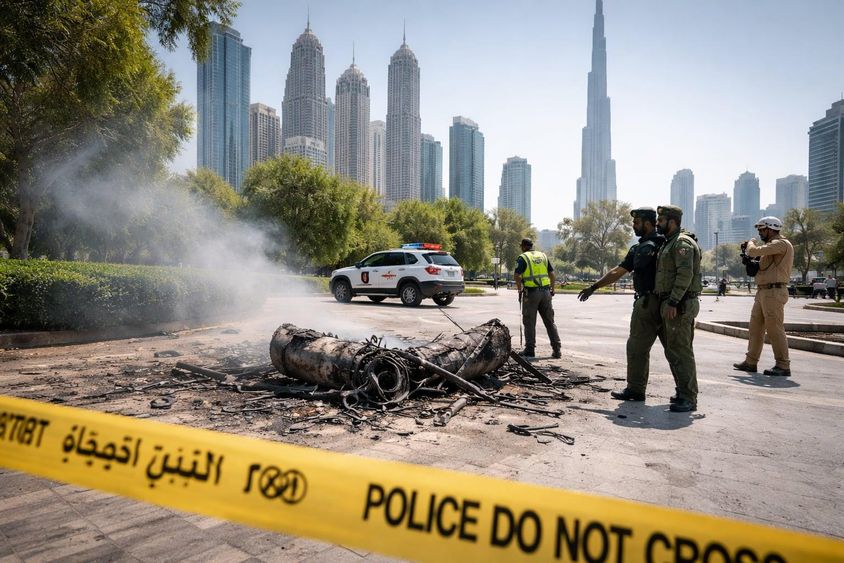
Warning to the Public: Do Not Approach Debris After Interceptions
Recent events have again drawn attention to the fact that the functioning of modern air defense systems is not only a military or technological matter but also directly affects the everyday safety of the public. Authorities in the United Arab Emirates have issued an important warning: after successful air defense interceptions, debris, objects, or unknown items that fall to the ground should not be approached, touched, or photographed. Authorities emphasize that in every such case, only designated experts may examine the site.
The warning is particularly important for a global hub like Dubai, where due to the densely populated urban environment, tourism, and high infrastructure density, all security measures are of utmost significance.
What Happens During an Air Defense Interception?
An air defense interception is a complex technological process aimed at neutralizing potentially dangerous flying objects while they are still in the air. Modern systems can quickly identify threats using radars, sensors, and automated control systems, then destroy them with interceptor missiles or other technologies.
When such an interception is successful, the object might break into pieces. These pieces often fall from great heights and can reach the ground as debris of various sizes. The falling parts can be metal pieces, composite materials, electronic elements, or other components that at first glance might seem harmless.
According to authorities, however, these objects can pose potential dangers. Some components may still contain unexploded parts, fuel residues, or other elements that could react upon touch, heat, or mechanical impact.
Why Is Approaching Debris Dangerous?
Many people react with natural curiosity to such events. If something special or unusual appears in a neighborhood, park, or desert area, many instinctively go closer to see what it is. In the age of social media, many would also take photos or videos of it.
However, authorities clearly warn: this poses a serious safety risk.
One of the biggest dangers is that the structure of fallen objects might be unstable. A seemingly simple metal piece could actually be a component containing a pressurized system or an energy storage element. These components can react even minutes or hours after the event.
Chemical substances can also pose further risks. Some systems use special fuels, oxidizers, or other technological liquids that can be dangerous if they come into contact with the skin or are inhaled.
The Role of Authorities and Safety Protocols
Dubai and the United Arab Emirates generally react very quickly and organized to such situations. When an air defense interception occurs, security agencies follow a multi-step protocol.
First, they determine, with the help of radar and sensor systems, the area where the intercepted object's pieces might have fallen. Subsequently, special units are dispatched to the site, tasked with securing the area and identifying the debris.
Experts use protective gear and various examination methods to check the objects. Debris can only be removed once all risks have been ruled out.
This process can be time-consuming, so the patience and cooperation of the public are requested.
The Role of Social Media in Such Situations
In the modern information environment, one of the greatest challenges is that people tend to immediately share everything they see. A photo of a special object or debris can spread across the internet within minutes.
Authorities, however, request the public to refrain from taking and disseminating photos in these cases. There are several reasons for this.
Firstly, during security operations, it's important that exact locations and technical details do not become public. Secondly, rapidly spreading information can easily lead to misunderstandings or panic.
Official communication is thus crucial. For the public, the safest solution is always to rely solely on information published through official channels.
The Specifics of Dubai's Urban Environment
Dubai is in a unique position because the city is extremely densely built and features numerous iconic buildings. Skyscrapers, highways, tourist districts, and residential parks are located side by side.
This means that falling objects could land in a parking lot, on a rooftop terrace, or near a desert excursion site. Due to the city's rapid growth, there are many areas where residents, tourists, and constructions are present simultaneously.
Therefore, authorities ask everyone that if they see an unusual object on the ground, immediately keep distance and notify the appropriate authorities.
The Public's Responsibility in Maintaining Safety
The safety of modern cities does not solely depend on the authorities. The cooperation of the public also plays a fundamental role in ensuring that a potentially dangerous situation can be handled quickly and seamlessly.
If someone finds debris or an unknown object, the most important steps are: maintaining distance, warning others, and notifying the relevant authorities.
Curiosity is a natural human reaction, but in such situations, safety must always take precedence.
The Message of Stability and Preparedness
The warning from the authorities of the United Arab Emirates is not merely a simple safety notice. It also indicates that the country takes the protection of its population seriously and takes all possible measures to minimize risks.
For a long time, Dubai has been a symbol of stability, modern infrastructure, and safety in the region. The functioning of air defense systems and the related protocols also show that the city and the country are prepared to handle various challenges.
The most important message for the public is simple: if you see unknown debris or objects anywhere, do not approach, touch, or take photos. Let the experts carry out the necessary examinations.
This simple rule helps ensure that Dubai remains a safe and stable environment for all those who live or visit there. img_alt: Fallen debris safety warning
If you find any errors on this page, please let us know via email.