Oil Price Surge Sparks New Global Era
Oil Price Surge and New Era: What the Brent Price Above $120 Means for Dubai and the World?
In recent weeks, events have unfolded in the global energy market that have immediately drawn the attention not only of investors but of everyday consumers. The price of Brent crude has crossed the $120 per barrel mark, while West Texas Intermediate crude is also showing a steep rise. This dramatic change is closely linked to the conflict that erupted on February 28, which led to the partial closure of the Strait of Hormuz, causing serious disruptions in the world's oil supply.
The situation is particularly sensitive for the Middle East region, especially Dubai's economy, which is both directly and indirectly dependent on the fluctuation of energy prices.
What Drives Prices to Such Heights?
Several factors are behind the current price surge, which simultaneously exert their influence. One of the most important is the uncertainty of the shipping routes. A significant part of the world's oil and LNG trade passes through the Strait of Hormuz, so any restriction there immediately induces a supply shock.
This is compounded by escalating geopolitical tensions and the potential for military actions, further increasing market uncertainty. The price of energy is not solely dependent on physical supply but also on future expectations; hence, even the news of potential conflicts can trigger substantial price increases.
It should not be ignored that oil prices were already on an upward trend beforehand, so the current events have drastically accelerated an already rising trajectory.
Historical Comparison: Close to a Record
The current price levels are nearing the peaks of 2008 when oil prices almost reached $150 a barrel. Although the current situation differs in many respects from the previous crisis, the similarities are still noteworthy.
Back then, exploding demand and speculation drove prices, whereas now, supply constraints and geopolitical risks dominate. This means that the current situation could have more lasting effects, especially if shipping routes do not recover shortly.
UAE Decision: Exit from OPEC and New Strategy
The situation is further complicated by the announcement from the United Arab Emirates, a key OPEC member, of its exit from the cooperation, including the OPEC+ structure.
This step is historically significant because the country has been part of the production quota-regulating system for decades. The exit allows the country to increase production according to its own strategy, potentially surpassing previous limits significantly.
Analysts suggest three main scenarios are emerging. The first is a gradual increase, which would have only a moderate impact on prices. The second is a moderate expansion, which could stabilize the market, especially if shipping routes reopen. The third is aggressive production growth, which could even reduce prices, provided demand does not increase concurrently.
Fuel Price Increases in Dubai
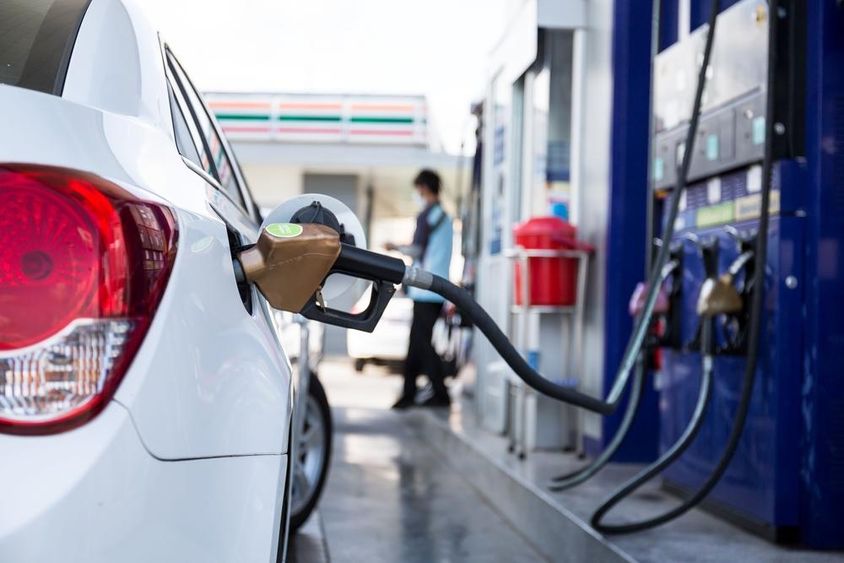
The impact of global processes has quickly appeared in the local market. By May, fuel prices have risen significantly: premium categories have increased by more than 7 percent, while the rise was even higher for lower octane fuels. Although diesel prices remained stable, the overall picture is clear: transportation costs are rising.
This affects not only car owners but the entire economy. The rise in transportation costs is incorporated into prices, which could cause inflationary pressure in the long term.
Economic Impacts: Winners and Losers
Dubai's economy is in a unique position. Although it is not an oil-dependent economy in the classical sense, the energy sector still plays a significant role in the region. High oil prices can increase short-term revenues and improve the budget balance.
However, non-oil sectors, such as tourism, logistics, or trade, may also suffer negative impacts due to increased costs. Higher prices for airline tickets, shipping, and supply chains can suppress demand.
What Can We Expect in the Coming Months?
The future is primarily dependent on three factors: the geopolitical situation, the stability of shipping routes, and production decisions. If the Strait of Hormuz begins operating at full capacity again, it could relieve price pressures.
However, if tensions persist or worsen, oil prices could reach new peaks. In this case, the world's economies may face another wave of inflation.
Summary: Turning Point in the Energy Market
The current situation is not just a temporary price fluctuation but a potential turning point in the energy market. The oil price above $120, the uncertainty of strategic straits, and the UAE's exit from OPEC are all factors that could transform global power dynamics in the long term.
For Dubai, this situation presents both an opportunity and a challenge. High oil prices could increase the region's revenues, but they also exert significant pressure on other sectors of the economy. The coming months will be crucial in determining whether this new situation stabilizes or further turbulence is expected in one of the world's most important markets.
If you find any errors on this page, please let us know via email.


