Oil Market Shifts: UAE's OPEC Exit Implications
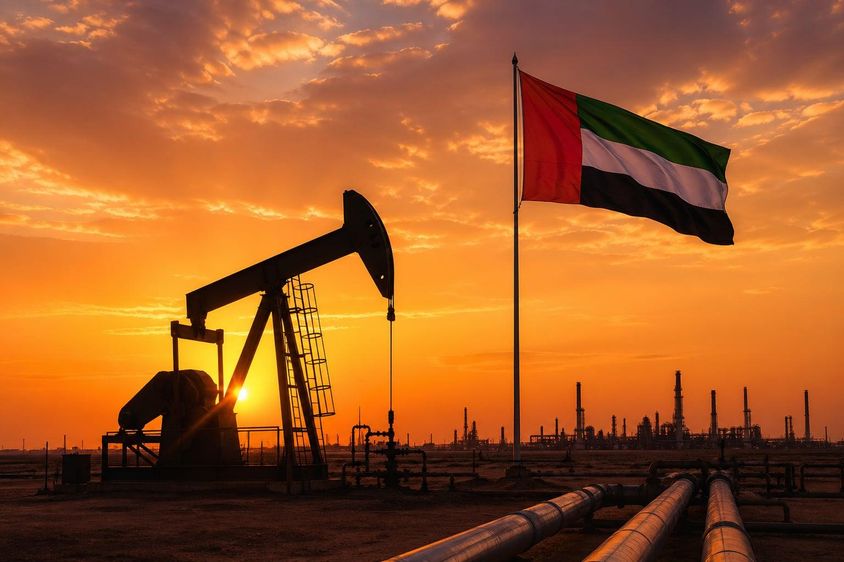
New Era in Oil Market: Potential UAE OPEC Exit Impact
One of the most intriguing and impactful economic topics recently is the potential scenario if the United Arab Emirates, a key player in OPEC, chose to take an independent path. Although the global oil market is already extremely tense due to geopolitical situations, such a decision could lead to deeper changes in the long term.
The current market situation is primarily influenced by Middle Eastern tensions, particularly the uncertainty surrounding the Strait of Hormuz. This is one of the most important oil shipping routes in the world, so any disturbance has an immediate impact on prices. It is no coincidence that Brent crude oil prices have again risen above $110 per barrel.
Two Opposing Forces in the Market
Currently, the oil market is driven by two opposing forces. The first is the short-term supply shortage caused by geopolitical conflicts and transportation disruptions. The second is future uncertainty, stemming from the fact that some major producers, like the UAE, could significantly increase their production.
This duality creates a kind of tension in the market: while we currently see high prices, investors have also begun to price in the possibility of future oversupply.
Three Possible Scenarios
If the UAE were indeed to exit the OPEC system and follow its own strategy, three main scenarios emerge.
Gradual Increase: Stable Market, Moderate Impact
The first possibility is a cautious, gradual increase in production. In this case, supply would rise by 200,000 to 300,000 barrels per day. The market could easily absorb this, so the impact on prices would be minimal.
This approach would align with a strategy aiming for long-term stability. The UAE could increase its revenue without disrupting global balance.
Medium Expansion: Price Ceiling Emergence
The second scenario suggests a more aggressive step: an increase in production of between 500,000 and 1 million barrels per day. In this case, the rise in oil prices could be limited, especially if the situation around the Strait of Hormuz stabilizes.
This level would have a more significant impact on global supply, essentially creating an "invisible price ceiling." Investors would know that if the price rises too high, the UAE could quickly increase production.
Full Capacity Utilization: Risk of Price Decline
The third and most drastic scenario involves the UAE producing at full capacity, which could mean an increase of over 1 million barrels per day. This could lead to significant oversupply, particularly if global demand does not grow fast enough.
In this case, oil prices could start to decline, which might be favorable for importing countries in the short term but could cause substantial revenue losses for producers.
Not Just Physical, But Psychological Impact As Well
One of OPEC's greatest strengths lies not only in actual production levels but also in its ability to influence market expectations. If a key player like the UAE exits, it could weaken this influence.
Investors may have less confidence that the organization can keep supply under control. This could increase price fluctuations and make the market more unpredictable.
Why Immediate Oversupply Isn't Expected
It's important to emphasize that such a step would not result in immediate oversupply. The current geopolitical situation, particularly issues around the Strait of Hormuz, continues to limit shipments.
Additionally, global inventories are under pressure as recent events have significantly reduced reserves. This means that even with a production increase, it would take time for the market to become truly oversupplied.
The Beginning of a More Flexible Oil Market
The most likely scenario is that the oil market enters a new era where major producers operate both collaboratively and independently. The United Arab Emirates could play a key role in this, as it has the ability to react quickly to market changes.
This flexibility could enhance supply security, while also leading to greater price movements. In the future, oil prices will not only be determined by the basic balance of demand and supply but also by how quickly and to what extent major players can intervene.
What Does This Mean for Everyday Life?
For motorists and businesses, all this primarily manifests in fuel price developments. In the short term, high prices may persist, but in the medium term, larger fluctuations are expected.
This means that instead of a stable, predictable price environment, a more dynamic, rapidly changing market emerges. In this environment, adaptability will be crucial—whether for logistics companies or everyday car users.
Summary
The potential exit of the UAE from OPEC would not just be a simple organizational change but an event that could redefine how the global oil market functions. The three possible scenarios each have different implications for prices, but one common point is certain: greater volatility and faster changes should be anticipated in the future.
What is certain is that the role of the United Arab Emirates will continue to grow stronger, becoming an increasingly defining factor in the world’s energy supply—and with it, the everyday operation of economies.
If you find any errors on this page, please let us know via email.