Jeddah Tower Rising: Redefining Skyscraper Heights
Jeddah Tower: A New Era in Skyscraper Architecture
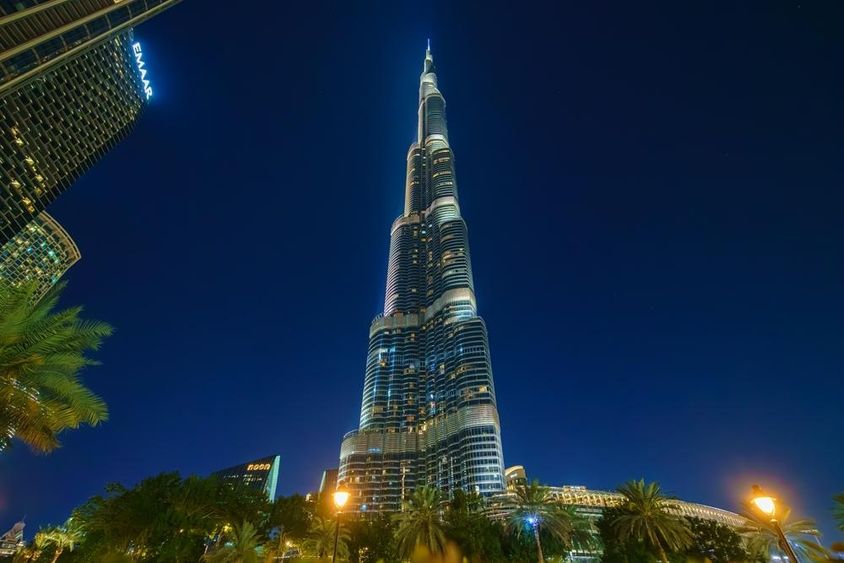
The title of the world's tallest building currently belongs to Dubai's iconic Burj Khalifa, which in 2010, with its height of 828 meters, literally redefined the boundaries of architecture. For a long time, it seemed that no one would surpass this record for decades. However, now, in Jeddah, Saudi Arabia, a project is underway that not only aims to outshine Dubai's pride but also sets a new benchmark for future urban architecture: this is the Jeddah Tower, the world's first building expected to reach a height of one kilometer.
Roots of the project: From Kingdom Tower to Jeddah Tower
The plans for the tower were initially announced back in 2011, and the project originally went by the name Kingdom Tower. The aim was to transform Jeddah, located on the Red Sea coast of western Saudi Arabia, into a global economic hub. The building serves as the central element of the Jeddah Economic City, a mixed-use urban development with a base area of 57 million square feet. The ambitious project's objective is to make Jeddah a significant player not only regionally but also on an international scale, both in business and tourism.
In 2015, the tower received its current name—Jeddah Tower—to better connect with the city's identity and avoid possible confusion with the Kingdom Center in Riyadh.
New momentum after a seven-year hiatus
Although foundational work began in late 2013, and notable progress was visible in the first few years, the project stalled in 2018, mainly due to financial and organizational issues. The construction resumed in January 2025, under a 7.2 billion Saudi riyal contract undertaken by the Saudi Binladin Group.
Since the restart, the pace of work has been impressive. By the end of 2025, 80 floors have been completed, and the project engineers are raising a new floor every three to four days. The structural construction is overseen by Thornton Tomasetti, a firm that has previously been involved in many iconic skyscrapers worldwide. The 100th floor is expected to be reached by February 2026, with full completion planned for August 2028.
What the Jeddah Tower offers
The tower stands out not only for its height but also for its functional diversity. The 168-story building will include residential, office, and hotel functions, as well as retail spaces and an observation deck. This deck is particularly noteworthy as it will be the world's highest, positioned at 652 meters.
The tower's design is credited to Adrian Smith + Gill Gordon Architecture, who played a key role in creating the Burj Khalifa. It can thus be said that this new record-holder is born from the same architectural thinking that defined Dubai's iconic skyline.
Global impact and competition with Dubai
The Jeddah Tower is not just another attempt to set a record. It is part of a much broader effort aimed at solidifying Saudi Arabia's position on the global economic and tourism map. Under the Saudi Vision 2030 strategy, the country is making substantial investments in infrastructure, entertainment, and tourism to diversify its economy from oil dependency.
This race presents a direct challenge to Dubai, which has become a prominent player in the region over the past two decades through similar large-scale developments. Thanks to projects like the Burj Khalifa, Palm Jumeirah, the Dubai Mall, and countless others, Dubai has placed itself on the world map, and now the Jeddah Tower marks the next milestone in this developmental arc—now under Saudi Arabia's flag.
Engineering challenges and future questions
Building a structure one kilometer tall poses serious engineering and logistical challenges. The structure must withstand wind pressures, earthquakes, extreme temperature fluctuations, and significant load. Elevator technology also advances to a new level, as traditional means can no longer efficiently cover such distances. The Jeddah Tower is expected to employ a multi-zone, high-speed elevator system that will allow passengers to move quickly and comfortably between floors.
Although the project is currently gaining momentum, past experiences show that similar large-scale developments always carry the risk of further delays, particularly due to economic, political, or global market challenges. The target is August 2028, but whether this will be met remains to be seen.
Summary: A new symbol of height
The Jeddah Tower will not just be a building, but a symbol of a new era. A period where Middle Eastern countries—including Saudi Arabia and the United Arab Emirates—compete for attention, investments, and global recognition. This competition is not destructive but rather inspiring, as it gives birth to projects that continuously push the boundaries of what is possible.
While Dubai continues to maintain its central role in the region, the construction of the Jeddah Tower opens a new chapter—and perhaps not just in terms of heights. The building will be a stone-carved manifestation of ambition, innovation, and belief in the future, changing what we previously thought impossible.
(Source: Based on a statement from Saudi Binladin Group.)
If you find any errors on this page, please let us know via email.


