Innovative Home Learning for Young Children
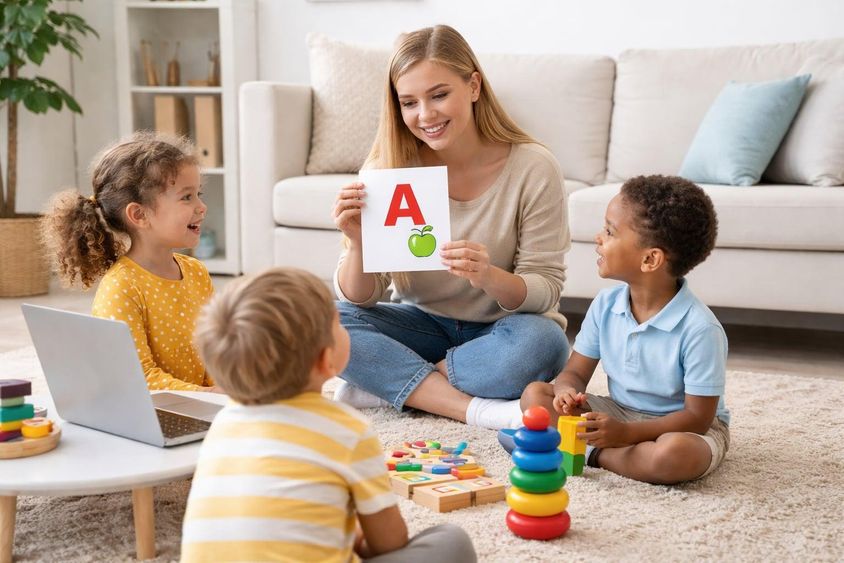
New Learning Opportunities for the Youngest: How Flexible Home Systems are Reshaping Early Education in Dubai
The educational system in Dubai has repeatedly proven its ability to respond quickly and effectively to unexpected situations in recent years. The latest development takes this flexibility to a new level, particularly for the youngest age group. The introduction of home-based, institution-directed learning opportunities for children aged 0–6 years is not merely a temporary solution but a forward-looking direction that is redefining the framework of early education.
Reimagining Early Development
Early childhood education has always required special attention. In such an early stage of life, not only is the goal to develop basic skills, but also to support a sense of security, social relationships, and emotional development. Dubai is now implementing a system that can ensure this complex set of needs in a home environment while maintaining institutional quality.
The new services are available exclusively during periods when authorities mandate distance learning. This is an important distinction because it is not a general alternative, but a targeted, regulated solution that ensures continuity during crisis situations.
Two Models, One Goal: Continuous Learning
One of the most interesting aspects is that they offer not one, but two different models, tailored to different family needs.
One system is based on smaller, home-based groups. These so-called community learning units accommodate up to eight children from different families in an approved home environment. The sessions are led by trained professionals employed by the given institution. This approach retains the sense of community, which is especially important at this age.
The other option is a much more personalized form: home activities organized for individuals or siblings. In this case, a registered educator visits the family and conducts development within the institution-defined framework. This model can be ideal for those who want to ensure greater control and personalized attention for their child.
Regulated Flexibility
One of the system's most important characteristics is that while it is flexible, it operates within strictly regulated frameworks. It is not an informal solution but a structure that sets exact requirements for all participants.
The operation's foundation includes several key elements: official licensing, detailed risk assessment, parental agreements, child protection guidelines, staff registration, continuous supervision, and appropriate insurance background. These conditions ensure that the quality and safety of home-based education do not fall short of the institutional level.
This approach sends a clear message: the location may change, but expectations do not.
The Role of Trust in the System
One of the new model's most important pillars is building trust with families. When education steps out from the institution's walls and enters homes, parents' roles also transform. They become active partners in the learning process, not just observers.
However, this partnership only works if there are clear rules and transparent operation behind it. Therefore, the system places great emphasis on communication, feedback, and collaboration. The goal is not only for the child to learn but also for families to feel safe in this new situation.
Continuity Under Any Circumstances
One of the most significant challenges in modern education is how to ensure continuity in learning during unexpected situations. Whether it is a pandemic, extreme weather conditions, or other disruptions, the system must be able to adapt.
Dubai is now presenting a model that does not just react to these situations but prepares for them in advance. Home learning opportunities are not ad hoc solutions but preplanned, controlled, and approved systems.
This is especially important for the youngest children, for whom interruptions can have a much greater impact than on older students. Stability and predictability at this age are of fundamental significance.
The Direction of Future Education
Although the system is currently only activated during specific periods, in the long run, it clearly indicates where education is heading. The boundary between physical institutions and the home environment is becoming increasingly blurred, and a hybrid, flexible model is beginning to emerge.
This perspective is not just a technological issue but a cultural shift as well. Learning is no longer an activity tied exclusively to a place but a process that can be realized in multiple spaces and forms.
In this regard, Dubai is once again one step ahead: it is not just following global trends but actively shaping them.
Quality Without Compromise
One of the most important messages that can be read from the new system is that flexibility cannot mean compromising quality. The location of education may change, but professional expectations must remain high.
The centers continue to take full responsibility for the children's development, safety, and well-being. This responsibility does not diminish even if the learning does not take place within the institution's walls.
This attitude ensures that the system is not only functional but sustainable and reliable in the long term.
Summary
The introduction of new home learning opportunities clearly shows that Dubai's educational system can adapt to changing circumstances without abandoning its core principles. The balance of flexibility, safety, and quality creates a combination that not only answers the challenges of the present but also foreshadows the educational model of the future.
For the age group of 0–6 years, this is a particularly important step, as in this stage of life, any interruption can have longer-term effects. However, the new system ensures that learning does not stop, even if circumstances change.
This mindset distinguishes truly prepared systems from others. And it seems that Dubai continues to stay at the forefront in this race.
If you find any errors on this page, please let us know via email.


