India-Dubai Flight Crisis: Tickets Scarce, Prices Soar
Flight Ticket Scarcity and Price Surge Threaten India-Dubai Travelers
The aviation corridor between the United Arab Emirates and India is one of the busiest in the world, yet it faces increasingly severe issues. Due to current capacity constraints, airlines have significant pricing advantages, especially during peak periods, while travelers increasingly encounter seat shortages and substantial ticket price hikes.
Demand Dynamics and Limited Capacity
Analyses indicate that demand already exceeds the available number of seats, and this ratio could worsen over the coming decade. According to forecasts by Tourism Economics, a subsidiary of Oxford Economics, there may be a 27% shortage in travel demand between the two countries by 2035, amounting to approximately 54.5 million unmet trips between 2026 and 2035.
The pressure is already evident: occupancy rates on major routes exceed 80%, leaving little room for passengers. If current schedules remain unchanged, Tourism Economics predicts that all available seats will be fully utilized by 2026. The Abu Dhabi-India route is the most affected, with forecasts indicating that 13.2 million passengers may be underserved in the next decade.
India's Aviation Expansion – The Main Driver
India's rapidly growing middle class, often referred to as the "flying traveler's class," has significantly increased travel demand. While in 2010, 24% of the population belonged to this category, by 2024, it reached 40%. This equates to approximately 300 million new potential air travelers. Accordingly, flight demand is expected to grow by 7.2% annually until 2035, with nearly 22 million new trips each year.
While this trend boosts airline revenues, passengers face the burden of rising prices and limited seat availability. Capacity constraints hinder competition, so during popular periods such as school holidays and festive seasons, ticket prices can skyrocket.
Dubai's Role in Global Air Travel
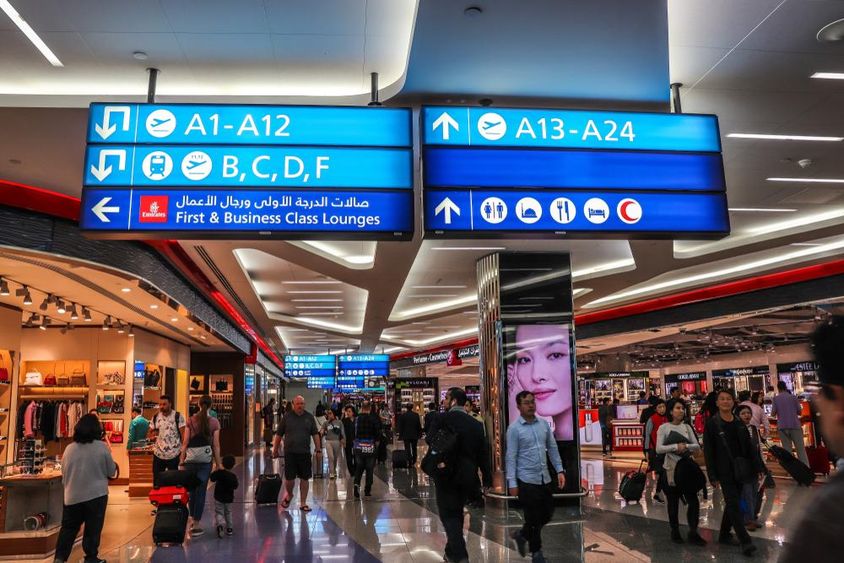
Dubai International Airport received 92.3 million passengers in 2024, with more than 12 million traveling to or from India. This means every eighth passenger at the world's busiest international airport is connected to an Indian destination.
Currently, six major airlines operate 538 weekly flights between Dubai and 23 Indian cities, a density exceptional on a global scale. Emirates remains a key player: since 1985, it has carried over 90 million passengers on the Dubai-India corridor and currently operates 167 weekly flights to nine Indian cities. Etihad Airways, based in Abu Dhabi, serves 11 Indian destinations, and about 10,000 of its 50,000 weekly authorized seats remain unused, allowing only limited expansion.
Indian airlines aren't lagging behind either. IndiGo offers approximately 220 weekly flights, Air India 82 flights, while Air India Express, the largest Indian operator, provides over 240 flights to various UAE airports. Nevertheless, demand still outstrips supply.
Changing Travel Habits and Economic Impacts
Reports from Indian travel agencies indicate that popular routes are increasingly getting filled quickly, and last-minute ticket prices are steeply rising. During school breaks and holiday periods, passengers are forced to book weeks in advance or pay significantly more for tickets.
However, problems affect more than just travelers. Tourism Economics estimates that if current capacity constraints remain, the GDP contribution of the air corridor between the two countries could grow by about 3% annually. However, if regulations were eased, this growth could reach 5.5-7%. Doubling the capacity of the Abu Dhabi-India route alone could generate an additional $7.2 billion GDP over five years, supporting over 170,000 jobs annually.
Regulation Is the Major Barrier
One of the main causes of the capacity problem is the current bilateral air transport agreement effective since 2014. It limits weekly flights to 66,000 for Dubai and 55,000 seats for Abu Dhabi at maximum. These quotas are almost fully utilized. Talks on expansion have stalled with India wanting to allocate additional flights at a 4:1 ratio in favor of its airlines, while the UAE seeks broader access to meet growing demand.
Conclusion
The current trend clearly indicates that flight connections between the two countries need to be re-evaluated. The growth in demand is unstoppable while supply cannot keep pace with changes. The prominent roles of Dubai and Abu Dhabi airports and the growing travel eagerness of India's middle class are fundamentally reshaping the region's aviation map. Without significant regulatory changes, travelers will have to pay higher prices for years, and the market could lose out on several billion dollars in opportunities.
(Sourced from a new analysis by Oxford Economics.)
If you find any errors on this page, please let us know via email.


