Gold Prices: Safety Amid Global Tensions
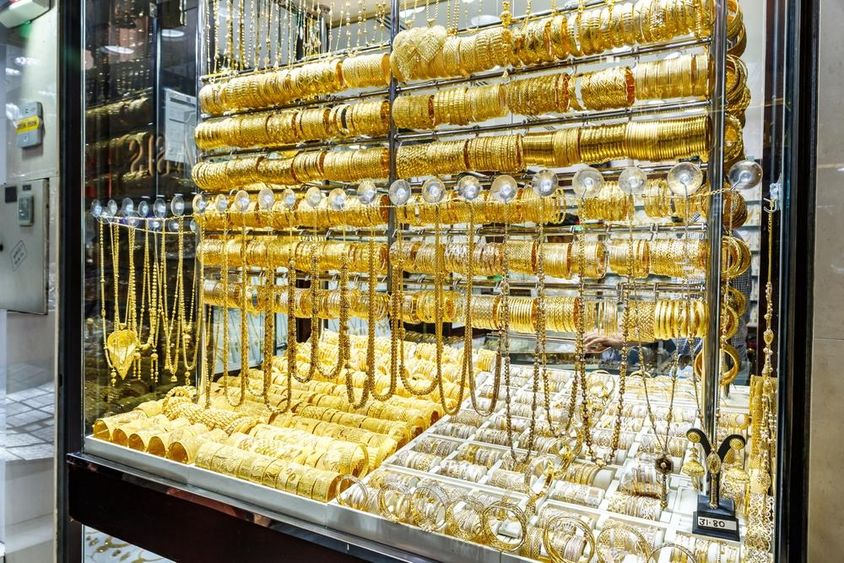
Gold and Silver Prices Dip, But Remain Safe Havens Amid Geopolitical Tensions
The prices of gold and silver slightly dropped in the middle of the week, yet global uncertainty continues to provide strong support for the precious metals market. Investor sentiment reflects both short-term profit taking and a long-term search for safety. Moderate corrections were observed in both the Dubai market and internationally, while analysts' expectations remained particularly optimistic until the end of 2026.
Slight Correction in Dubai's Gold Market
On Thursday morning, the price of 24-karat gold opened at 625.75 dirhams per gram on the Dubai gold market, compared to 628.25 dirhams the previous evening. The 22-karat gold traded at 579.25 dirhams, 21-karat gold at 555.50 dirhams, 18-karat gold at 476.25 dirhams, and 14-karat gold at 371.5 dirhams. The decline is not drastic, more of a technical correction after a strong upward phase.
Internationally, the spot price for gold was at $5,198.52 per ounce, which is a 0.17% decrease. The price of silver fell by 1.2%, hovering around 330.25 dirhams. Although the numbers show a decrease, the overall picture remains stable, especially in the current geopolitical environment.
Why Does Gold's Fundamental Strength Persist?
Various structural factors currently support the price of precious metals. A new wave of global trade disputes, rising tariffs, and geopolitical tensions are all factors generating uncertainty in financial markets. When stock markets fluctuate and bond market yields are volatile, investors traditionally turn to assets that hold their value.
In this context, gold is not just a commodity, but a strategic reserve asset. Central bank purchases have remained lively worldwide, which provides long-term support for its price. The strengthening trend of diversification—endeavors to reduce exposure to dollar and stock markets—also steers capital towards gold.
Tariff Wars and Supply Chain Risks
The new 10% global tariff imposed by the United States puts additional pressure on international trade. The measure has taken effect, and markets are already speculating that tariffs could rise further. Such a scenario could revive previous trade conflicts that have already caused significant disruptions in global supply chains.
The vulnerability of supply chains has a direct impact on inflation, corporate profits, and consumer confidence. When economic actors do not have clarity about the future, risk-averse strategies gain value. In such times, demand for gold and silver usually increases, even if short-term price fluctuations are observed.
Geopolitical Negotiations and Risk Premium
Market attention is currently focused on the resumption of talks between Washington and Tehran. Although the parties involved have expressed an intention to negotiate, the path to a final agreement remains fraught with obstacles. A potential failure in negotiations could suddenly increase regional risk, redirecting capital towards safe-haven assets.
In Eastern Europe, instability due to armed conflict persists, while in Latin America, increasing political uncertainty is noticeable. These factors together create a global environment where investors are inclined to pay a premium for security. This risk premium is also reflected in the price of gold.
Bold Forecasts until 2026
A major American bank has significantly raised its long-term gold price forecast: the new target price is $4,500 per ounce, with a potential level of $6,300 by the end of 2026. This suggests an extremely strong, structural upward trajectory.
Several factors underpin such forecasts. Firstly, the global debt level is historically high and could generate inflationary pressure in the long term. Secondly, the increase in central banks' gold reserves provides sustained demand-side support. Thirdly, the geopolitical bloc formation and fragmentation of the financial system push countries to accumulate alternative reserve assets.
Silver: Undervalued Sidekick or Standalone Story?
Silver often follows gold's movements, but it has its own dynamics due to its industrial applications. The energy transition, the manufacture of solar panels, and the spread of electric vehicles boost industrial demand. This could provide a stable foundation for silver in the long term, even if greater short-term volatility is observed.
The current 1.2% drop is more of a technical correction. If gold remains in a sustained upward trend, silver could also benefit from increased investor interest.
Short-term Movements, Long-term Trends
Thus, the current price decline does not necessarily signal a trend reversal. It is rather a consolidation phase in which the market is re-pricing risks. The combination of global tariff tensions, geopolitical uncertainties, inflation prospects, and structural diversification continues to support precious metals.
The slight retreat observed in the Dubai market can be viewed as an opportunity for those thinking long-term. The role of precious metals in portfolios is not only speculative but of strategic significance. As long as global political and economic uncertainties persist, the demand for gold and silver is unlikely to disappear significantly.
Overall, the current market situation presents a classic paradox: short-term prices are falling, while the fundamental background is strengthening. The question is not whether there will be volatility, but how investors will assess risks in the coming years. If global tensions do not ease, the path to higher price levels for precious metals remains open.
If you find any errors on this page, please let us know via email.


