Gold Jewelry Demand Plummets in UAE
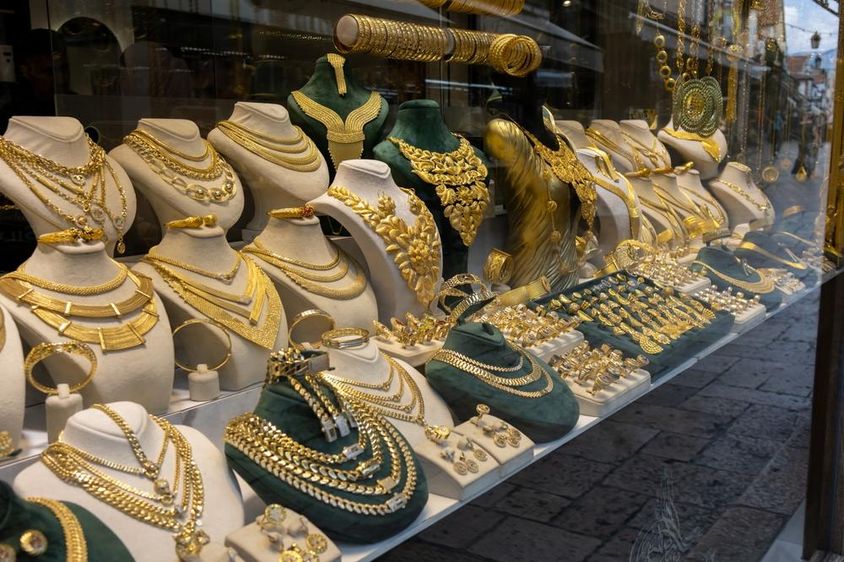
The Demand for Gold Jewelry Plummets in the UAE
The gold market in the United Arab Emirates has always played a significant role in the region's economy and daily life. Dubai's name has long been synonymous with gold trading, luxury jewelry, and shoppers from around the world who often visit the emirate primarily for gold. However, the first quarter of 2026 brought a significant shift in this market, as the demand for gold jewelry fell to a nearly six-year low due to the escalating Middle Eastern conflict.
According to the latest data, the volume of gold jewelry purchases decreased by 40 percent compared to the same period last year. This is considered a significant downturn in a country where gold is not only an investment tool but also holds cultural and social importance. In the first three months of the year, jewelry demand reduced to 4.7 tons, compared to 7.9 tons during the same period the previous year.
The outbreak of the regional military conflict at the end of February, which escalated tensions between the United States, Israel, and Iran, primarily led to the downturn. During March, Dubai's gold market visibly slowed down, with a significant number of buyers opting to wait and see.
Dubai traditionally heavily relies on tourism, which is particularly true for gold trading. Tourists account for a significant portion of gold purchases, especially around the Gold Souk area, home to one of the world's best-known gold markets. However, due to the conflict, many travelers postponed or canceled their Middle East trips, directly impacting jewelry store sales.
Traders have also reported a drastic decline in spontaneous purchases in recent months. Previously, many tourists or local residents bought jewelry as gifts for weddings or family events, but now, many are holding off on these expenses due to the uncertain economic and geopolitical situation.
Investment Gold Thrives
While the demand for gold jewelry plunged, another segment witnessed significant growth. Demand for gold bars and coins rose by 27 percent in the first quarter, reaching 4 tons.
This shift clearly indicates a change in buyer mentality. Many no longer view gold as a luxury item or status symbol, but rather as a classic safe haven and secure investment. Due to the Middle Eastern conflict, inflation concerns, and uncertainty in international financial markets, more people are opting for simpler, more easily liquidated investment gold products.
Dubai remains a strong player in this segment. Traders in the emirate report that many buyers are specifically purchasing gold bars or coins for long-term wealth preservation, viewing them as safer during a period when stock markets and other investment forms are highly volatile.
Gold Prices Remain Extremely High
International gold prices have shown highly volatile movements in recent months. The price of gold per ounce closed at $4,715.6 on Sunday, which remains near historic highs. In Dubai, the price of 24-karat gold per gram was around 568.25 dirhams, while 22-karat gold was approximately 526.25 dirhams.
Such high price levels themselves dampen enthusiasm for jewelry purchases. The price of a traditional gold necklace or bracelet has often risen to the point where buyers prefer to wait. This is especially true for larger gold purchases related to family events.
Some Dubai stores are trying to adapt to the new situation. Increasingly, traders offer lighter designs or installment payment options to maintain demand. However, the premium luxury jewelry market has noticeably slowed.
Global Demand Declines as Well
The decline is not only seen in the UAE. Global demand for gold jewelry also dropped by 23 percent on an annual basis. Experts say high prices and geopolitical tensions have made buyers cautious worldwide.
Asian and Middle Eastern markets are particularly sensitive to changes in gold prices, as gold in these regions is not only an investment but also a traditional family value preservation tool. When prices rise rapidly, many families choose to postpone jewelry purchases.
International organizations indicate that no significant recovery is expected in the gold jewelry market in the coming months. Buyers are likely to continue seeking gold for investment rather than as a fashion or luxury item.
Increasing Uncertainty in the Middle East
Markets are significantly concerned that the Middle Eastern conflict could further escalate. The tensions around the Strait of Hormuz still pose serious risks to global trade and the oil market. Consequently, investors react very sensitively to any geopolitical developments.
Analysts suggest that gold prices could come under strong pressure again in the short term. Although gold is traditionally seen as a safe haven in crisis situations, the current situation is more complex. Several investors have already begun profit-taking after previously record-high prices, while concerns over inflation and interest rate expectations significantly influence the market.
Experts also warn that capital inflows into gold from international investment funds may slow down. If the conflict persists for a longer time, it could further increase market uncertainty.
Dubai's Gold Market Remains Influential
Despite the significant declines in current numbers, Dubai remains one of the world's most crucial gold trading centers. The emirate's infrastructure, taxation environment, international connections, and tourism appeal continue to provide a stable long-term foundation for the gold market.
The current period is more an adaptation phase, where consumer habits quickly change due to geopolitical events. The focus is increasingly shifting towards gold for investment purposes, while the jewelry market is experiencing a tougher time.
In the coming months, much will depend on whether the tensions in the Middle East can be alleviated. If the region becomes more stable, tourism could quickly rebound, once again boosting Dubai's legendary gold market. For now, however, caution dominates the market, as clearly seen in the drastic decline in demand for gold jewelry.
If you find any errors on this page, please let us know via email.