UAE's Economic Surge in 2025
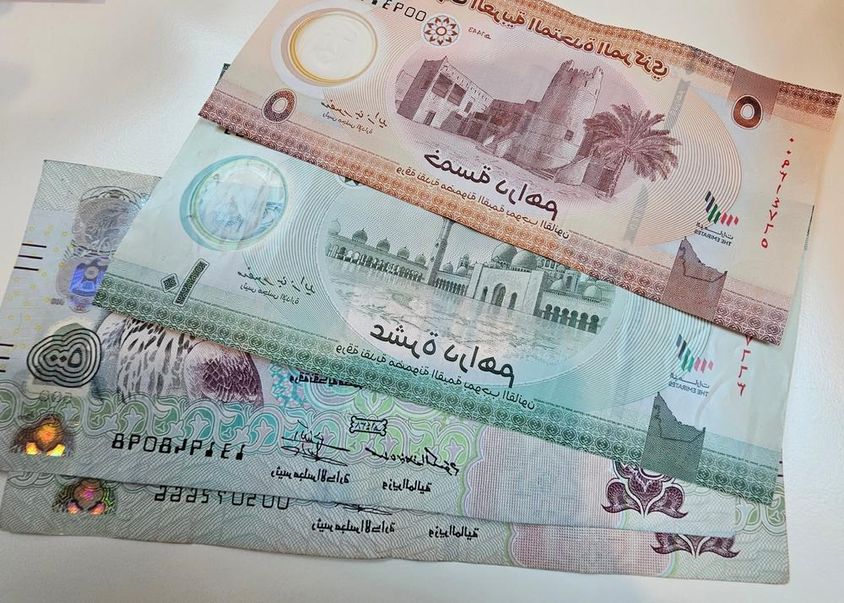
Strong Growth in UAE Economy by End-Year 2025
The UAE's economy demonstrated strong performance again in 2025, highlighting that the country's economic model is increasingly less reliant solely on oil revenues. According to recent data, the gross domestic product expanded by 6.2 percent, reaching a value of 1.9 trillion dirhams. This not only signifies spectacular growth but also shows that the country’s long-term development strategy is yielding tangible results.
The non-oil economic performance was even more impressive. The non-oil GDP grew by 6.8 percent, reaching 1.5 trillion dirhams. This is a particularly important figure as the UAE has been working for years to establish a broader economic foundation. The goal is not only to maintain its leading regional role but to become an increasingly stronger, more resilient, and competitive player in the global economy.
Non-oil Sectors Propel the Economy Forward
One of the key messages from the 2025 growth data is that the UAE's economic transformation is not a theoretical plan but an already functioning process. The expansion of non-oil sectors indicates that the country is successfully building on sectors that can ensure sustainable long-term growth.
The most robust performances were seen in construction, financial and insurance activities, and real estate. These sectors have played an important role in the country’s development in recent years and became even more prominent in 2025. The growth in construction is linked to infrastructure developments, new residential and commercial projects, and the UAE’s continued attractiveness as a destination for investors, businesses, and foreign professionals.
The strengthening of the financial and insurance sector is also a significant signal. It suggests that the country is becoming an increasingly important financial hub where the demand for banking services, investment opportunities, insurance solutions, and wealth management activities continues to grow. Dubai and Abu Dhabi play a key role in this process as they operate as significant international business centers.
Real Estate Market Remains a Key Player
The real estate sector remained one of the standout performers in the UAE economy in 2025. There is a continuous demand for residential, commercial properties, premium developments, and mixed-use projects across the country. Dubai is a particularly strong player in this area, as the city continues to attract foreign buyers, investors, and entrepreneurs.
Several factors support the growth of the real estate market. The country’s stable business environment, modern infrastructure, favorable tax conditions, high quality of life, and global reach all contribute to the UAE's continued appeal. The growing population, strengthening tourism, and expanding corporate presence also invigorate the real estate market.
The performance of the real estate market is important as it influences many other sectors. Increased construction results in job creation, and boosts demand for construction materials, services, interior design solutions, and financial products. Thus, the real estate sector is not strong on its own but drives a broader economic chain.
Trade and Manufacturing Provide a Stable Foundation
While construction, the financial sector, and the real estate market showed the strongest growth, trade and manufacturing continue to account for the largest portion of non-oil GDP. This is crucial as these sectors ensure the stable foundation of the economy.
The UAE's geographic location is a unique advantage. The country is situated between Asia, Africa, and Europe, naturally functioning as a hub for trade. Ports, airports, logistics centers, and free trade zones create a network that makes the country competitive on a global scale.
The strengthening of manufacturing is also an important part of economic diversification. The UAE aims to be strong not only in services and trade but also in industrial production, technological developments, and the manufacture of exportable products. This can reduce vulnerability to external shocks in the long run and create a more stable economic structure.
Role of the 'We the UAE 2031' Vision
Economic growth is closely linked to the 'We the UAE 2031' vision, which is one of the defining strategic frameworks for the next decade of the country. The program aims for the UAE to become one of the world's most developed, competitive, and innovative economies.
The 2025 data shows that the country is on the right path toward these goals. The strong growth of non-oil GDP, the expansion of key sectors, and the overall GDP rising to 1.9 trillion dirhams all indicate that the development direction is working. The UAE is not building on short-term growth waves but is consciously reshaping its economic structure.
The vision’s central elements are a knowledge-based economy, innovation, investment promotion, global competitiveness, and sustainable development. This means the country not only aims to build a larger economy but a system capable of adapting to global changes in the long term.
Strong Momentum Expected in 2026
Forecasts for the following year also paint a favorable picture. According to a report published in March by the UAE Central Bank, GDP is expected to grow by 5.6 percent in 2026. This means that the country's economy could maintain its momentum even after the strong performance of 2025.
The growth is expected to be driven primarily by the non-oil sector. This is particularly important given regional uncertainties. The recurrent tensions in the Middle East, global trade changes, and energy price fluctuations are all factors that could impact economic prospects. However, the UAE is becoming stronger precisely because its economy is less dependent on a single revenue source.
According to the central bank's forecast, the UAE could surpass the GCC's average growth rate of 4.8 percent in 2026. This represents a strong position in regional comparison. Based on the report, the UAE could be one of the fastest-growing economies in the region, second only to Qatar, whose economy is expected to grow by 6.1 percent.
What Does This Mean for Businesses and Investors?
The economic performance of the UAE is not just statistical data but an important message for businesses, investors, and workers. A GDP growth of 6.2 percent indicates that economic activity remains strong in the country, expansion is observed in many sectors, and the market remains attractive for international players.
For businesses, this could mean more stable demand, new opportunities, and a more favorable business environment. For investors, strong economic growth can provide confidence, especially in areas like real estate, financial services, trade, logistics, technology, and tourism.
Dubai plays an especially important role in this story. As a global business center, tourist destination, and a powerhouse in the real estate market, the city contributes significantly to the country’s economic performance. However, the UAE’s success is not solely Dubai’s success but the result of the coordinated development model of the entire country.
Stable Growth in a Changing World
Based on the 2025 economic data, the UAE was able to strengthen during a period when the global economy faced numerous challenges. Geopolitical tensions, changes in energy prices, international trade uncertainties, and fluctuations in financial markets created a difficult environment for many countries. Yet, the UAE remained on a growth trajectory.
One reason for this is conscious economic policy. The country has long been building the foundations that allow for diversified growth. Free trade zones, advanced infrastructure, international aviation connections, modern financial centers, flexible business regulations, and an investor-friendly environment all contribute to making the UAE’s economy more resilient.
The UAE Economy Has Reached a New Level
The 6.2 percent economic growth in 2025 and the GDP of 1.9 trillion dirhams clearly indicate that the UAE economy has reached a new level. The rise of non-oil GDP to 1.5 trillion dirhams is especially significant, proving that the country’s economic future no longer solely depends on the energy sector.
Construction, the real estate market, financial and insurance activities, trade, and manufacturing collectively form a strong economic structure that can support growth in 2026 as well. Based on the central bank's forecast, the UAE can continue to be one of the strongest economic players in the GCC.
A clear direction emerges from the numbers: the country is not just growing but transforming. The UAE’s goal is to strengthen its position in the world as a modern, competitive, open, and multifaceted economy. Based on the 2025 results, this process is no longer just a plan but a reality.
If you find any errors on this page, please let us know via email.


