Dubai's Workforce Stability in Crisis
Stability in Uncertain Times: A Corporate Decision's Message to Dubai's Labor Market
Economic cycles inherently consist of fluctuations, but there are times when uncertainty manifests not just in figures but in everyday decisions. The current tensions in the Middle East create precisely such a situation. In these times, how companies react becomes highly significant: do they retreat, cut costs, or on the contrary – communicate stability and build trust?
A major Dubai-based corporation has sent a clear message: it does not plan to lay off employees and guarantees timely payment of salaries. At first glance, this might seem like an internal corporate decision, but it actually conveys much more. Such a declaration can impact the entire region's labor market and business mindset.
Trust as a Strategic Tool
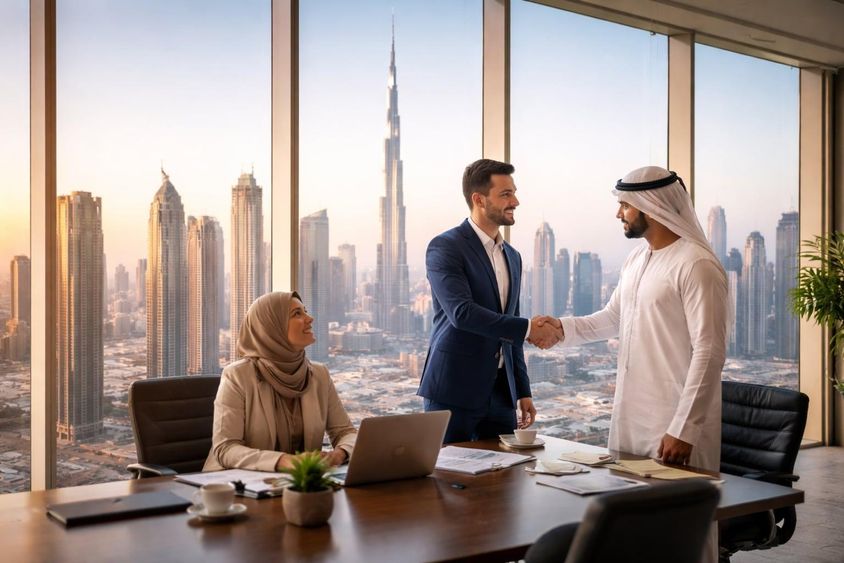
When a company declares that it will not lay off workers amid a tense geopolitical situation, it is not merely an HR decision. It's strategic communication. To employees, it sends the message: you are not a cost line, but an asset. To business partners, it says that operations are stable and the company is not panicking.
Dubai's economic model is fundamentally built on trust. It is not by chance that the city has become a global center over the past decades. Investors, entrepreneurs, and workers choose it because they seek a stable environment in an often unpredictable region. A corporate move like this further strengthens that image.
Workforce as an Investment, Not a Cost
One classic short-term crisis management tool is downsizing. It's quick, visible, and brings immediate cost reduction. However, in the long term, it comes at a high price. Recruitment, training, and onboarding all require time and money. Building a well-functioning team takes years of work.
Dubai companies are increasingly recognizing that the workforce is not just a resource but a strategic tool. A skilled, loyal team not only operates the company but also creates a competitive edge. This is particularly true in industries like real estate development, construction, or services, where quality and reliability are crucial.
When a company retains its people even in difficult times, it is essentially an investment in the future. Not only is the knowledge retained in-house, but loyalty is also strengthened.
Lessons from the Covid Era
This is not the first time Dubai companies have made decisions to preserve jobs during a crisis. During the previous global pandemic, many companies implemented temporary salary reductions, which they restored once the situation stabilized.
This experience is now resurfacing. Companies have seen that a global shock does not necessarily lead to a permanent downturn. It's more about temporary pressures, which can be followed by a quick rebound.
Similar thinking appears in relation to the current conflict. Many companies view the situation not as a structural crisis but as a temporary disruptive factor. This leads to entirely different decisions.
Flexibility Instead of Layoffs
An interesting trend can be observed: companies are not laying off but reorganizing. Employees are being redirected to other projects, training programs are initiated, or even the taking of leave is encouraged.
This approach is much more sophisticated than classic crisis management. It does not dismantle the organization but allows it to adapt. Flexibility becomes the key word.
One of Dubai's greatest economic strengths is precisely this: rapid adaptation. The city has repeatedly proven that it can quickly find new directions, whether in tourism, real estate, or the technology sector.
Regional Impacts and Global Connections
The current geopolitical situation is not a localized phenomenon. Its impact extends to energy prices, logistics, and investor sentiment. In such an environment, every corporate decision reaches beyond itself.
When a Dubai company communicates stability, it also signals to international markets. It conveys that the region is functioning, the economy has not come to a halt, and business continues.
This is particularly important in a period when investors are sensitive to risks. Stable operations and predictable decisions help maintain trust.
The Advantage of Long-term Thinking
Short-term profit maximization often conflicts with long-term value creation. This is particularly evident in a crisis situation. Companies focusing solely on immediate cost-cutting often lose the foundations for future growth.
Conversely, companies that can think long-term emerge stronger from hard times. They retain their teams, knowledge, and market position.
Dubai's business environment is increasingly moving in this direction. The focus shifts from mere survival to sustainable growth.
What Does This Mean for Workers?
For employees, one of the greatest values is a sense of security. In an uncertain world, the knowledge that one's job is stable makes a significant difference. Not only from a financial perspective but mentally too.
Such corporate decisions strengthen loyalty. People remember how the company treated them during difficult times. This, in the long run, reflects on performance, motivation, and corporate culture.
Summary: More Than a Corporate Decision
At first glance, it appears to be a simple announcement: no layoffs, salaries are on time. But in reality, it's a much deeper message.
It indicates that Dubai's economic model is not just about growth but also about stability. That companies are capable of thinking long-term and do not panic at the first sign of trouble.
Such an attitude not only defines the future of a company but shapes the economic image of an entire region. And perhaps most importantly: trust is not only buildable, but it can also be preserved – even in the toughest times.
If you find any errors on this page, please let us know via email.