Dubai's Urban Growth: Planning and Reality Clash
Dubai's Urban Growth: Planning and Reality Clash
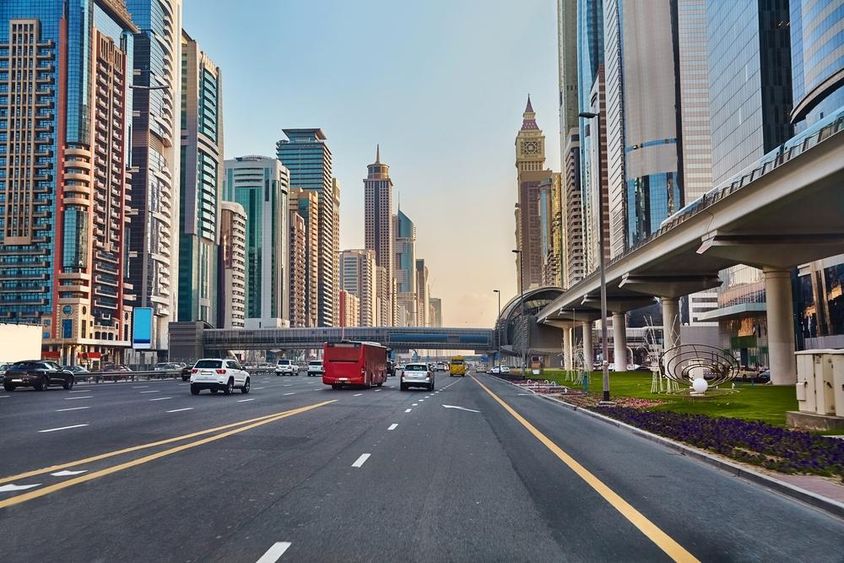
The unprecedented development in the United Arab Emirates has opened a new era in the relationship between urban planning and transportation policy. The urban densification observed in the country, particularly in Dubai, challenges the sustainability of traditional urban development models. According to a recent study by the Al-Futtaim Group, it is essential that mobility planning should not be an afterthought but rather emphasized from the earliest stages of urban development.
Liveability vs. Accessibility
Many of Dubai's communities serve as examples of modern, sustainable urban planning. Green spaces, walkability, and smart city solutions all contribute to quality of life. However, these livable areas are often difficult to access—especially during peak hours. This paradox, where a community is optimal internally but isolated, highlights the tension between urban transport and the built environment.
The study suggests that the current model—where communities are first built, followed by the development of road networks and public transport—is not sustainable in the long term. The system cannot keep pace with Dubai's explosive growth, especially given the city strategy up to 2033, which aims for doubled GDP and population.
Commuting Challenges
Al-Futtaim surveyed 2,000 residents across the UAE to explore the factors that define liveability for them. While respondents had varying preferences—some mentioned affordability, others cited green spaces or safety—everyone agreed on one major issue: traffic congestion.
Nevertheless, only 33% of those surveyed regularly use public transport. The most common reason cited was the lack of available options near their residences. Those who do use buses or the metro often complain about inadequate schedules.
Dubai's transport infrastructure has undoubtedly improved—consider the metro network operational since 2009—but the backbone system is no longer enough. There is a need for finer network coverage, or "capillarity," that reaches smaller communities and residential areas.
Electric Vehicles and Charging Hurdles
The research uncovered another important area: the rise of electric vehicles. More than half of the respondents plan to purchase a new car in the next two years, with 24% intending to buy an electric or alternative energy vehicle. This indicates that UAE residents are open to green mobility.
However, the biggest barrier to widespread adoption of electric cars remains the lack of charging infrastructure. Range anxiety has taken a backseat, but the lack of charging possibilities at home, work, or on the go poses a significant obstacle.
Many people experience that their residential building does not permit the installation of charging stations, making the transition difficult. The current situation resembles the early days of the internet when broadband access was not universally available. The solution lies in public-private cooperation—similar to how the telecommunications sector evolved.
Urban Planning with Artificial Intelligence
Looking ahead, digitalization offers new opportunities in urban planning. AI-supported models, such as digital twins, allow for the pre-testing of urban areas before construction begins. This enables decision-makers to foresee the impact of a new road segment or toll on traffic.
This is particularly important for Dubai, where the time horizon is not ten years but much shorter. Retrofitting is costly, so it is critical for municipalities, real estate developers, and transport authorities to make coordinated decisions early on.
Summary
Dubai's urban development is impressive but not without challenges. Maintaining urban liveability requires that transport planning not be a reactive measure but an integrated part of urban development. Electric vehicles, intelligent modeling, and extensive data usage can all contribute to making Dubai not only spectacular but also livable for future generations.
Mobility is no longer just a transportation issue. It is a fundamental condition for social cohesion, economic development, and ecological sustainability. If Dubai truly wants to double its GDP and population in the next decade, this realization must become central to new urban policy strategies.
(Source: Based on the Al-Futtaim study.)
If you find any errors on this page, please let us know via email.


