Dubai's New Building Safety Law
New Law Boosts Building Safety in Dubai
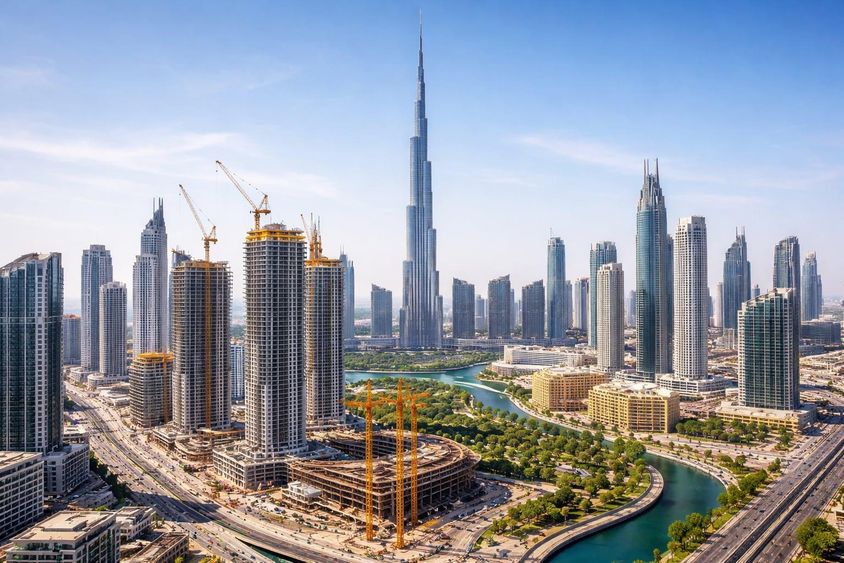
Dubai, one of the fastest-growing cities in the United Arab Emirates, has transformed its skyline radically over the past decades. The continuous construction of skyscrapers, residential complexes, business centers, and tourist facilities has created a unique urban environment on a global scale. However, this rapid development increasingly demands attention to building safety, quality, and long-term sustainability.
This goal is served by a new law issued by Sheikh Mohammed, the Vice President and Prime Minister of the United Arab Emirates and the ruler of Dubai. The legislation aims to enhance the quality, safety, and sustainability of buildings across the emirate. The regulation applies not only to new constructions but to all existing buildings, including those in private development zones and free economic areas.
Why was new regulation needed?
In recent years, Dubai has experienced rapid growth unmatched by most cities worldwide. Hundreds of residential towers, luxury villas, hotels, and business complexes have been built in a short time. Although modern construction technologies are highly advanced, such rapid urbanization inherently raises questions of long-term maintenance and safety.
The new law aims to ensure the structural integrity and proper functioning of buildings throughout their lifespan. The legislation strives to provide residents with a more comfortable and safer environment while preserving the architectural identity of the city.
The regulation focuses on reducing accidents, improving building maintenance levels, and preserving the value of properties in the long run.
The law applies to all buildings
A significant aspect of the legislation is that it makes no distinctions between buildings. The provisions apply to all buildings throughout Dubai, regardless of whether the particular property is located in a private development zone, free economic area, or traditional urban sector.
This means that major business districts, financial centers, residential areas, and tourist complexes will all operate under the same quality and safety rules.
The law covers not only new constructions but also buildings completed years or even decades ago. This step is important because it allows for the establishment of uniform safety and quality standards across the entire city.
Digital system to monitor buildings
One of the key elements of the new regulation is the introduction of a modern digital management system. This system allows the tracking of building conditions, maintenance, and technical characteristics within a central database.
The goal of the digital platform is to create a unified data set for each building, containing structural information, maintenance history, and inspection results.
This solution benefits not only authorities but property owners and residents as well. Such a system allows potential problems to be identified quickly, enabling necessary repairs to be made in a timely manner.
Mandatory quality and safety certification
One of the most important innovations of the law is the introduction of a quality and safety certificate. This document verifies that a building meets the technical and safety requirements set by the law.
The certificate can only be issued after a licensed engineering firm or expert organization conducts a comprehensive inspection of the building. The inspection examines structural conditions, technical systems, and overall building operation.
This system ensures that every building undergoes regular professional review.
What does this mean for property owners?
The new law defines clear obligations for building owners. After the completion of construction, owners are required to obtain the quality and safety certificate.
If inspections reveal any faults or issues, the owner is obliged to rectify them. After repairs are completed, reassessment can occur to ensure the building meets the requirements.
The regulation also applies to condominium owners, ensuring that individual apartment owners are part of maintaining building safety.
Certifications' validity
The quality and safety certificate is not valid indefinitely. Its validity period depends on the age of the building.
For buildings less than 40 years old, the certificate is valid for ten years. For buildings older than 40 years, this period decreases to five years.
Once the certificate expires, the building must be inspected again, and only after the new inspection can the validity be extended.
This system ensures regular review of building conditions.
Strict fines for violators
The new law also includes stringent sanctions for those who do not comply with the regulations.
Fines can range from 100 dirhams to 1 million dirhams. If a violation occurs again within two years, the fine can increase up to 2 million dirhams.
The aim of the strict penalties is clear: to ensure that every owner takes building safety and maintenance seriously.
Safety considerations amidst current geopolitical conditions
The introduction of the law coincides with a period of heightened security tensions in the region. The United Arab Emirates has recently intercepted drones and other aerial threats, some of which caused damage near residential areas.
This situation highlights the importance of structural security and resilience in buildings during unexpected events.
Therefore, the new regulation serves not only everyday safety but also contributes to making buildings more resilient against external impacts.
The city's future: a safer and more sustainable Dubai
Dubai is already one of the world's most modern cities, where architectural innovation and technological development go hand in hand. The new law represents another step towards ensuring that the city remains safe, sustainable, and livable in the long term.
The regulation aims not only to improve building quality but also to increase the safety and comfort of residents. Digital systems, mandatory inspections, and strict rules all contribute to continuing Dubai's urban development as a role model for other cities worldwide.
The new law carries a clear message: A modern city consists not only of spectacular buildings but also of infrastructure that is safe, reliable, and sustainable for its inhabitants in the long run.
If you find any errors on this page, please let us know via email.


