Dubai's Traffic Challenges and Future Strategies
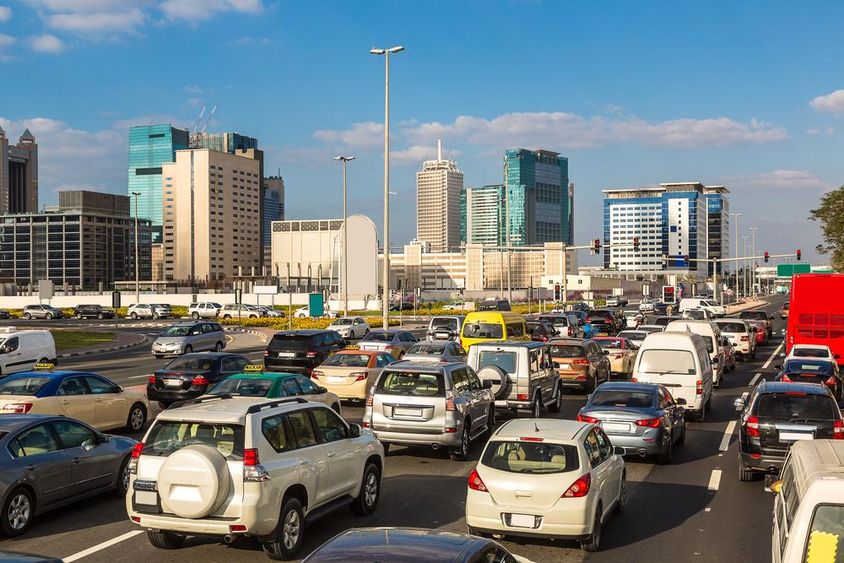
Dubai's Traffic in 2025: 45 Hours in Congestion and Future Plans
The rapid economic and social development of the United Arab Emirates has brought not only new opportunities but also significant transportation challenges. In 2025, drivers in Dubai spent an average of 45 hours in traffic jams—ten hours more than the previous year. This is not just about time lost: increasing traffic congestion also leads to fuel wastage, environmental stress, and heightened stress for the population. Behind the problem lies a growing population, an increasing number of vehicles, and the city's urbanization dynamics.
Population Growth and Vehicle Traffic: The Main Causes of Congestion
According to Worldometers, by November 2025, the UAE's population reached 11.48 million, marking a two-million increase over five years. Simultaneously, the number of vehicles has drastically increased, especially in Dubai and Abu Dhabi. The increased vehicle traffic has inevitably led to a significant rise in congestion: according to Inrix's 2025 global traffic report, drivers in Dubai lost 45 hours in traffic, while those in Abu Dhabi lost 29 hours.
Similar trends can be observed in other emirates: Umm Al Quwain's residents lost 28 hours, Al Ain's drivers 17, while in Fujairah city, the annual loss was eight hours. Congestions are particularly severe during morning and afternoon rush hours when peak speeds in downtown Dubai are only 29 miles per hour, compared to 33 miles per hour in 2023.
Billion-Dollar Transportation Investments in Hope of a Solution
Over the past two decades, the Dubai government has already invested huge sums—about 175 billion dirhams—in transportation development. Thanks to this, the Dubai Metro and Dubai Tram, over 25,000 lane kilometers of new roads, 1,050 bridges and tunnels, as well as 560 km of bicycle tracks and 177 pedestrian crossings have been established. According to a study by McKinsey & Company, these investments saved 319 billion dirhams in fuel and time costs.
However, the challenges have now reached a new level, prompting the federal government to prepare even more ambitious plans. At the 2025 UAE Government Annual Meeting, it was announced that by 2030, a total of 170 billion dirhams worth of road and transportation projects will be implemented. The goal is to increase the efficiency of federal roads by 73 percent and expand traffic capacities.
Lane Expansions and New Highways Among Plans
Among the planned developments, the expansion of the Etihad Road holds a prominent place, adding three new lanes in each direction for a total of 12 lanes, which will increase capacity by 60%. The Emirates Road will become ten lanes, resulting in a 65% capacity increase and a 45% reduction in travel time. The Sheikh Mohammed bin Zayed Road will also expand to ten lanes, improving through traffic efficiency by 45%.
Additionally, a brand-new fourth federal highway is planned, which would be 120 kilometers long with 12 lanes, capable of handling up to 360,000 trips per day. This project could ease traffic congestion not only in Dubai but throughout the entire country.
Dubai: Noticeable Global Congestion Issues
In international comparison, Dubai still does not rank among the worst-affected cities, but the trend is concerning. According to the 2025 Inrix Global Traffic Scorecard, the busiest city this year was again Istanbul, where people lost 118 hours in traffic, 12% more than the year before. The list also includes major cities such as Mexico City, Chicago, New York, Philadelphia, London, Paris, and Los Angeles.
In Dubai, the traffic issues are attributed not only to population growth but also to the high rate of personal vehicle use, which remains exceptionally high. While the Dubai Metro and Tram help significantly as public transit alternatives, daily commuting largely still happens by car.
The Future of Mobility: Smart City, Smart Transportation?
In Dubai's transportation policy, intelligent technologies are playing an increasingly vital role alongside infrastructure. Smart urban transportation systems (ITS), traffic monitoring sensors, real-time navigation data, and the optimization of traffic signals are all aimed at making existing infrastructure work more efficiently.
In the future, further investments are expected in the expansion of electric car charging networks, testing urban drone taxis, and introducing autonomous vehicles. All these could contribute in the long run to making Dubai not only an icon of luxury and modernity but also a model of sustainable mobility.
Summary
The year 2025 presented traffic challenges for Dubai and the entire UAE. The 45 hours of time loss in Dubai's traffic is a warning sign to which the government is responding with determined and comprehensive infrastructural developments. The road expansions, new highway plans, and smart transportation systems all aim to ensure the city can continue to meet the mobility needs of its dynamically growing population.
The question remains whether these investments can keep pace with the city's growth rate and when Dubai will reach a point where transportation becomes an opportunity, rather than an obstacle, in the creation of a livable urban environment.
(Source of the article based on Inrix's 2025 global traffic report.)
If you find any errors on this page, please let us know via email.


