Dubai's Skies Open Again with Emirates Flight
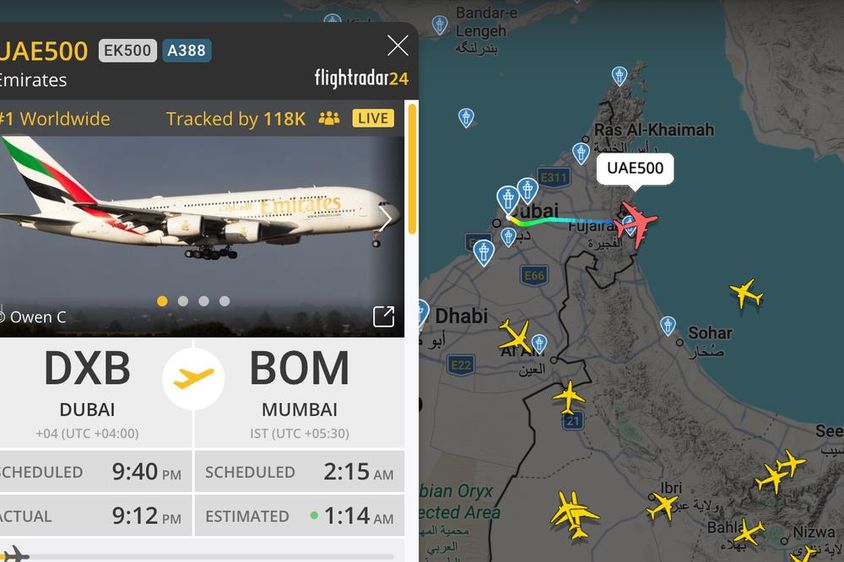
Dubai's First Emirates Flight Takes Off After Airspace Closure
Air travel has restarted in Dubai.
Since Saturday, an extraordinary situation paralyzed the region's air traffic after the airspace was temporarily closed for security reasons. The decision had an immediate impact on international flights, transit passengers, and cargo traffic. Dubai, one of the world's most important global hubs, had been quieter than usual for several days: runway traffic significantly decreased, schedules were disrupted, and uncertainty dominated the transit terminals.
Now, the turnaround has arrived. Following the airspace closure since Saturday, Emirates' first scheduled flight has taken off. The EK500 flight to Mumbai marks a new chapter in the restoration process and sends a clear signal to the market: Dubai is operational again.
Why is this flight crucial?
Dubai is not just a metropolis but a global transport gateway between Europe, Asia, Africa, and Australia. Airlines operating here launch hundreds of flights daily worldwide. When the airspace is closed, its impact reaches far beyond the region: triggering a domino effect on international schedules.
The selection of the flight to Mumbai is no accident. The United Arab Emirates and India have strong economic, business, and tourism ties. Millions of passengers travel annually between the two regions, and this route is one of the busiest in the entire network. The restart of the EK500 flight is not just a technical step but a strategically significant decision.
The symbolic role of the Airbus A380
The flight was operated by one of Emirates' Airbus A380s. This aircraft type is a defining element of the airline's identity, as well as one of the world's largest passenger planes. Its double-deck design, enormous capacity, and long range make it ideal for high-traffic routes.
The fact that, after the airspace closure, not a smaller but an A380 was the first to depart sends a strong message. The airline demonstrates that it is not considering a cautious, gradual restart but is ready to return to full capacity normal operations. The decision also indicates that significant passenger traffic is expected between India and Dubai.
Passengers' situation during the closure
During the days of the airspace closure, thousands of passengers were forced to wait. Many were rebooked on other flights, while others postponed their travels to a later date. Airport operators and airlines worked in coordination to minimize disruptions, but uncertainty was naturally felt.
The restart does not mean everything returns to normal immediately. Restoring schedules takes time, and processing backlogs can take several days. However, the first takeoff is always a psychological turning point: it signals that the system is moving again.
Economic impacts and business consequences
Dubai's economy relies significantly on international relations, tourism, and business travel. Therefore, the temporary airspace closure was not just a transportation issue but an economic factor as well. Hotel bookings, conferences, business meetings, and logistics shipments were all affected.
The resumption of flights is a stability message to the market. For investors, international partners, and tourists, it is crucial that Dubai responds quickly and systematically to extraordinary situations. The first takeoff shows that the system can adapt and return to normal operations in a short time.
Security aspects and protocols
Lifting an airspace closure follows strict security checks. Coordination between aviation authorities, airport management, and airlines is crucial at such times. The preparatory work behind the first flight includes replanning air routes, checking navigation systems, and fully preparing ground services.
Operating an Airbus A380 requires particularly precise organization, given its large passenger capacity and significant logistical background work. The smooth launch indicates that the infrastructure is ready for the full return of traffic.
What does this mean for the coming days?
After the first flight, the number of operational routes is expected to gradually expand. Airlines typically prioritize high-traffic, strategically significant routes, followed by restoring smaller capacity flights.
For passengers, staying informed is the most important advice. Although the situation appears to be stabilizing, schedule changes may still occur during the transitional period. Flexibility and prior verification are key now.
Dubai's position on the global map
Over the past decades, Dubai has consciously built its position as a hub of international air travel. Modern airport infrastructure, strategic geographical location, and a strong airline background have all contributed to making the city one of the world's busiest hubs.
For such a center, rapid response and maintaining stable operations are fundamental expectations. The takeoff of the EK500 flight was not just a plane's departure, but the first, visible sign of normalization.
Summary
The airspace closure since Saturday posed a significant challenge for the region, but recovery has begun swiftly. The launch of the EK500 flight to Mumbai with an Airbus A380 is a powerful message: Dubai is open again, air travel has resumed, and the restoration of global connections has commenced.
The coming days will focus on fully stabilizing the schedule, but the first takeoff is already a clear turning point. The city and the airline have proven that even in a crisis, they can quickly adapt and return to the forefront of international travel.
If you find any errors on this page, please let us know via email.


