Dubai's Real Estate Demands Accessibility Premium
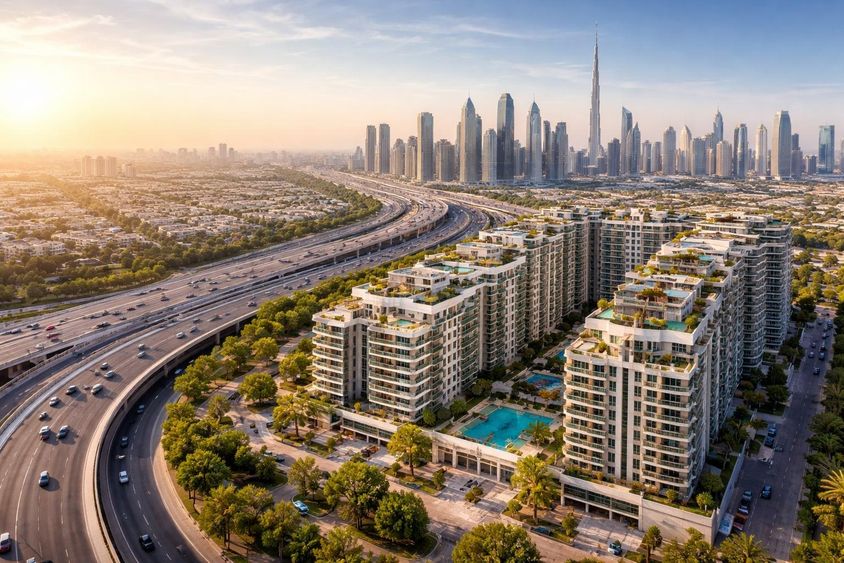
Dubai Properties with Easy Access Demand 20% Premium
Transport as a Value-Adding Factor
Dubai's real estate market has always been sensitive to changes affecting urban quality of life, but recently, one factor has become more prominent than ever: transport. Properties offering easy access to and from residential communities can now command a significant premium of up to 20 percent on the market. Rising traffic congestion has introduced new criteria in buying and renting decisions, giving a new meaning to the concept of location.
The classic adage that the most important thing in real estate is "location" now goes beyond prestige or neighborhood in Dubai. The question is rather: how quickly can one leave the residential area? How predictable is daily transportation? How many alternative routes are available during rush hours?
Growing Traffic, Longer Commute Times
The city's population is growing dynamically, and in parallel, the number of vehicles on the roads is increasing. The time required to cover a ten-kilometer route has markedly increased in just one year. The decrease in average speed during peak hours shows that the urban infrastructure is under significant strain.
This is not just an inconvenience. Longer commutes increase daily stress, reduce productivity, and take significant time away from family, rest, or sports. In a business hub like Dubai, where the pace is fast and workdays are intense, every minute counts.
Why Pay More for Better Accessibility?
Residential projects with direct connections to major highways or multiple access points are at a serious competitive advantage. If a residential community can reach a high-traffic highway within a few minutes, residents save time and reduce uncertainty in daily transport.
This is especially true for densely populated communities, where the internal road network often becomes a bottleneck. Developments with direct outlets to a high-capacity road find buyers much faster. Market experiences suggest these properties can be sold 10-15 percent, in some cases even 20 percent, higher than similar but less accessible apartments.
For buyers, easy access in and out is no longer an extra convenience but a fundamental expectation. Daily time savings represent a concrete, monetary advantage.
Shorter Commutes as a Quality of Life Factor
If a home allows one to reach work ten minutes faster, that translates into a twenty-minute daily gain, over a hundred hours of extra time per year. This time can be dedicated to sports, family, rest, or even more work.
In modern urban life, reducing mental strain is of paramount importance. Predictable commuting allows for a more stable daily routine. In the real estate market, this factor directly affects prices: the possibility of a less stressful life commands a premium.
The Role of Metro and Public Transport
It's not only the proximity to highways that matters. Properties within a short walking distance of metro stations are also in higher demand. Public transport offers an alternative to car use, allowing for safer, more predictable commuting even during peak times.
Metro proximity is especially important for young professionals and expatriate workers who often move between different parts of the city. In the rental market, these properties are leased faster and provide more stable rental income for owners.
Developer Shift in Perspective
Developers today consciously seek plots with excellent transport connections. In master-planned communities, special attention is paid to optimizing the internal road network, creating multiple exits, and evenly distributing traffic.
In the marketing communication of new projects, fast highway access, congestion-free availability, and multi-directional accessibility are prominently featured. These developments exhibit faster sales and stronger rental performance, creating a more stable investment environment in the long term.
Regional Commuting and Urban Pressure
Many people commute not only within Dubai but also from surrounding emirates daily. This further increases the load on major traffic routes. For those who travel several tens of kilometers daily, easy highway access is particularly important.
As traffic grows, more people decide to move closer to their workplaces, even if they need to pay a higher price. In the long run, shorter and more predictable commuting compensates for the higher purchase price.
Long-Term Value Retention
Current trends indicate that properties with excellent accessibility may remain more stable in value over the long term. Continuous improvements in transport infrastructure may alleviate congestion, but due to population growth, demand remains persistently high.
Residential projects with multiple in-and out exits, direct highway connections, and well-thought-out internal road networks are not only considered premium today but are likely to remain attractive in the future.
Summary
On Dubai's real estate market, a good neighborhood or a spectacular view is no longer sufficient. Transportation accessibility has become a key factor directly influencing prices. Easy entry and exit, fast highway access, proximity to the metro, and multiple alternative routes are all factors that may justify premiums of up to 20 percent.
For buyers and investors, the decision increasingly revolves around the quality of daily life. Shorter commutes, less stress, and predictable transportation now hold tangible value. Dubai's development remains dynamic, but the future winners will be those properties that are not only beautiful and modern but also smartly connected to the city's bloodstream.
If you find any errors on this page, please let us know via email.


