Dubai's Iconic Tower Reimagined for Future
The Former 'Big Ben' Tower's New Life in Dubai's Heart
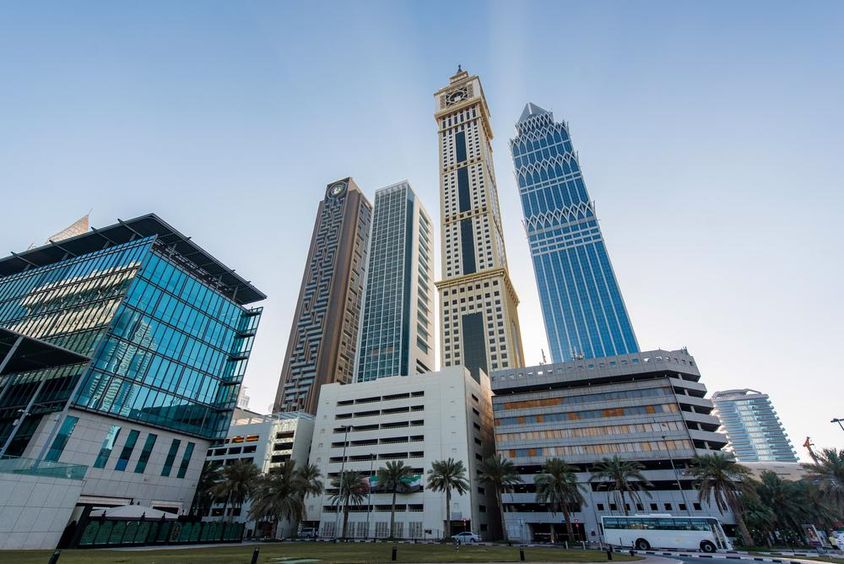
The skyline of Dubai has been continuously changing over the past two decades, but some buildings carry unique stories. One such structure is the tower along Sheikh Zayed Road, once referred to as 'Big Ben,' which has now embarked on a completely new chapter. This formerly iconic building has found a new owner, been renamed and redesigned, and has been sold entirely in record time. According to the developer's announcement, every square meter of the 69-story tower has been sold, with revenues from the sale exceeding 700 million dollars, which amounts to over 2.5 billion in dirhams.
This is not merely a story of a successful real estate transaction; it's an indication of the direction Dubai's commercial real estate market is heading in 2025 and beyond.
New Name, New Image, New Position
The tower was previously nicknamed 'Big Ben' due to its facade reminiscent of the London clock tower. Though this was never its official name, it gained popularity among the city's residents and business community. The new owner made a conscious decision: the clock was removed, the facade redesigned, and the building received a completely new identity.
Now known as the AHS Tower, this over 200-meter-tall, 69-floor tower has undergone more than just aesthetic changes. The goal was to position the building as a premium office block with its own character, rather than appearing as a copy of another world-famous tower. Dubai's development in recent years has increasingly moved towards unique, standalone designs, and this project fits into that trend.
Strategic Acquisition on Sheikh Zayed Road
The acquisition of the tower took place in July 2025, when it was purchased from the Commercial Bank of Dubai for about 120 million dollars. The location on Sheikh Zayed Road was a key factor in the decision. This route is not just a major thoroughfare but also the business backbone of Dubai, home to the largest multinational companies, financial institutions, and regional headquarters.
A Grade A office building in such a location is in almost guaranteed demand, especially during a period when the number of businesses in the city is rapidly increasing. Hence, refurbishing and repositioning the tower was not a speculative move but a strategic investment in a strengthening market.
Record Demand for Office Space in Dubai
In 2025, more than 250,000 new companies were established in Dubai, bringing the total number of active businesses to 1.4 million. This represents a 119 percent increase, remarkable by global standards. The city’s economy is becoming increasingly diversified, with the technology, finance, logistics, and creative sectors all showing significant growth.
This growth naturally accompanies an increased demand for office spaces. Premium, easily accessible office buildings with modern infrastructure are particularly sought after. AHS Tower has positioned itself precisely within this segment: a Grade A-rated, modernly designed commercial space that meets the highest standards.
The complete sale demonstrates that the market is not only theoretically strong but is backed by real, solvent demand.
The New Role of Offices: More than Just Workplaces
In recent years, the concept of an office has fundamentally changed. In the post-pandemic period, people worldwide had to reconsider why and how they return to workplaces. Dubai is at the forefront of this process. Offices are now not just workstations but experience centers and communal spaces where well-being, alongside productivity, takes center stage.
According to the developer’s communication, human health was central to the planning and transformation of the project. The concept includes maximizing natural light, modern ventilation systems, integrating communal spaces, and enhancing the workplace experience. This approach is not just a trend but a business rationale: companies increasingly seek offices that support the mental and physical well-being of employees.
The Rise of the Wellness-Based Real Estate Market
The project aligns with a global trend known as wellness-based real estate development. This market is currently valued at approximately 584 billion dollars and is forecasted to reach 1.1 trillion dollars by 2029. The figures speak for themselves: well-being, health, and experience-centered space design are not passing fads but a structural change.
Dubai is particularly suitable for this concept. The city is already synonymous with luxury, innovation, and quality of life in the region. An office building that combines classic business functions with a wellness concept meets corporate expectations that regard the workplace as a strategic tool for retaining talent.
What Does This Mean for Dubai's Future?
The complete sale of AHS Tower is significant for several reasons. Firstly, it demonstrates that the commercial real estate market is strong and liquid. Secondly, it indicates that the city’s economic growth isn’t slowing down but is advancing to a new level. The hundreds of thousands of new companies, increasing international presence, and stable business environment all contribute to ensuring that Dubai remains a global business hub.
The transformation of the once 'Big Ben' tower is also symbolic. A building that once evoked another city's iconic tower now has its own identity, function, and market position. This reflects the direction of Dubai's development well: not to imitate, but to redefine; not to follow, but to shape.
The over 700-million-dollar revenue is not only a financial success but also a vote of confidence in the city’s future. Investors, companies, and tenants clearly believe that Dubai will remain one of the region's strongest business and commercial centers.
Thus, the story of AHS Tower is not just the chronicle of a building’s sale but a snapshot of a city’s economic dynamism. And if current trends continue, we can witness many similar stories along Sheikh Zayed Road in the coming years.
If you find any errors on this page, please let us know via email.