Dubai’s Historic District Embraces Pedestrian Future
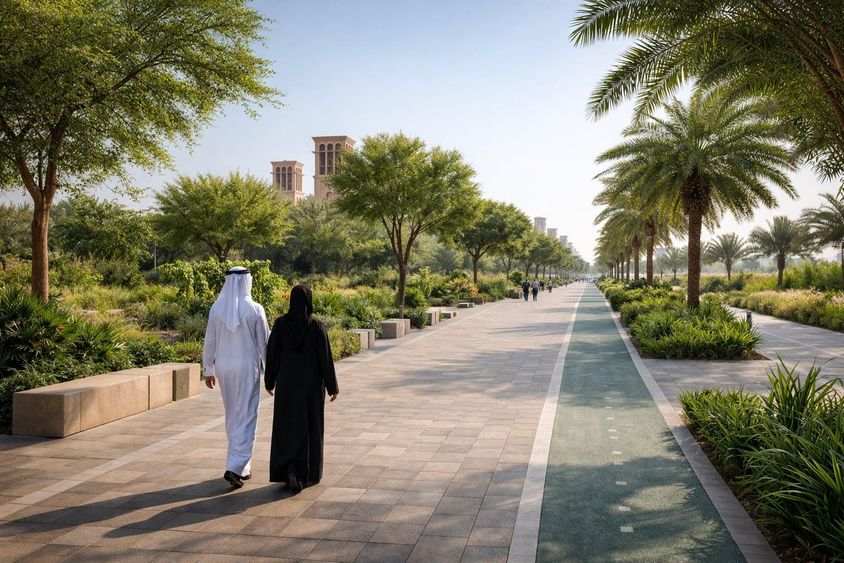
Pedestrian-Friendly Future Unveiled in Dubai's Historic District
Dubai has been known for decades as a car-centric city dominated by wide boulevards, skyscrapers, and modern transportation systems. However, we are now witnessing a remarkable shift in mindset: the city is placing increasing emphasis on pedestrian transportation, community spaces, and livable urban environments. One of the most significant steps in this direction is the 12-kilometer promenade project in the Al Ras area, which is not just infrastructure development but part of a comprehensive urban planning vision.
The Intersection of History and Modernity
Al Ras is one of Dubai's oldest and most distinctive districts, where the past remains tangible. The blend of traditional architecture, narrow streets, and cultural heritage creates a unique atmosphere. The goal of the new promenade project is not only to preserve this heritage but to make it accessible in a new way.
The planned route connects the city's iconic historical sites, such as forts, museums, and cultural districts. This is important not only from a tourism perspective but also offers a new experience for locals as the historical layers of the city become directly discoverable on foot.
12 Kilometers to Redefine Transportation
The central element of the project is the 12-kilometer-long pedestrian promenade, offering a continuous, well-designed route. It is complemented by an additional 5 kilometers of cycling paths, clearly focusing on sustainable and so-called "soft mobility" solutions.
This development is not just a promenade but part of a complex transportation system. The route connects with 11 different transport hubs, including metro, buses, and water transportation. This is particularly important in solving the so-called first and last kilometer issue, which poses a challenge for big cities worldwide.
Implementing the "20-Minute City" Concept
Dubai's long-term urban development plan, the 2040 Urban Master Plan, sets an ambitious goal: most residents should be able to access services necessary for daily life within 20 minutes. This concept is becoming increasingly popular in major cities worldwide as it reduces traffic burdens and improves the quality of life.
The Al Ras project is a tangible realization of this concept. The integration of pedestrian routes and transport connections allows residents and visitors to move quickly and comfortably without the need for a car.
A More Livable Urban Environment Emerges
The development extends beyond transportation. The promenade will feature shaded areas, rest zones, green spaces, and modern orientation systems. These elements not only enhance comfort but also encourage pedestrian traffic.
Dubai's climate conditions make shading and thermal comfort particularly important. The project takes this into account, making the promenade usable year-round, even during the hotter months.
Art and Culture in Public Spaces
One of the project's most interesting elements is the creation of ten art spaces showcasing local artists' work, including murals, sculptures, and innovative light installations.
This approach goes beyond traditional infrastructure development. Public spaces serve not only functional roles but also provide cultural experiences. Thus, the city becomes not only more modern in terms of transportation but also richer in identity.
Long-Term Vision: Thousands of Kilometers of Pedestrian Paths
The Al Ras project is just the first step in a much larger plan. The Dubai Walk Master Plan aims to create over 6000 kilometers of pedestrian pathways in 160 different areas of the city by 2040.
Additionally, more than a hundred pedestrian bridges and underpasses will be built to facilitate safe and continuous movement. This scale demonstrates that this is not a one-time investment but a comprehensive strategic transformation.
Increasing the Role of Walking
Currently, the proportion of pedestrian and alternative modes of transportation is still relatively low, but the goal is clear: a significant increase in the coming years. By 2040, pedestrian transportation is expected to reach 25 percent.
This represents not just a transportation issue but a lifestyle change. Walking offers a healthier, more environmentally friendly, and often quicker alternative for short-distance travel.
Timing and Implementation
The first phase of the project will be implemented between 2025 and 2027, followed by further phases of development continuing until 2040. This allows for gradual adaptation and the fine-tuning of later stages based on experience.
The phased implementation also means the city is continuously evolving, and residents can feel the changes from the very first years.
Summary: Dubai's New Face
The pedestrian-friendly developments clearly indicate that Dubai is heading in a new direction. The city aims not only to be the location of spectacular constructions and records but also a livable, human-centric metropolis.
The Al Ras promenade project exemplifies how to blend past values with future technology. The combination of historical environment, modern infrastructure, and community spaces creates an urban experience that is attractive not only to tourists but also to locals.
In the coming years, more similar developments are expected to emerge, further enhancing Dubai's position as one of the world's most innovative cities. The direction is clear: fewer cars, more walking, and a much more livable urban environment.
If you find any errors on this page, please let us know via email.


