Dubai's Gold Market: Panic or Opportunity?
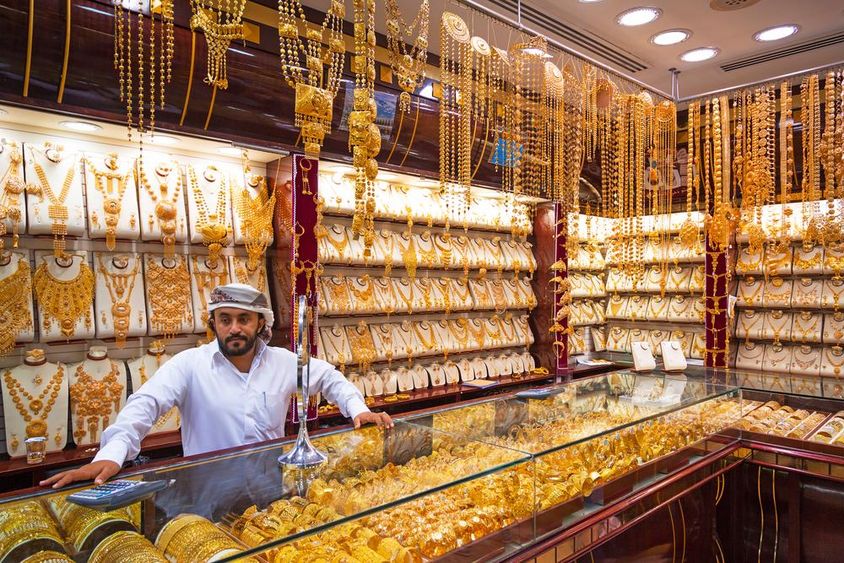
Gold and Silver Panic Selling in Dubai: What's Behind the Queues?
The dramatic price drop experienced in January 2026 on the gold and silver market not only moved numbers on screens but also mobilized people. Long queues formed at the entrances of the Dubai Gold Souk, with hundreds of sellers trying to unload their savings, either in hopes of quick profit or out of fear of further loss. But was it really panic? Or just profit realization in a volatile market?
From Record High to Freefall – What Exactly Happened?
Gold hit a record high: its 24-carat variant reached 666 dirhams/gram in Dubai, equivalent to more than $5,500 globally per ounce. This was followed by a steep decline - by the weekend, the price had fallen to 589.5 dirhams, a more than 11% drop in a short period. Silver wasn’t spared either, suffering significant losses. The events spurred on queues among those wishing to redeem precious metals – a sort of collective reflex came into effect.
Profit Realization or Fear-Induced Selling?
Experts argue the events can’t be classified as classic “panic selling” – they much more resemble a textbook example of so-called “profit-booking” mechanism. In such cases, some investors, seeing the achieved price peak, decide to exit the market, closing their positions, and pocketing the gains. This, however, can initiate a price drop itself, generating further sales – and the domino effect is complete.
Dubai's gold market, being one of the world’s most liquid and responsive precious metal markets, is particularly sensitive to global impulses. Once a trend starts – up or down – it has an immediate effect on local prices and consumer behavior.
Why is Dubai’s Gold Market Unique?
Dubai holds a unique position: tax-free precious metal trading, tourist appeal, and a deeply ingrained trust in physical gold among residents. For many buyers, gold isn’t just an investment, but an asset with cultural and emotional value – whether it’s wedding jewelry, an inheritance, or financial security.
In such an environment, short-term market corrections can trigger swift, impulsive responses. The recent event showcased this: behind the quick sales wasn’t an unsustainable market bubble bursting, but a healthy – albeit fear-driven – reaction to global movements.
What Lies Behind?
A new chair was appointed to the US Federal Reserve, strengthening the dollar and pushing upward yield expectations – classically impacting precious metals negatively, as a stronger dollar diminishes gold’s appeal against other currencies. Furthermore, expectations of interest rate hikes bolster bond market yields, redirecting capital away from non-yielding assets like gold.
Algorithmic trading, leveraged positions, and short-term speculators’ behavior amplified the shifts. Thus, gold’s price not only simply corrected but experienced the ripple of a global psychological reaction.
Rebound or Further Weakening?
Analysts say the long-term fundamentals of gold haven’t changed. Geopolitical uncertainties, inflation concerns, and central bank gold accumulation persist. This means the current selling wave is more of a correction than a trend reversal.
In Dubai, while consumers’ rapid reactions paint a sharp picture of investor psychology, local jewelers and traders aren’t worried: demand for gold remains strong, and the lessons of the recent period affirm that patience and a long-term perspective are worthwhile.
What Can We Learn From This?
Recent events remind us that the workings of financial markets are often built on collective emotion and swift decision-making. Profit realization is natural, but when paired with fear and mass behavior, it can lead to panic. For investors, self-discipline, prior strategy, and a long-term perspective provide security.
Dubai’s example also shows the crucial role of market liquidity, the potential for swift price reactions, and the fact that trading in precious metals contains both economic and social-cultural dimensions.
What Follows Next?
The coming weeks will show how the market processes the sudden price changes. Gold and silver prices are expected to stabilize and gradually return to equilibrium levels. Meanwhile, Dubai’s gold market will continue to maintain its prominent role in global precious metal trading – not just through numbers, but through the stories of people, too.
If you find any errors on this page, please let us know via email.


