Dubai's Churches Reopen with Safety Measures
Gradual Reopening in an Uncertain Period
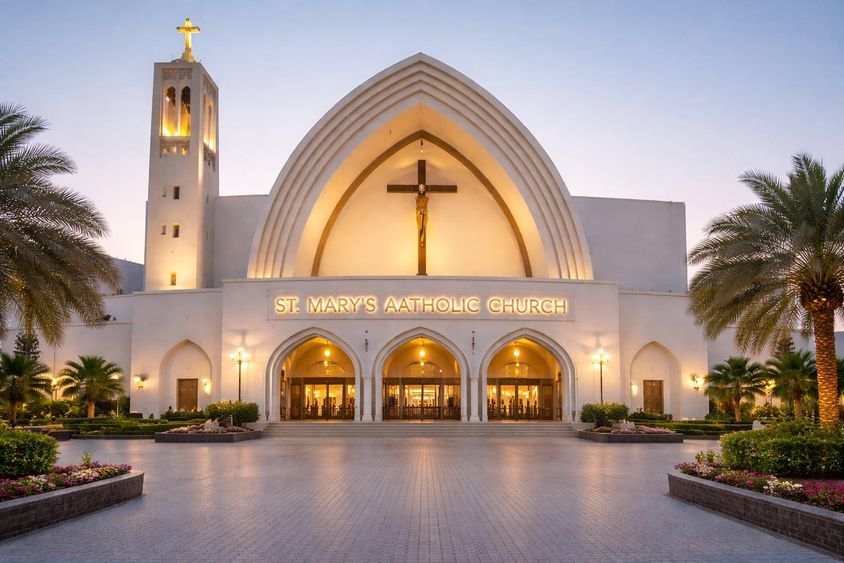
Recent events have once again highlighted how a city functioning as a global multi-ethnic center is sensitive to regional tensions. This is especially true for Dubai, as the city is not only an economically, but also a socially and religiously diverse environment. One of the latest developments is that St. Mary’s Church will be able to reopen its doors from April 11, albeit under limited conditions.
This decision not only signifies the restart of a religious institution's operation but also acts as a signal: normalization has begun, slowly but surely. However, the conditions are strict and clearly reflect the current security environment.
What led to the closures?
Shortly before, several religious institutions in Dubai had to close temporarily. The decision was driven by tensions in the region, which also impacted public safety measures. Authorities reacted quickly, prioritizing the control of sites that attract larger crowds.
For religious communities, this happened during a particularly sensitive period, as they had to adapt to the new situation in the midst of a prominent religious holiday period. Instead of personal attendance, many places switched to online broadcasts, which illustrates how quickly Dubai can provide digital alternatives even in such circumstances.
Details of the limited reopening
The reopening does not mean a full return to previous operations. The church can conduct ceremonies only indoors and only under strict conditions. Practically, this means that each mass takes place under pre-arranged and controlled circumstances.
Pre-registration online is mandatory to attend. This is not just an administrative step but a key element in crowd control. The digital system allows exact tracking of participant numbers to avoid overcrowding.
Ceremonies are held on weekends, which is also a deliberate decision. This way, organizers can better manage visitor flow and ensure necessary safety conditions.
Strict restrictions for safety
One of the most important restrictions is that only adults over 18 can attend the masses. Children are currently not allowed entry, showing that decision-makers prioritize the protection of the most at-risk groups.
Furthermore, all other activities on church grounds are suspended. There will be no community programs, meetings, or events that were previously integral to religious life. The focus is solely on liturgical events.
Multilingual informational materials at the site aid visitors, which is particularly crucial in a city where a significant portion of the population is foreign. These materials cover not only general rules but emergency protocols as well.
The growing role of digital presence
For those who cannot or do not wish to attend in person, online broadcasts remain available. This solution has become truly refined in recent years and now plays a key role once more.
Dubai is particularly adept at synchronizing physical and digital presence. The online broadcasting of religious events is not only a makeshift solution but a possibility that may persist long-term. Thus, even those who cannot be present for geographic or other reasons can participate.
Community responsibility and cooperation
The church leadership has clearly emphasized the importance of community cooperation. Visitors are asked to adhere to the rules and ensure each other's safety. This means not only rule-following but conscious presence as well.
There is also notable attention given to immediately reporting any panic-inducing or aggressive behavior to the appropriate authorities. This proactive attitude fits well with Dubai's general operational philosophy, where prevention is always prioritized over reactive treatment.
The role of authorities in maintaining stability
In the current situation, the quick and decisive actions of the authorities play a key role. The reopening of religious institutions is only possible under strict supervision, indicating that thoroughly devised strategy backs decisions.
Dubai has spent many years building a system that allows maintaining operational capability even in crisis situations. This extends beyond infrastructure to organizational and social cooperation as well.
Balance between reopening and safety
One of the most important messages of the current reopening is the search for balance. The city does not shy away from the resumption of normal life, but neither does it risk safety. This duality defines the current period.
The restarting of religious life provides spiritual stability for many, particularly in an uncertain environment. However, the restrictions are a reminder that the situation is not yet fully resolved.
Long-term impacts and lessons
The recent events are likely to have long-term effects on how religious and community spaces operate in Dubai. Digital solutions, pre-registration, and controlled participation are all elements that may remain in the future.
Such a situation also highlights the importance of flexibility. Institutions that can swiftly adapt can maintain connections with their communities even under challenging circumstances.
Summary: Careful Return to Routine
The reopening of St. Mary’s Church is a small but significant step toward normalization in Dubai. It is not about a full return to the old order but a consciously built, safety-centered new operational model.
The key question in the coming period will be how well this balance can be maintained. The current measures suggest that Dubai remains capable of quickly responding to challenges while gradually rebuilding the foundations of community life.
This process does not happen overnight, but each step like this brings the city closer to operating at full capacity once again — safely and predictably.
If you find any errors on this page, please let us know via email.


