Dubai's Airports: Pioneering a New Travel Era
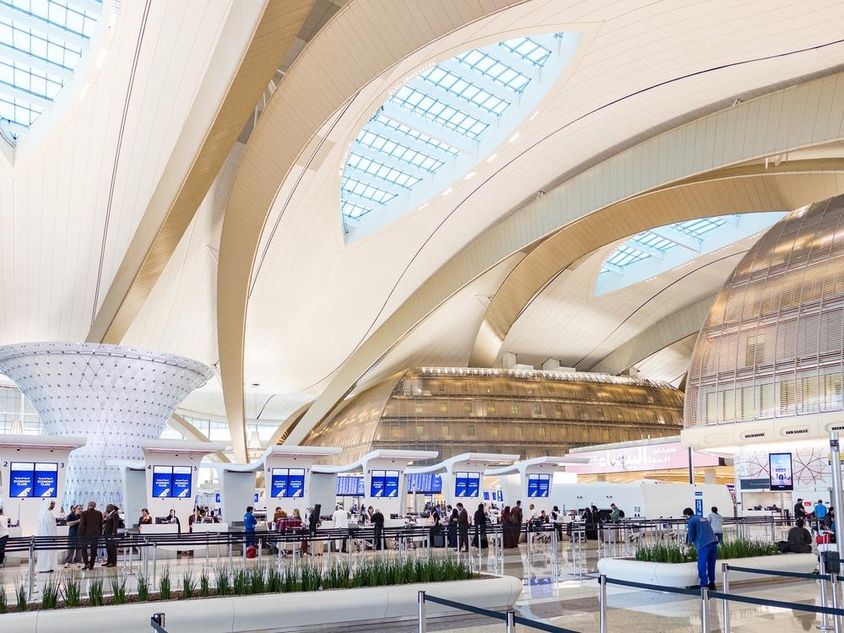
The Future of Travel: Dubai and GCC Airports Open a New Era
The world of travel is set to change fundamentally in the next decade, driven by developments in the GCC (Gulf Cooperation Council) countries. The region's next-generation airports, particularly the ambitious projects in Dubai and Riyadh, will be capable of serving 500 million passengers annually, while technological innovations revolutionize the travel experience. The ongoing investments will not only transform tourism and the economy but also set new standards in travel convenience and efficiency.
Dubai: The Next-Generation Air Hub
The Dubai International Airport (DXB), already the world's busiest international airport, is at its capacity limit. Hence, the Al Maktoum International Airport is being constructed, which upon completion will be fifty times the size of the current DXB and capable of accommodating up to 260 million passengers per year. The nearly $35 billion development not only places Dubai at the center of the global air travel map but opens new opportunities for the entire region.
The new airport will host the fleets of Emirates and flydubai, which could expand by up to 500 new aircraft in the coming years. This allows Dubai to reach a new level where travel is faster, safer, and more technologically advanced than ever before.
Regional Competition and Catch-up
The other GCC countries are not idle: Riyadh has allocated nearly $50 billion for the King Salman International Airport project. Abu Dhabi continues to expand its Zayed International Airport, while Sharjah and Doha achieve significant growth in cargo traffic. Oman plans to build six new airports by 2028, while Bahrain and Kuwait are also making significant investments to catch up with their competitors.
However, experts say that despite their efforts, Saudi Arabia, Oman, or Bahrain will not reach the level represented by Dubai for a long time, either in technological or traffic terms.
Technological Innovation and Rethinking Passenger Experience
GCC airports are already global leaders in technological solutions. Facial recognition, AI-based check-in systems, paperless passenger processing, and smart security gates all contribute to making travel more convenient and faster.
For example, Dubai airports are already operating systems where passengers can reach the gate from the entrance in as little as 10 minutes using facial recognition, with minimal human intervention. In the future, this could be further simplified: a model could become available where a passenger buys a ticket on-site, checks in immediately, and walks to the plane after AI-driven security screening—all within minutes.
Cargo Traffic: The Dominance of Dubai and Doha
Not only in passenger traffic but also in freight, Dubai and Doha lead the way. Together, the two cities handled more than 4.8 million tons of air cargo in 2024, which is more than half of the entire GCC region's volume. Sharjah Airport also achieved an outstanding growth of 38.5%, mainly due to sea-air multimodal logistics.
Labor Market and Economic Impacts
Airport developments significantly impact the economy. The industry directly contributes to GDP growth, creates jobs, and supports tourism, hospitality, and other related sectors. However, rapid development also poses challenges: the lack of adequate professionals is already noticeable, and the competition for skilled labor is set to intensify in the coming years.
Global Competition
The GCC countries aim not only for regional dominance but also for global competitiveness. The new Istanbul airport and several new terminals in India, such as in Delhi and Mumbai, could become serious rivals. Experts say the key is innovation, passenger-friendly operations, and continuous development.
Dubai is leading in this as well. While airports in other regions are still operating along traditional models, Dubai not only invests in new technologies but also implements them, reinforcing its leadership role.
Challenges and Opportunities
The biggest challenge currently is that the Dubai International Airport has reached maximum capacity. The development of the Dubai World Central is a response to this, but the transition is a vast logistics task. Furthermore, regional geopolitical tensions always pose a risk—though experts say these are manageable if diplomatic direction prevails.
Another challenge is how the GCC countries, which are currently smaller players—such as Bahrain or Kuwait—can implement their developments without hindering the operation of their existing airports. Examples show that Dubai builds its new hub at a different location, which is an advantage over others.
Conclusion
The Gulf region's air travel has entered a new era. Dubai leads the way, and all indications are that it will maintain this position in the long term. Through technology, spectacular infrastructural investments, and rethinking the passenger experience, GCC airports can become global benchmarks. The next ten years hold new opportunities for travelers, the economy, and the air transport industry—and Dubai will play a key role in this.
(Source based on the Gulf Cooperation Council's announcement.)
If you find any errors on this page, please let us know via email.


