Dubai Real Estate Market Defies Uncertainty
Strengthening Market Amid Uncertain Environment
The Dubai real estate market has once again demonstrated its exceptional resilience. Despite prevailing geopolitical tensions and uncertainty in the region, the emirate's real estate sector continued to grow in the first quarter of 2026. This phenomenon is not merely a short-term fluctuation but a reflection of a deeper economic system based on stable foundations.
In the first quarter, transactions worth nearly 176.7 billion dirhams took place, with almost 48,000 sales in total. These numbers are noteworthy in themselves, but become truly significant when considering the external environment: despite the uncertainty, the market not only did not slow down, but accelerated further.
A New Level of Off-Plan Dominance
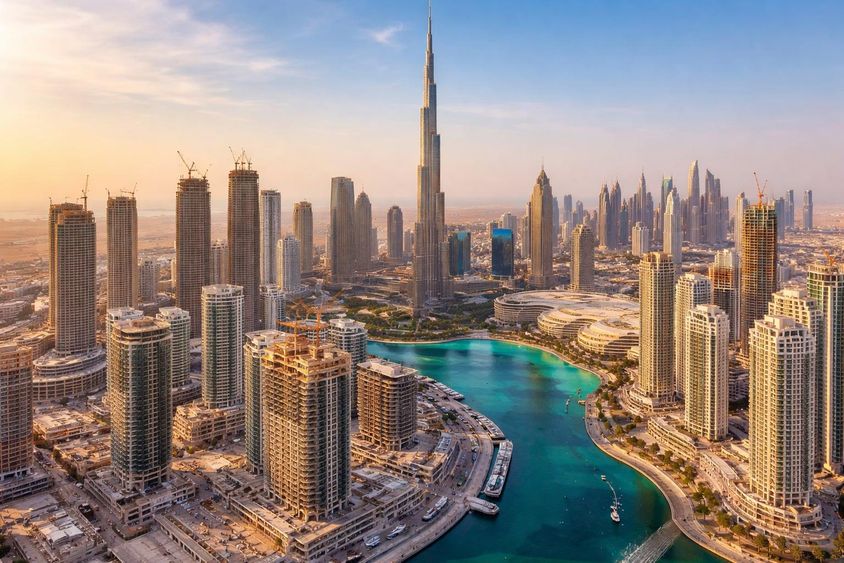
One of the most important trends defining the current operation of the Dubai real estate market is the dominance of so-called off-plan projects. These are properties sold during or even before construction.
In the first three months of 2026, about 70 percent of all transactions were of this type, indicating that investors trust not only the current market but future growth as well. In terms of value, this ratio was even higher, around 71 percent.
This kind of activity suggests that Dubai remains a strongly future-oriented market where developments and long-term plans play a key role.
Stability in March Figures
March proved to be an especially strong month. Over 10,000 transactions were completed, totaling more than 31 billion dirhams. This represents more than a 5 percent growth in volume and over a 23 percent increase in value year-on-year.
The off-plan segment stood out here as well: the number of transactions grew by more than 5 percent, while value increased by nearly 9 percent. This indicates that demand not only remained but strengthened further.
Emerging Districts on the Rise
A significant portion of transactions is not concentrated in classic luxury districts, but in emerging areas where more affordable prices and new developments await buyers.
These districts are increasingly becoming targets for investors and first-time home buyers. The demand here is high not only because of the lower entry threshold but also because these neighborhoods have significant long-term value growth potential.
This trend clearly indicates that the Dubai real estate market is about more than just luxury; it's about a broader, diversified offering.
Apartments Lead the Market
Apartments remain the engine of the market. More than 36,000 transactions occurred in this segment, representing a total value of over 75 billion dirhams. This marks more than a 10 percent increase compared with the previous year.
The popularity of apartments can be attributed to several factors. They represent lower entry costs and are excellently suited for rental, providing stable returns for investors.
Dubai's rental market remains strong, making this category even more attractive.
Villas and Premium Properties Gain Strength
While apartments dominate, the villa market also showed remarkable growth. Sales increased by nearly 18 percent, with the total value exceeding 59 billion dirhams.
Villa prices have significantly risen: the median price of new-build properties surpassed 4 million dirhams, reflecting more than a 35 percent increase in one year.
This trend shows that there is continuous demand for higher-end properties, especially among international investors planning long-term in Dubai.
Commercial Properties and Land
The commercial real estate market showed particularly strong value growth, with an increase of more than 69 percent. This indicates that businesses trust the economic environment’s stability and are willing to invest long term.
The land market presents a mixed picture. Although the number and total value of transactions increased, prices decreased in certain cases. This presents opportunities for those considering long-term developments.
Secondary Market and Price Trends
Increasing prices are noticeable in the secondary market as well, especially for villas, where prices have significantly surpassed previous years’ levels.
Apartments also experienced growth, albeit at a more moderate pace. This points to a balanced market where there is no overheating, but a stable rise is observable.
For plots, however, there was a significant drop in prices, opening new opportunities for investors.
Financing and Cash Purchases
The number of mortgage-based purchases also grew, with more than 11,000 transactions. The total value was nearly 60 billion dirhams.
Meanwhile, cash purchases continue to dominate, especially in the secondary market, where about two-thirds of transactions are not financed by credit. This is an extremely important signal: a significant part of the market relies on cash-strong investors.
What Drives the Growth?
There are several reasons for the success of the Dubai real estate market. One of the most important is the transparency of the regulatory environment and investor-friendly policies. Additionally, ongoing infrastructure developments and global economic connections contribute to growth.
The city is attractive not only as a place to live but also as a business hub, which generates continuous demand for properties.
Conclusion: Stable Foundations, Strong Future
The numbers clearly show that the Dubai real estate market not only survives challenges but is capable of growing despite them. The dominance of off-plan projects, the strengthening of emerging areas, and the high cash rate all indicate that there is real, stable demand behind the market.
This is not a short-term boom but the result of a consciously built, long-term economic model. Dubai remains one of the most dynamic real estate markets in the world, where investors find not only opportunity but security.
If you find any errors on this page, please let us know via email.


