Early Summer Heat Surges in UAE
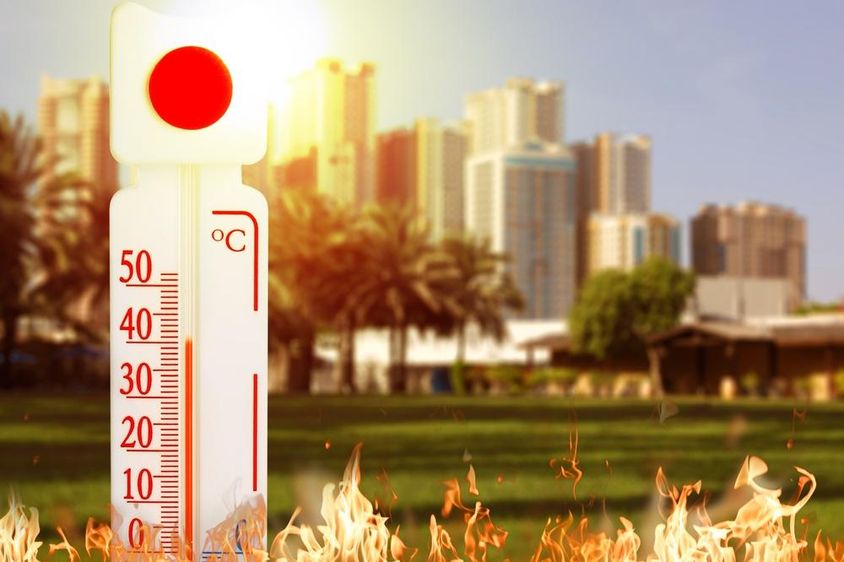
Early Arrival of Summer Heat in the UAE
Residents of the UAE have clearly felt in recent days that the summer weather has arrived earlier than usual this year. Although astronomical summer officially begins on June 21, summer conditions often develop in the region before this date. This is exactly what's happening now: daytime temperatures in several areas have risen to levels more typical of mid-season rather than the beginning of summer.
According to the UAE National Meteorological Center, this summer may be warmer compared to previous years, although actual temperatures always depend on what weather systems affect the region during a given period. This means that the heat is not caused by a single factor, but a combination of several regional and global atmospheric processes shaping the weather.
Why do we feel summer earlier?
The UAE's climate is inherently hot and dry, so the transition to the summer season is often not marked by sharp boundaries. During this time, residents gradually feel the pleasant spring days being replaced by increasingly warmer, drier, and more intense heat stress weather. However, this year, this transition has occurred earlier and more intensely than usual.
Meteorological experts say the current average temperatures are already approaching those typically measured in summer months. This is an important signal that the country has practically already entered the summer weather period, even if the calendar says summer has yet to begin.
Dubai, Abu Dhabi, and the southern interior areas of the country are particularly sensitive to the hot air masses arriving over the region. In urban environments, the heat perception can be even stronger, as buildings, roads, and paved surfaces absorb and re-radiate heat. Therefore, alongside actual temperature, heat perception also plays a significant role in how stressful the residents find the weather.
The Impact of El Niño on the Region
One significant background factor of the warmer weather is the El Niño phenomenon. This is a global climatic process originating in the Pacific Ocean region, but its effects can appear in various parts of the world. One characteristic of El Niño is that it can result in higher temperatures in certain regions and contribute to periods warmer than usual.
For the UAE, this does not mean that El Niño alone is causing the current heat. Rather, it creates more favorable conditions for higher temperatures. When accompanied by hot air masses, temperatures can rise further, leading to a summer weather stronger than usual.
The broader region can also expect a warmer period, which fits the weather patterns influenced by El Niño. It is not unusual in the UAE's climatic cycle for summer-like weather to appear early, but the intensity of the phenomenon is particularly striking this year.
The Role of the Indian Monsoon System
Another defining cause of the current heat is the impact of the Indian monsoon system. The so-called thermal low-pressure area forming in the region can move hot air masses towards the southern parts of the UAE. This process significantly contributes to daytime temperatures reaching values around 47-48 degrees Celsius in several places.
This represents a serious summer heat load. At such temperatures, outdoor work, prolonged walking, or even short exposure to direct sunlight can be exhausting. The body loses fluid quicker, increasing the risk of dehydration and heatstroke.
Thus, the impact of the monsoon system is not limited to the Indian subcontinent. The associated atmospheric movements can also affect the weather of the Arabian Peninsula, especially when hot air masses flow towards the UAE.
Why is there no rain despite the intense heat?
Many might think that such intense heat might be accompanied by showers or thunderstorms, but currently, this is not the case. According to weather forecasts, there is no significant chance of precipitation in the UAE this week or next week.
The main reason for this is dry air. In the current weather setup, northwesterly winds arrive from the desert and western areas, bringing extremely dry air over the country. This dry air restricts cloud formation, hence the conditions for rain are not present.
Although rain in the summer is not unknown in the UAE, especially in the eastern and mountainous regions, it requires the right moisture and rising air movement. Under normal conditions, moist air from the Oman Sea could rise over the mountains, forming clouds, and sometimes showers could develop. This process, called orographic lifting, occurs when air is forced upward by the terrain, cools, and cloud formation begins.
However, the current wind direction is not favorable for this. The dry northwesterly airflow cuts off the inflow of more humid air masses, so cloud formation remains limited. As a result, currently, the heat is not accompanied by relieving rain.
When is there a higher chance of summer rainfall?
For summer precipitation in the UAE, the period from mid-July to mid-August is generally the most important. During this time, convective clouds can form more frequently, especially in the eastern parts of the country and occasionally in the Liwa region.
In this period, the intertropical convergence zone near the equator might move northwards, allowing moist air from the Arabian Sea and Oman Sea to reach the UAE region. If this moisture encounters suitable atmospheric instability, clouds and local showers can form.
However, it is important to emphasize that these summer rains are usually not countrywide. Often, only certain areas are affected, and it might happen that some parts of Dubai or Abu Dhabi remain completely dry, while clouds and showers appear in the eastern mountainous regions.
What does this mean for everyday life?
Due to the early arrival of the heat, residents and visitors in the UAE should already switch to summer mode. It is advisable to keep outdoor activities as short as possible during midday and early afternoon hours. Proper fluid intake, light clothing, avoiding direct sunlight, and favoring shady or air-conditioned places are not just comfort issues but are also important for health.
Those traveling by car should also be cautious, as interior vehicle temperatures can rise extremely quickly. Children, the elderly, or pets should never be left in closed cars, even for a short time. The condition of tires is also crucial, as hot asphalt and high temperatures pose increased stress on the tires.
Dubai and other cities in the UAE are prepared for the summer heat, as daily life, transportation, shopping malls, and workplaces are mostly built around an air-conditioned environment. Regardless, the current early heatwave is a reminder that summer weather is not only unpleasant but also demands serious attention.
Summer has Practically Already Begun
Although the official start of summer is only June 21, the weather in the UAE is already showing its summer face. The combination of El Niño, the Indian monsoon system, hot air masses, and dry northwesterly winds have created a situation where temperatures are rising quickly, while the chance of rain remains low for now.
In the coming weeks, the most important message for residents is caution. The summer season has not waited for the calendar date: the heat has already arrived, and all signs indicate that this season could be warmer than average. Therefore, those living in the UAE or visiting should adapt in time, as the region's weather is now clearly following the rhythm of summer.
If you find any errors on this page, please let us know via email.


