Dubai Airport Leads Global Traffic Again
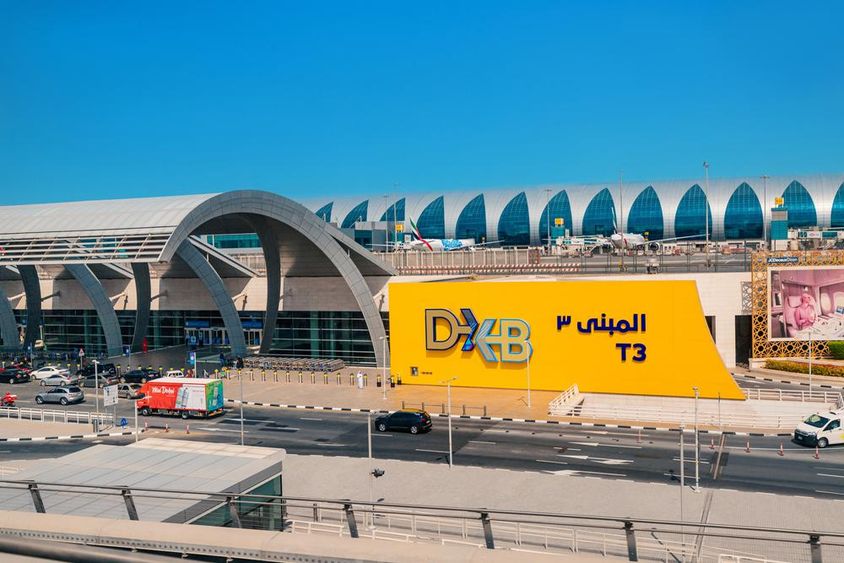
Dubai International Airport Remains Busiest in 2025
Dubai is not only famous for its luxury, modernity, and impressive development pace but is also recognized as one of the world's most important transportation hubs. In 2025, Dubai International Airport (DXB) again claimed the title of the world's busiest international airport — holding this position for several consecutive years. According to the latest report from global aviation data provider OAG, DXB offered 62.4 million international passenger seats in 2025, outpacing other significant airports like London's Heathrow and Seoul's Incheon.
Dubai airport's international traffic continues to grow
One of the key features of Dubai airport is that it registers only international passenger traffic. In contrast, for example, Atlanta's Hartsfield-Jackson airport (ATL) appears in rankings with combined — both domestic and international — data. Despite this, DXB led Atlanta in actual passenger traffic for several months, and by the end of 2025, the total annual passenger count is expected to reach 95.3 million, which is an impressive figure for an international hub. Forecasts suggest that by 2027, this number will exceed 100 million, marking another milestone in the airport's history.
Strengthened position in global aviation
Compared to 2019, Dubai increased its airline capacity by 16 percent, while a 4 percent rise was noted compared to 2024. These numbers indicate that the city not only maintained but consistently strengthens its position on the world aviation map. Dubai is not just essential as a stopover point but is increasingly attractive as a destination, thanks to the growing tourist, business, and investor interest in the city.
Performance of rival airports
In 2025, Dubai airport offered 13.5 million more international passenger seats than second-place London's Heathrow, which closed the year with 49 million seats. This represents only a 1 percent increase compared to 2024 but still exceeds the 2019 figures by 4 percent. Seoul's Incheon airport came third with 43 million seats, followed by Singapore's Changi with 42.6 million.
Of the ten busiest international airports listed, four are in North America, three in Asia, two in Europe, and only one in the Middle East — namely Dubai. This clearly shows the significant role the region plays in global air traffic, even if numerically fewer airports from the region make it to the top ten.
Rise of Hong Kong and Istanbul
Hong Kong airport achieved a spectacular 12 percent annual growth, reaching 38.7 million passenger seats, placing it in the eighth position. Nevertheless, it is still 14 percent below its 2019 capacity, indicating that the pre-pandemic level has not been completely regained. Istanbul airport (IST), however, had an exceptionally strong year: in 2025, it offered 41.2 million international seats, a 7 percent increase over 2024 and an impressive 27 percent growth compared to 2019.
Strategic role of the Middle East
Closing the list yet still a significant player is Doha's Hamad International Airport, which secured the tenth spot with 32.7 million seats. This represents a 1 percent annual growth and a 20 percent advancement compared to 2019 figures. This also shows that in the region, not only Dubai but other airports are on notable growth trajectories.
What underpins Dubai's success?
Dubai International Airport is distinguished not only by its size but also by its ability to adapt to global trends. Emirates airline, one of the world's most recognized brands, plays a key role in increasing the airport's traffic, while the city consistently expands and modernizes its infrastructure capacities.
Efficient border crossing processes, quick handling of global transfers, and digital technologies (such as facial recognition entry and automated passport control) all contribute to making DXB an increasingly primary choice for international passengers.
Looking forward: The dream of 100 million
Dubai airport aims to reach 100 million passengers by 2027. This is an ambitious yet entirely realistic goal based on current data and growth rates. The city's leadership and airport operators are both working to achieve this milestone on time and safely while maintaining their focus on sustainability, comfort, and speed.
Conclusion
Dubai International Airport in 2025 has once again proven its ability to dominate the international aviation scene. While airports in other cities struggle with post-pandemic recovery or balancing domestic and international traffic, Dubai is steadily and consciously building its global position. For international travelers, it has become clearly attractive, and if the current trend continues, it could even rank first in overall global traffic within a few years.
(Source: Based on the Official Aviation Guide report.)
If you find any errors on this page, please let us know via email.


