Will UAE Fuel Costs Rise Again?
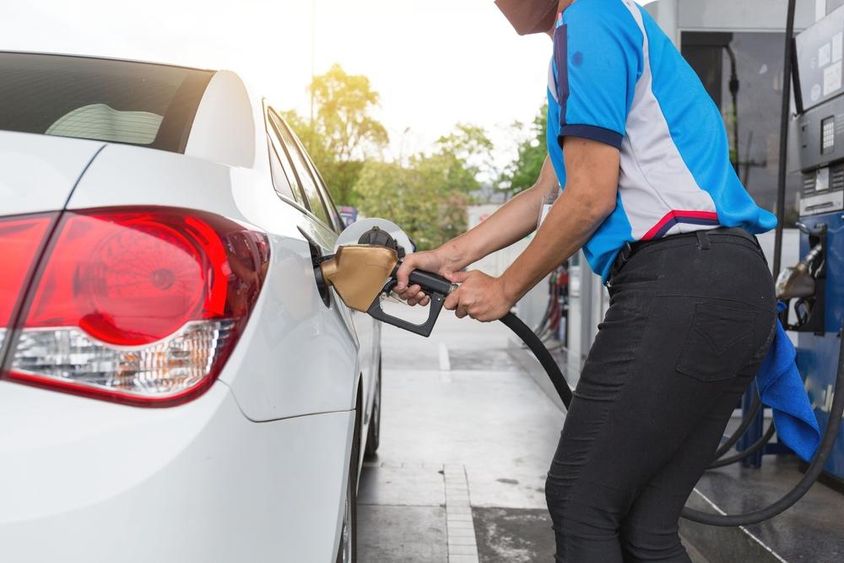
Will UAE Fuel Prices Rise Again in June? Fourth Monthly Increase Possible
In the United Arab Emirates, fuel prices have once again become the focus of attention, as the market anticipates that the responsible pricing committee might announce another hike in June. If this happens, it will be the fourth consecutive month that drivers in the country will have to pay more at the pump. The past few months have seen a significant rise in the international oil market, which has directly affected the UAE's monthly fuel pricing system.
The situation is particularly sensitive for residents living in Dubai, as well as those who commute daily by car on the roads of Abu Dhabi, Sharjah, or other emirates. In the UAE, fuel prices are regularly adjusted each month to reflect global market movements, meaning international conflicts, changes in oil supply, and geopolitical tensions quickly manifest in the prices at petrol stations.
The Closure of the Strait of Hormuz Exerts Massive Pressure on the Oil Market
One of the key reasons for the current wave of price hikes is the situation surrounding the Strait of Hormuz. The uncertainty created by the U.S.–Israel–Iran conflict has caused significant supply fears on the global market. The Strait of Hormuz is one of the most crucial oil transportation routes in the world, with massive amounts of crude oil passing through it daily.
When the market fears that oil shipments might falter or even come to a complete stop, prices begin to rise almost immediately. In May, the average closing price of Brent crude oil was approximately $106 per barrel, while in April it hovered around $99. This represents a significant increase over a short period, especially considering that between February and May, there was a nearly 50% rise in oil prices.
Based on the weekend's closing data, Brent finished trading at $103.5 per barrel, while WTI was at $96.6. These prices are still considered high and exert strong pressure on countries where fuel prices closely follow global market movements.
Fueling Is Already Significantly More Expensive in the UAE
In the UAE, prices have already increased for the third consecutive month in May. The price of Super 98 rose to 3.66 dirhams per liter, Special 95 reached 3.55 dirhams, while E-Plus climbed to 3.48 dirhams per liter.
Compared to February's price levels, this represents an extremely significant increase. Back then, Super 98 was just 2.45 dirhams per liter, meaning that each liter has become 1.21 dirhams more expensive in just a few months. This nearly 50% increase is something that everyday drivers can clearly feel.
In Dubai, many people rely on cars daily, as the city's structure and lifestyle are heavily dependent on road transport. Although public transport is constantly improving, many people commute to work, school, or business meetings in their own vehicles. Therefore, changes in fuel prices are quickly reflected in family budgets.
Historical Price Hikes Have Happened in the Country Before
The UAE has experienced extremely high fuel prices in the past as well. A historical record was set during the 2022 Russian-Ukrainian war when prices first exceeded the 4-dirham mark per liter.
In July 2022, the price of Super 98 reached 4.63 dirhams, while Special 95 rose to 4.52 dirhams per liter. These prices shocked the market at the time, particularly because the UAE had long been known for its lower fuel prices in the region.
Although current prices have not reached the 2022 records, the increases in recent months once again show how quickly global geopolitical situations can change the costs of everyday life, even in an oil-producing country.
Rising Prices Also Have a Serious Impact on Household Budgets
Fuel is one of the most important regular expenditures for UAE residents. Since many families use cars daily, even minor monthly increases can represent a significant additional burden annually.
Higher fuel prices not only increase the cost of fueling. They can also indirectly affect many other areas. Transportation fees, logistics costs, and certain service prices may also rise. This is especially important in Dubai, where goods transportation and online commerce are extremely intensive.
Many are trying to adapt to the new situation. More people are paying attention to consumption, using the metro network more, or choosing more economical cars. Interest in electric vehicles is also steadily growing in the country, especially during periods of higher fuel prices.
The Market Still Hopes for a Drop in Oil Prices
Although a price increase currently seems likely, the market is still watching geopolitical developments. Oil prices can drop quickly if tensions in the Middle East ease.
Analysts believe that a significant change could occur with a possible U.S.–Iran agreement. If relations between Washington and Tehran improve, a portion of Iranian oil could return to the global market in larger quantities. This would increase global supply, potentially pushing prices down.
Market experts suggest that after an official agreement, oil prices could show a 4–8% decline in the initial period. This could relieve pressure on the UAE fuel market and potentially stabilize summer prices.
Drivers Are Now Anxiously Awaiting the June Announcement
The UAE fuel pricing committee is set to announce the June prices at the end of the month, so drivers are closely monitoring developments. Based on the current oil market environment, many expect another hike, although the extent of it remains uncertain.
In Dubai and across the UAE, fuel prices have recently become not just an economic but also a social topic. The continuous increases are causing more people to seek cost-effective transportation solutions, while businesses try to adapt to higher operating expenses.
The coming weeks could be crucial for the oil market. If geopolitical tensions ease, it could quickly be reflected in prices. However, if the situation around the Strait of Hormuz remains uncertain, UAE drivers may be facing another price hike as the summer period begins.
If you find any errors on this page, please let us know via email.