Unfolding the First iPhone: Why the Delay?
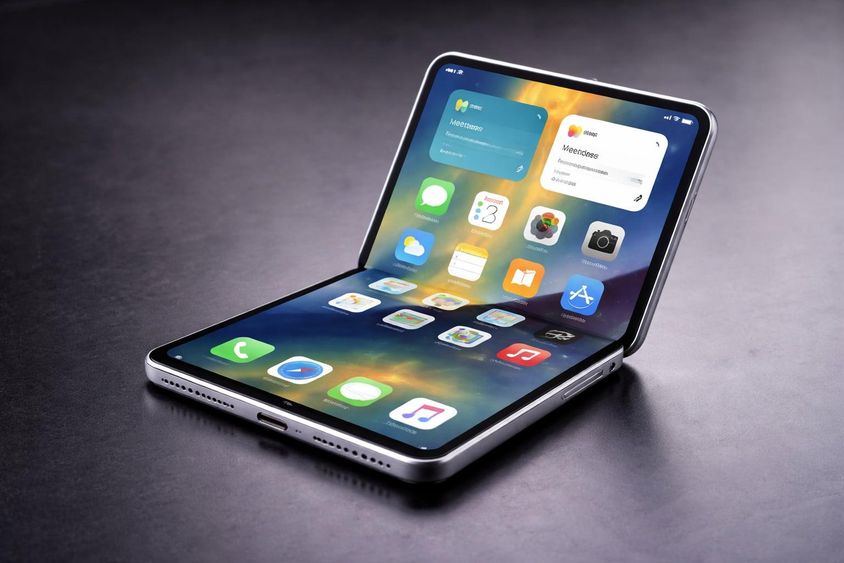
The Delay Behind the First Foldable iPhone
The smartphone market has seen spectacular development in recent years, but one area has remained particularly exciting: the world of foldable devices. While several manufacturers have been present in this segment for years, a major name has so far stayed out of the competition. Now, however, it seems that this is changing, and the first foldable iPhone is on its way. The excitement, however, is paired with an important question: why might the release be delayed, and what does this mean for the market?
On the Verge of a New Era
Foldable phones are not just new models but represent an entirely new category. These devices aim to erase the boundary between traditional smartphones and tablets. With a single motion, we can switch from a compact device to a large-screen workspace, opening up new possibilities in multitasking, media consumption, and productivity.
The first foldable iPhone would step in this direction. It is not merely a new model but a device that promises a completely new user experience. However, this comes not only with advantages but also with significant technological challenges.
The Price of Technological Complexity
Developing foldable displays is one of the most complex tasks in the electronics industry. It is not enough for the display to be thin and flexible; it must also remain durable after thousands of bends. Any tiny error during production can cause serious problems, whether it be screen breakage, wrinkling, or hinge mechanism failure.
There can be no compromise with such a device. If the display is not perfect, it affects the judgment of the entire product. This is one of the main reasons why the manufacturer would rather wait and not rush to market.
Why Might the Release Be Delayed?
Current expectations suggest that the device may be presented at a fall event, during the usual annual iPhone unveiling. However, the actual store release could be delayed, possibly until the end of the year.
This kind of delay is not unprecedented. There have been instances before where a model showcasing new technology became available only months later. The reason is simple: ramping up production for new formats is time-consuming, and quality assurance is much stricter.
This is especially true for the foldable iPhone. Manufacturing the displays, fine-tuning the hinge mechanism, and testing the long-term reliability of the entire device all take time. Such a product is not just a new phone but an entirely new platform.
Not a Mistake, but a Strategy
Many tend to see the delay as a problem, but it is much more of a conscious decision. When introducing a new category, what matters is not who arrives first, but who arrives with the best product.
Appearing too early can be risky. If users encounter flaws, it erodes trust in the long term. With a foldable device, reliability is particularly important, as mechanical movement introduces new sources of error.
Therefore, the delay is more a sign that the manufacturer does not want to compromise. They would rather release later but with a more refined product.
What Can the New Form Bring?
The biggest advantage of the foldable iPhone could be versatility. It can combine the functions of a phone and a tablet in a single device. This can be particularly appealing to those who work a lot on the go or frequently consume media content.
The larger display also opens up new possibilities for applications. Better multitasking, more advanced application management, and a new type of user experience can become available. This poses not only hardware but also software challenges, as the operating system must be adapted to this.
Market Impact and Competition
The foldable phone market is currently relatively narrow but rapidly growing. The appearance of a new player can significantly accelerate this process. If the foldable iPhone is successful, it can inspire other manufacturers to undertake new developments.
This competition ultimately benefits users. More innovation, better quality, and a wider selection can appear on the market. However, the issue of price remains an important factor, as foldable devices currently belong to the premium category.
Dubai and Technology Trends
It is interesting to observe how quickly such new technologies appear in markets like Dubai. The city has long been known for its openness to innovation, and new devices often become available here the fastest in the world.
The foldable iPhone is expected to quickly become popular here as well, especially among premium users. The business and technology environment provides an ideal platform for such innovations.
The Direction of the Future
Foldable phones are not just a short trend. They are much more part of a longer-term development direction that builds on the flexibility and versatility of devices.
Therefore, the delay is not a setback but a sign that the technology is still being fine-tuned. When the first foldable iPhone finally arrives, it will likely not just be a new model but the beginning of a new era.
Summary
The appearance of the foldable iPhone can be a milestone in the history of smartphones. Although the presentation is expected to happen sooner, the actual market release may be delayed. However, this is not due to a problem, but a commitment to quality.
The technological challenges, manufacturing difficulties, and new user experience all contribute to making this device special. Those who wait can receive a more refined and reliable product.
The direction is clear: the future is not just about faster and stronger phones, but more flexible and versatile devices. The foldable iPhone could be one of the most important milestones on this path.
If you find any errors on this page, please let us know via email.


