UAE Workers: Staying Steady Amid Uncertainty
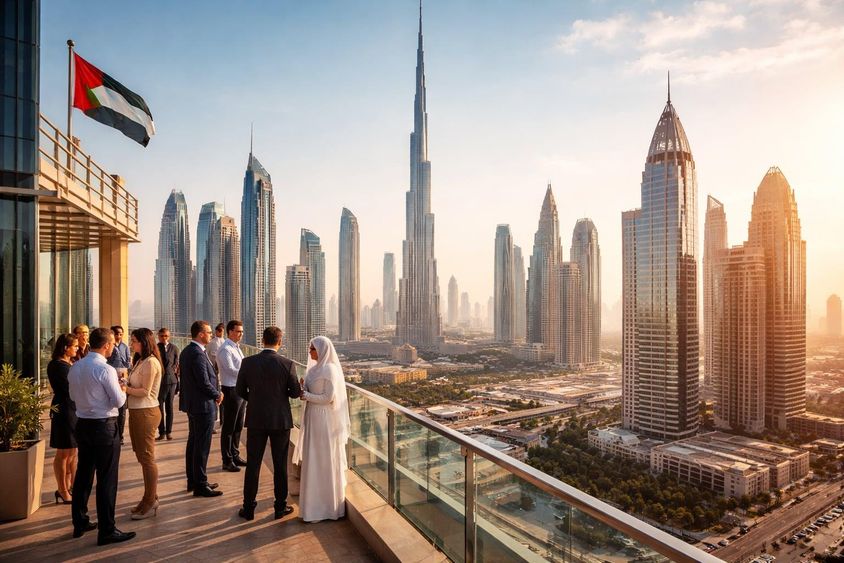
Stability Amid Uncertainty: Why Workers Stay in UAE
Recent geopolitical tensions have caused many people to reconsider their positions worldwide, especially in regions directly or indirectly affected by conflicts. The UAE, however, finds itself in a unique situation: despite significant uncertainty in the region, the majority of workers choose not to leave. This may seem surprising at first, but upon closer examination of the economic, social, and operational factors, a clear picture emerges.
The Role of Trust in Decisions
One of the most crucial factors contributing to staying is trust in stability. The UAE has consciously built an economic and institutional system in recent years that can withstand external shocks. Workers value not only the current situation but also how the country has handled crises in the past.
This trust is not empty promises but based on concrete experiences. Functioning state systems, transparent regulations, and swift responses all contribute to preventing people from making panic-driven decisions. Uncertainty is naturally present, but it does not dominate everyday life.
The Resilience of the Labor Market
The UAE's labor market is one of the strongest factors preventing mass exodus. Employment has shown significant growth in recent years, and the workforce has been continuously expanding. This is not only measurable in numbers but also in the quality of opportunities available.
Most companies continue to operate, projects are ongoing, and economic activity has not ceased. Despite operational complexities and the need for greater caution, the system's foundations remain stable. This kind of operational continuity is crucial for workers.
Cautious Operations, But No Shutdown
It is important to emphasize that the current situation does not mean a complete shutdown. Business life continues, administrative systems are active, and state processes are ongoing. However, a sense of caution is clearly perceptible.
Companies are planning much more consciously, especially regarding travel and international movements. Short-term decisions are being made, reviewed more frequently than before. This is not a weakness but an adaptation: a strategy that allows for rapid response.
Immigration Systems: Functioning, Yet Changing
The immigration and visa systems continue to function, which is vital for the country, as the UAE's economy heavily relies on international labor. However, processes may slow down in some cases.
This is not due to system failure but the changing global environment. Diplomatic capacities may decrease, some processes may become less predictable, yet the system remains fundamentally stable. This means that those thinking long-term can still count on a presence in the UAE.
Dubai's Economic Defense Mechanisms
Dubai's economic response deserves special attention. The government has launched targeted support packages to protect jobs and maintain economic activity. These measures provide not only short-term assistance but also send a strong signal to the market.
Businesses are thus able to plan, even if the environment becomes more unpredictable. Workers see a system behind them that will not abandon them. This is as important psychologically as it is in terms of concrete economic support.
Aviation and Mobility
Aviation is one of the most sensitive areas in such situations, yet it clearly demonstrates the UAE's resilience. Although partial restrictions have been enacted at certain times, there has been no complete shutdown.
Flights continue to operate, though with modified schedules and enhanced safety measures. This allows the country not to become isolated and maintain international connections. Mobility is thus more limited, but it has not ceased.
The New Role of Employers
In the current situation, the role of employers has become more significant. It is not enough to maintain traditional operations; active communication and support are required. Companies must continuously monitor the conditions, safety, and plans of their employees.
This requires a new type of leadership attitude, where flexibility and empathy are as important as efficiency. For workers, this reinforces the feeling that they matter not only as resources but also as people.
Selective Movement Instead of Mass Exodus
While relocations and relocations occur, they are not massive. Rather, a selective process is observed, where changes are decided upon only for certain positions or projects.
This shows that the market does not react with panic but with targeted decisions. Both companies and workers weigh their options and only make moves when truly necessary. This kind of rationality is crucial in maintaining stability.
Future Outlook
The current situation undoubtedly presents challenges, but it does not spell systemic collapse. The UAE continues to operate, adapt, and respond. The economic foundations are stable, the job market is active, and government measures serve continuity.
Workers' decision to stay is not accidental. It is a conscious choice backed by experience, trust, and rationality. The world is changing, the environment is becoming more uncertain, but the UAE's example shows that a well-built system can handle these challenges.
And perhaps the most important lesson: it's not the presence of uncertainty that matters, but how a country responds to it. The UAE's current operation shows that stability is not coincidental but a consciously built result.
If you find any errors on this page, please let us know via email.


