UAE Travel Ban: Effects and Implications
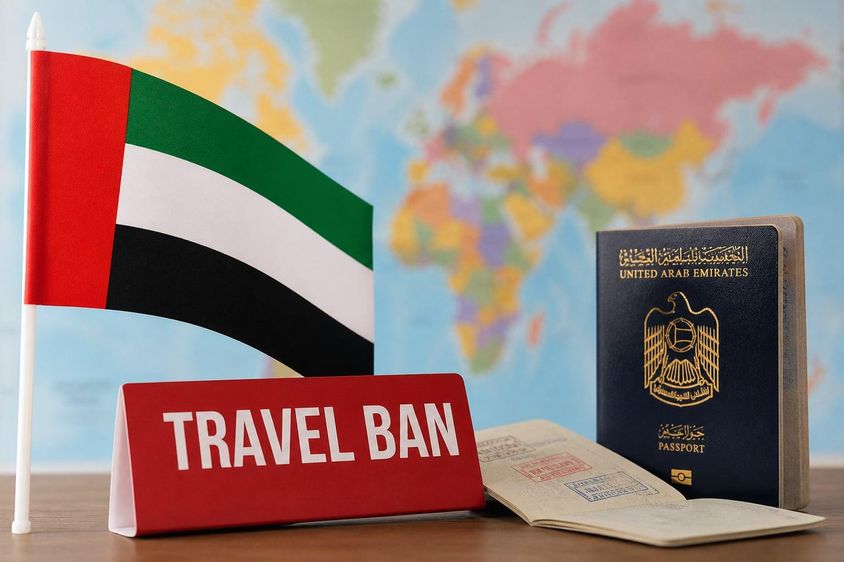
The United Arab Emirates' New Travel Ban: Regional Impacts
The foreign authorities of the United Arab Emirates have made a clear and decisive move in response to developments in the Middle East: a temporary travel ban has been announced for its citizens to Iran, Lebanon, and Iraq. This decision is not an isolated measure but part of a broader security strategy aimed at protecting citizens in an increasingly unpredictable geopolitical environment. The announcement comes at a crucial time, with tensions escalating in several parts of the region and the security situation subject to rapid changes.
Authorities have not only ordered the suspension of these travels but have also issued a clear ultimatum to citizens already in these countries: leave the region as soon as possible and return to the UAE. This step indicates that decision-makers view the situation not as a short-term inconvenience but as a real and immediate risk.
What's Behind the Decision?
The geopolitical dynamics of the Middle East have long been complex, but recent events have increased the uncertainty. Regional conflicts, political tensions, and security incidents have together created an environment where the risks of travel have significantly increased. The UAE traditionally conducts pragmatic and forward-looking foreign policy, so such measures are not surprising when the goal is to ensure the safety of its citizens.
It is also crucial to note that modern travel is not just a matter of tourism. Business relations, investments, diplomatic presence, and workforce movements can all be impacted by such a decision. The travel ban, therefore, affects not only individuals but also has economic and political implications.
Impact on Daily Life
The measure has immediate consequences for those who regularly travel to the region for business or family reasons. In many cases, these trips are based on long-term relationships, so the sudden restrictions can cause significant logistical and financial challenges. However, the logic behind the decision is clear: prevention is always cheaper and safer than managing a crisis.
For those currently in the affected countries, the situation is more urgent. Organizing a return home in a short time frame is not always simple, especially if air travel is also affected by regional events. In such cases, the role of diplomatic missions and authorities is crucial, as they provide the necessary information and support.
What Does This Mean for Dubai?
The decision does not directly target Dubai’s operations, yet it can significantly affect the city's international relations. Over the past decades, Dubai has become one of the region’s most important business and tourism hubs, maintaining close relations with numerous Middle Eastern countries. Such a travel ban can temporarily slow business traffic and reduce regional mobility.
However, Dubai's strength lies in its flexibility. The city's economy is diversified and able to swiftly adapt to changing circumstances. In these situations, connections with other markets, such as Europe or Asia, often gain more importance, potentially creating new opportunities in the long term.
Security as a Primary Consideration
The most important message of the travel ban is that security is paramount. With this measure, the UAE made it clear it will not risk the lives and well-being of its citizens, even if it involves short-term economic or logistical difficulties.
This approach is not new. The country has repeatedly demonstrated in recent years that it can react quickly and efficiently to global and regional challenges, be they health crises, economic downturns, or security threats. Such measures strengthen public trust and contribute to maintaining stability.
Possible Future Scenarios
The development of the current situation largely depends on how political and security conditions evolve in the region. If tensions ease, the travel ban could be lifted relatively quickly. Otherwise, long-term restrictions may be expected, potentially transforming travel and business practices permanently.
Another possible scenario is that digital solutions become even more prominent. Online meetings, remote collaboration, and virtual presence are already vital components of the global economy, and such situations can further strengthen this trend.
Summary
The UAE's decision to ban travel to Iran, Lebanon, and Iraq sends a clear message about the current state of the region. While the measure may pose short-term inconveniences, in the long run, it serves to preserve security and stability. For Dubai and the entire country, this is another test that highlights how swiftly and effectively they can adapt to a changing environment.
The coming period will be crucial in terms of determining the region's future trajectory. It is certain that such decisions are not made randomly but are the results of thorough analyses and risk assessments. The travel ban is thus not merely a restriction but a strategic step in an uncertain world.
If you find any errors on this page, please let us know via email.