UAE Schools Reopen After Remote Learning
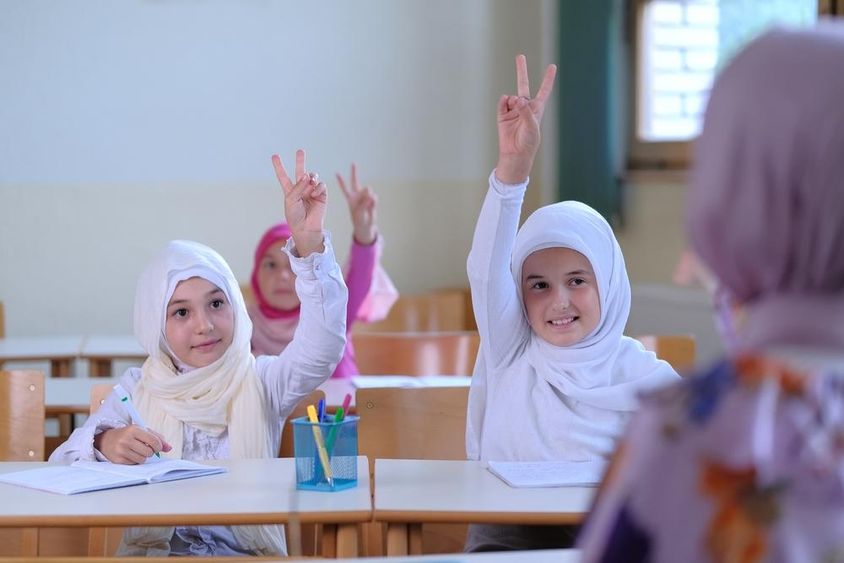
Schools in the UAE Reopen After Remote Learning Period
The education system in the United Arab Emirates has demonstrated its quick adaptability once again, as the country's authorities announced that, from May 11, 2026, in-person education would resume in schools, universities, and kindergartens. After a brief implementation of remote learning, students returned to classrooms on Monday morning, while the country remains on heightened security alert due to regional tensions.
The decision was announced by the UAE Ministry of Education, emphasizing that ensuring the continuity of education remains a priority, along with guaranteeing the safety of students, teachers, and school staff. Recent events have shown once again how swiftly the country's education system can transition between different learning models without causing significant disruptions.
Swift Return to Normal Operations
Between May 5 and May 8, remote learning was implemented in the UAE as a precautionary measure. The decision affected public and private schools, kindergartens, and universities nationwide. Not only students, but teachers and administrative staff also continued their work online.
According to the authorities, the temporary shift aimed to protect the educational community at a time of increased uncertainty in the region. However, the country's leadership emphasized from the start that the situation was under continuous assessment, and they intended to return to in-person education as soon as feasible.
The announcement finally arrived on the evening of May 10, when the ministry officially stated that classroom education would resume nationwide starting Monday.
Reopening of Dubai Educational Institutions
Dubai's education authority, the KHDA, confirmed that all educational institutions in the emirate will reopen. The decision includes private schools, international educational institutions, and other educational centers.
The authority stressed that all institutions are required to maintain strict safety protocols and health measures. Based on experiences from previous years, Dubai's educational system already possesses the technological and organizational solutions that enable a quick transition from one educational model to another.
This is particularly crucial in a cosmopolitan city where children from families all over the world learn together, and where a stable educational environment is of paramount economic and social interest.
Sharjah Returns to In-person Education Too
Not just Dubai, but Sharjah has also announced the resumption of in-person education. According to the Sharjah Private Education Authority, all private schools and kindergartens reopened on Monday.
This decision highlights that the UAE's educational system operates in a coordinated manner nationwide. While each emirate has its own educational oversight authority, they implement unified strategies during crises.
In recent times, the authorities have conducted more inspections, preparatory programs, and operational reviews to ensure that institutions are always prepared for a swift transition.
Universities Also Operating at Full Capacity Again
The decision also applies to higher education institutions. The UAE's Ministry of Higher Education and Scientific Research confirmed that students, faculty, and administrative staff at both public and private universities are returning to campuses.
Over recent years, the country's universities have made significant technological advancements, making hybrid education an almost standard operational model. Many institutions are capable of switching to a fully online system within hours, while lectures, exams, and administration proceed without interruption.
This is especially important for international educational hubs that host tens of thousands of foreign students.
Exams to Continue in Person
The Ministry of Education emphasized that exams and international assessments will continue to take place in-person according to previously approved schedules.
This decision is particularly critical because a significant percentage of international schools in the UAE follow British, American, IB, or other international curricula. The authenticity and global recognition of exams in these institutions is a fundamental requirement.
Maintaining in-person examinations indicates that authorities consider the situation stable and secure enough for the primary educational processes to continue under normal circumstances.
Heightened Security Alert in the Country
Nonetheless, the decision comes against a backdrop of significant regional security concerns. The UAE's Ministry of Defense confirmed that on May 10, the country's air defense systems intercepted and destroyed two drones.
According to the authorities, there were no injuries or fatalities during the incident, but it illustrates the continued sensitivity of the region's security landscape.
Despite this, the country's operations have remained stable, with transportation, business, and the educational system continuing to function. In recent years, UAE leadership has placed considerable emphasis on maintaining essential services even during crises.
Creating a Flexible Education System is the Priority
One of the most important lessons from recent times is that the future of education no longer relies solely on the traditional classroom model. In the UAE, there is a growing focus on developing flexible systems capable of quickly adapting to changing circumstances.
Developing digital infrastructure, utilizing online platforms, and preparing teachers technologically have long been part of the country's educational strategy. Recent events have once again proven that these investments are not just convenient but vital in crisis situations.
For students, the use of online and hybrid learning has also become customary. Many schools already employ systems where classes are available in digital form, homework is assigned through online platforms, and most communications take place electronically.
Dubai Continues to Project an Image of Stability
For Dubai, it is particularly important to convey an image of stability and security to the world. The emirate's economy largely relies on international business, tourism, and the expatriate population, making the smooth operation of education strategically significant.
For international families, one of the most important factors is always having their children's education take place in a predictable and stable environment. Recent swift measures demonstrate that Dubai and the United Arab Emirates are capable of reacting to emerging situations quickly and without causing long-term disruptions.
Therefore, the country’s educational system is not only modern and technologically advanced but has also become highly adaptable in recent years.
If you find any errors on this page, please let us know via email.


