UAE Rainfall: Why This Time Is Different
It's Not About Quantity: Why Recent Rainfall Differs from the Last Flood
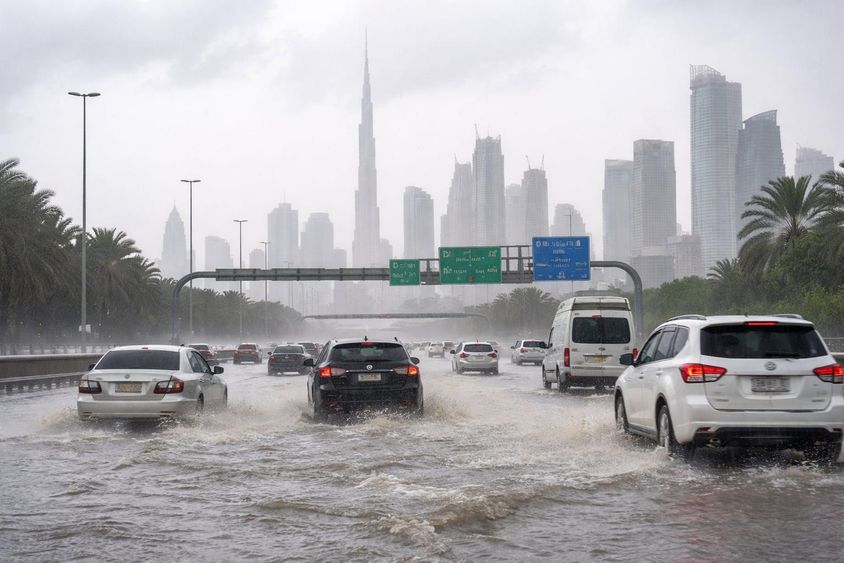
The weather in the United Arab Emirates has once again become a focal point of attention after significant rainfall was recorded in various regions over the past few days. Many people immediately recalled the historic floods of 2024, but experts believe that the current situation fundamentally differs from that extreme event. While the visuals and local disruptions may evoke similar feelings, the meteorological processes behind the scenes paint a completely different picture.
To understand the difference, it is not enough to merely examine the amount of rain that fell. The key lies in the intensity of the rainfall, its temporal distribution, and the structure of the weather system. These are the three factors that determine whether a rain event becomes a mere inconvenience or a serious flood situation.
The Reality Behind Numbers: How Much Rain Actually Fell?
At first glance, the figures do seem significant. In several locations, rainfall between 50-80 millimeters was measured, which is considerable for the region. In some areas, such as mountainous or valley regions, this amount can accumulate quickly and cause localized flooding.
The difference begins, however, in that while during the 2024 event, some places saw over 200 millimeters of rain fall in less than 24 hours, this time the amount was spread out over several days. This may not initially seem like a dramatic difference, but in practice, it makes a huge difference.
The soil, drainage systems, and infrastructure all get the time to manage the incoming water volume. This time factor prevents the system from being overloaded.
The Role of Timing: When Minutes Matter
Experts emphasize that flood risk depends not only on how much rain falls but also on how quickly it comes. If a large amount of precipitation arrives in a short time, the water simply can't flow away or soak in.
During an intense, several-hour rainstorm, an urban environment is particularly vulnerable. Due to asphalt, concrete, and dense development, the water cannot be absorbed, leading streets to quickly become submerged. This occurred in 2024, when the system became literally overwhelmed.
In the current situation, the rain arrived in several waves. This allowed drainage systems to work continuously, rather than having to manage the entire volume at once. The difference is like emptying a full pool at once versus letting the water drain slowly and continuously.
Two Different Worlds: Differences in Weather Systems
The 2024 event was the result of an extremely intense, concentrated weather system. A single, highly active system caused the rain, unleashing a vast amount of precipitation in a short period.
Now, however, we are talking about rainfall activity related to a low-pressure system, consisting of multiple waves. This means the precipitation did not appear as a single explosive event but in several smaller, consecutive phases.
This difference fundamentally determines the impacts as well. In the former case, sudden and drastic flooding can occur, while in the latter there is more gradual water accumulation.
Why Does the Situation Still Seem Serious?
Many ask: if the current rainfall is less intense, why do we still experience disruptions? The answer lies in multiple factors.
Firstly, the infrastructure of the United Arab Emirates was not fundamentally designed for extreme rainfall. Although significant developments have occurred in recent years, sudden rain still poses a challenge.
Secondly, soil saturation also plays a role. If rain falls for several consecutive days, the soil gradually loses its ability to absorb water. In such cases, even smaller amounts of rain can more easily cause surface flooding.
Misleading Terms: Not a Tornado, Not a Cyclone
Spectacular but often inaccurate terms spread rapidly on social media. Some referred to the phenomenon as a "tornado" or a "cyclone," which is not technically correct.
A tornado involves extremely strong, continuously destructive winds causing significant structural damage. Such a phenomenon was not present. The current weather situation was a classic storm system with intense rainfall but not extreme wind conditions.
These misleading terms are not only inaccurate but can also cause unnecessary panic. Official meteorological analyses provide a much more nuanced and reliable picture.
The Lesson: Not All Rain is the Same
The most important lesson is that the amount of rain alone is not sufficient to assess the severity of an event. Intensity, timing, and system structure together determine the consequences.
This is especially important for the future. As climate patterns change, extreme weather events may become more frequent. Accurate understanding and effective communication are key to preparedness.
What Does This Mean Practically for Residents?
The current situation shows that while the recent rainfall does not reach previous extreme levels, it should still be taken seriously. Transport disruptions may occur, water may accumulate in certain areas, and the weather can change rapidly.
However, it's important to see that the system is not on the brink of complete collapse. The difference lies in the fact that now there is time to respond. This time provides an opportunity for both authorities and residents to handle the situation together.
In the future, the accurate interpretation of forecasts will play an increasingly important role. Not every alert signifies a disaster, but every warning is issued for a serious reason.
Summary: Differences Lie in the Details
The latest rains in the United Arab Emirates illustrate well that surface impressions are often misleading. While the precipitation was significant, the meteorological processes behind it cannot be compared to the previous extreme event.
The most important difference lies in timing and intensity. This is the factor that determines whether a rain event remains a manageable challenge or turns into a serious crisis.
This realization not only helps in understanding the current situation but also in preparing for the future. Weather is not just numbers – but dynamic processes, understanding which avoids easy misconceptions.
If you find any errors on this page, please let us know via email.


