UAE Intercepts Missiles: A New Security Milestone
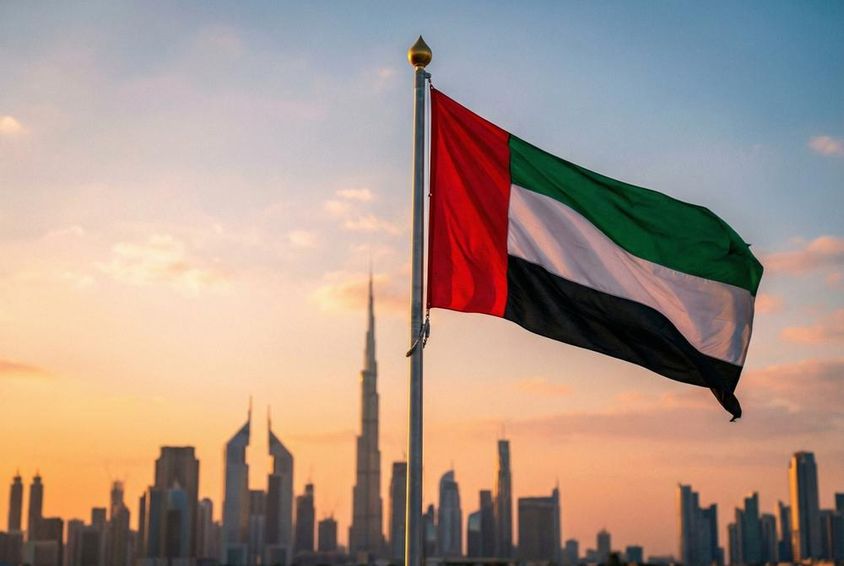
UAE Successfully Intercepts Missiles Launched from Iran
Regional Tensions – Another Critical Moment
The geopolitical map of the Middle East has been in constant flux over the past years, but from time to time, events occur that particularly shake the region's stability. The news that the United Arab Emirates' air defenses successfully intercepted missiles directed toward the country once again highlights the security situation in the region. Such incidents are not solely military issues but also have economic, social, and psychological impacts, especially for a country that has become a symbol of stability, modernization, and economic growth over the past decades.
The Emirates is a regional hub for global trade, tourism, and financial services. Dubai, in particular, has a strong international presence, attracting companies, investors, and tourists from around the world. Such a security incident may naturally cause concern among the international community. However, the fact of a successful interception conveys another message: the country's defense system is functioning.
The Role of Air Defense in a Modern State
Air defense is a key element in the security strategy of modern states. Intercepting missiles requires technological, intelligence, and operational preparedness. Such an operation is not just a military reaction but the result of a complex system built on radar networks, forecasting systems, missile defense technology, and well-trained personnel.
The UAE's ability to neutralize the threat signifies that the defense investments made in recent years have not been in vain. In the region, the development of air defense systems is not a luxury but a strategic necessity. A quick response not only provides physical protection but also serves as a confidence factor for both the population and international partners.
Economic Impacts and Investor Confidence
Such news can initially cause uncertainty in the markets. Investors react sensitively to geopolitical risks, especially those linked to direct military events. Nevertheless, successful interception and rapid official communication can have a stabilizing effect.
Dubai's economy is built around real estate, tourism, logistics, and financial services. Investor confidence is based on predictability and security. If a country can demonstrate that it effectively protects its territory in case of threats, it can even strengthen the perception of stability in the long run. For international companies, it is crucial that their operations do not face disruptions and that infrastructure remains protected.
While such incidents may temporarily unsettle sentiments, decisive action and controlled crisis management can quickly restore confidence.
Social Reactions and Everyday Life
The UAE's population is highly diverse, with a significant expatriate community. News of a missile threat can naturally create tension in daily life. Information—and often speculation—spreads quickly on social media. In such situations, the speed and transparency of official communication are particularly important.
In the case of Dubai, the city's operations typically return to normal even after unexpected events. The seamless functioning of airports, ports, transport systems, and financial centers is crucial. If these do not suffer prolonged disruptions, it signals that the situation is under control.
For the public, the most pressing question in such times is: Are we safe? The successful interception provides a clear answer to this question, even if regional tensions persist.
Regional Power Dynamics and Strategic Message
Intercepting missiles is not just a defensive act but also a strategic message. In the region, every such event has multiple layers: military, diplomatic, and political. Successful interception indicates that the UAE is not a passive actor and is capable of defending its airspace and infrastructure.
This message is not only directed at those directly involved but also at the international community. Due to its role in the global economy, the UAE's stability extends beyond the region. Trade routes, energy supplies, and financial transactions are all intertwined with the security of the area.
However, the geopolitical situation remains fragile. A single incident does not constitute complete escalation, but it serves as a reminder that regional conflicts' shadows can sometimes reach countries that have so far developed in relative calm.
Stability as a Strategic Priority
The UAE's development model is built on stability. Long-term plans—be it technological innovation, artificial intelligence, green energy, or tourism investments—all assume that the country can maintain a secure environment. A successful missile interception is not just the closure of a military event but also evidence of the functioning of the stability strategy.
Dubai, as a global city, is particularly sensitive to international perceptions. The city's image revolves around modernity, luxury, and security. Such an incident may temporarily raise questions, but if the response is swift and effective, it can reinforce the perception of the city's resilience.
Summary: Managed Crisis
The news of intercepting the missiles received significant attention, but the essential element of the story is not merely the threat, but the response. The successful interception demonstrates that the UAE can manage challenges. Tensions in the region are real, but technological and strategic preparedness is a crucial factor in maintaining stability.
For global investors, companies, and the public, the most important message is that the system works. Modern air defense, rapid response, and infrastructure protection all contribute to making the country—and within it, Dubai—remain one of the most stable and attractive centers in the region.
The history of the Middle East is full of challenges, but it is also apparent that prepared states can minimize risks. This incident is more about defense efficiency than vulnerability.
If you find any errors on this page, please let us know via email.