UAE Gears Up for Flying Taxis
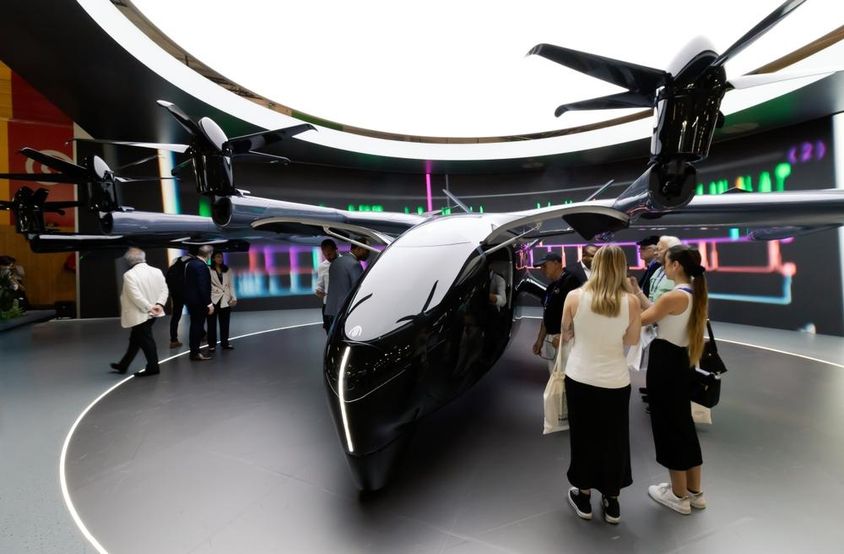
Flying Taxis on the Horizon: UAE's Transportation Revolution May Launch This Year
The United Arab Emirates may once again capture the world's attention, as it seems likely that the trial operation of flying taxis could begin in Abu Dhabi and Dubai by the end of the year. This isn't just the introduction of a technological innovation but could herald a new era of transportation that could revolutionize urban mobility.
The Future is At Our Doorstep
In recent years, numerous promises and prototypes have emerged in the world of flying cars, yet few countries appear to have a realistic chance to make them operational. The United Arab Emirates—particularly Dubai and Abu Dhabi—are at the forefront in this area as well. According to a representative of the country's aviation authority, there is a strong possibility that the service could launch before the year's end, provided all certification processes are completed on time.
Who is Behind the Technology?
Two American companies, Archer Aviation and Joby Aviation, are currently leading the flying taxi technology race in the Emirates. Both companies have long been working on electric aircraft specifically aimed at transforming urban transportation. Their aircraft can take off and land vertically, similar to helicopters, but are quieter, more environmentally friendly, and offer better passenger comfort.
For instance, Archer Aviation's "Midnight" model is designed so that the boarding experience feels more like getting into a car than clambering into a helicopter. The journey is smooth and quiet, and the transitions between takeoff, hovering, and flying are almost seamless.
Why the UAE?
There's a reason the United Arab Emirates has become a primary test market for flying taxis. The country's infrastructure is advanced, and regulators are open to innovation. The collaboration between government bodies, regulatory authorities, and technology partners allows for the relatively quick and safe introduction of new transportation solutions.
However, the crowded airspace over Abu Dhabi and Dubai presents a significant challenge. With eight international airports located closely together and already heavily trafficked by commercial, helicopter, and VIP flights, operating flying taxis in such an environment requires careful planning, regulation, and technological integration.
What Challenges Must be Overcome?
While flying taxi technology is advancing rapidly, the biggest obstacle remains the certification and safety processes. Aviation regulations worldwide are stringent as passenger safety is of utmost importance. The UAE aviation authority has stated that it will only grant permissions when the reliability of the system is assured from every aspect.
The companies are currently carrying out daily tests in California, but Archer plans to ship its aircraft to the Emirates over the summer to begin tests in a real-world environment there. The country's climate, airspace, and infrastructure offer a unique proving ground to demonstrate how the technology performs in real conditions.
What Impact Could This Have on Daily Life?
If flying taxis do begin operations by the year's end, it could dramatically change the transportation dynamics in Dubai and Abu Dhabi. The current road traffic is often congested, especially during peak hours, and distances don't always allow for quick travel. The introduction of flying taxis could significantly reduce travel time, particularly between major hubs, airports, and business districts.
Furthermore, this new mode of mobility could also positively impact tourism. Visitors seeking unique experiences would likely be eager to try the transportation method of the future, whether for panoramic city tours or quick transfers.
The Future is Within Reach
Although the exact date is still unknown, there are increasing signs that the first official flying taxi services could commence in the United Arab Emirates by the end of this year instead of in the third quarter of 2026. Thanks to the leadership of Archer and Joby, Dubai and Abu Dhabi could become a global center for the new era of urban air mobility.
The path won't be easy—the regulatory, technological, and logistical challenges remain significant. Nevertheless, the United Arab Emirates possesses all the attributes needed to pioneer the introduction of a revolutionary form of transportation that, until now, we have primarily recognized from sci-fi films. Dubai can once again prove that it not only follows but shapes the future.
(Source of the article: Based on an announcement by the General Civil Aviation Authority (GCAA).)
If you find any errors on this page, please let us know via email.


