Air Corridors Reopen Travel in the UAE
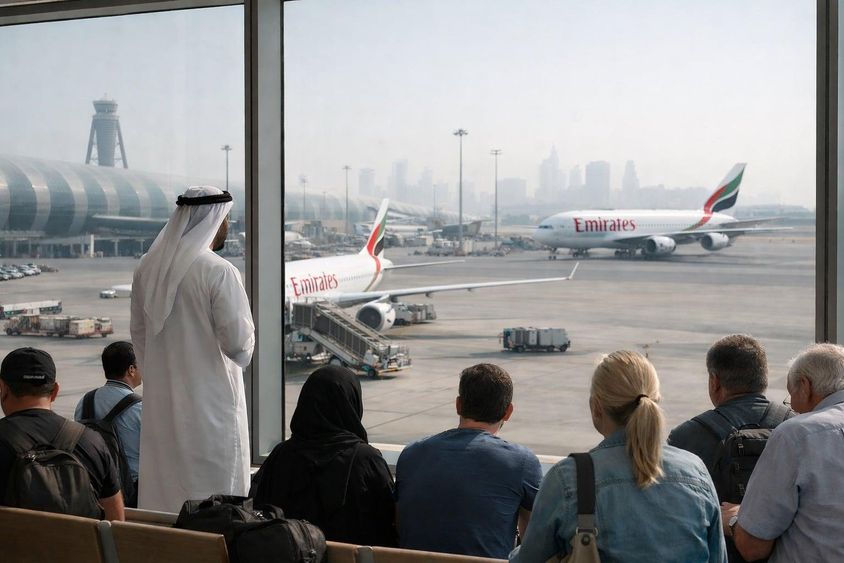
Air Corridors Ease Travel in the UAE
In recent days, the United Arab Emirates has introduced a special measure to alleviate congestion in air travel and assist those who need to travel urgently. Due to geopolitical tensions in the region, the temporary closure of the airspace caused significant disruptions to flight schedules, affecting thousands of passengers. To manage the situation, the country established air corridors with several states in the Persian Gulf region, enabling the gradual resumption of flights.
This measure primarily addresses the needs of those stranded in the country and those who need to travel urgently for reasons such as medical treatment or family emergencies. Although the air corridors operate with limited capacity, they provide significant assistance under the current circumstances.
Gradual Resumption of Air Transportation
Following the restriction of airspace, many airlines were forced to suspend their flights. This immediately impacted one of the region's busiest air hubs, where hundreds of thousands of passengers transit daily. The abrupt halt stranded many travelers at airports or in cities, disrupting transit travel.
Consequently, authorities decided to gradually reopen air traffic using a controlled system. This includes allowing up to 48 flights per hour on certain routes, maintaining crucial regional connections.
The establishment of air corridors allows airlines to operate at roughly 20–30% of their normal capacity. Although this is significantly lower than usual, it is sufficient to begin reducing passenger traffic and compensate for missed travel.
Who Benefits Most from the Measure
The limited flights primarily provide solutions for those who urgently need to travel. This includes passengers traveling for medical treatment, those needing to leave the country due to a family emergency, and transit passengers awaiting another flight.
Tourists temporarily stranded in the country also receive significant assistance through the new system. The air corridors allow them to gradually return to their home countries as flight schedules slowly normalize.
An additional advantage of the system is the reduction of congestion at airports. As flights resume, passengers can gradually leave the country, easing airport operations and reducing wait times.
Dubai's Key Role in Regional Air Travel
The operation of air corridors is particularly important for a global aviation hub like Dubai. The city's airport is one of the world's busiest international airports, providing connections across multiple continents.
The partial resumption of flights ensures that Dubai remains a crucial transit point in international travel. Despite the current capacity limitations, the system maintains a portion of global air connections.
From a tourism perspective, it is crucial that the city does not become completely cut off from international travel networks. The limited flights help prevent a complete shutdown of the tourism sector, allowing travelers to gradually return.
High Ticket Prices Due to Limited Capacity
Experts say that higher airfares are a natural consequence of the current situation. With a limited number of flights and significant travel demand, demand exceeds supply.
This means those urgently wishing to travel often encounter higher prices when purchasing tickets. Airlines cannot currently operate their flights at full capacity, resulting in limited available seats.
However, experts believe this condition is temporary. If air corridor operations remain stable and the regional situation does not deteriorate further, more routes may gradually open up.
Assistance from Communities and Organizations
In the current situation, several community organizations and civil groups have provided assistance to travelers. Some groups particularly support those needing urgent travel for medical reasons.
There have been cases where patients needed to return in time to continue their treatment. In these situations, community organizations facilitated safe transport for those affected.
In addition, there were transit passengers stranded in the country. Assistance played an important role in these cases as well, as many unexpectedly found themselves in difficult situations due to travel restrictions.
Supporting the Economy and Supply Chain
Air corridors are essential not only for passenger traffic but also for cargo transport. Aircraft play a significant role in transporting perishable goods, which require fast logistics.
The limited number of flights allows these goods to continue reaching markets. This is particularly important for food supply and other perishable goods requiring quick transportation.
Therefore, the system not only provides a solution for travelers but also supports economic operations during a challenging time.
Awaiting Full Recovery
The primary goal of current measures is to maintain stability and gradually resume air travel. Although flight capacity is currently limited, experts hope that the system's operation will eventually enable more routes to open.
Many hope that air travel can at least partially return to usual operations before the upcoming holiday season. If successful, this would provide significant relief to both travelers and the tourism industry.
Until then, air corridors remain the most crucial tool for managing the situation. Limited but operational flights offer travelers the opportunity to safely and gradually reach their destinations as regional air travel slowly resumes.
If you find any errors on this page, please let us know via email.