UAE Bans All Drones and Light Aircraft
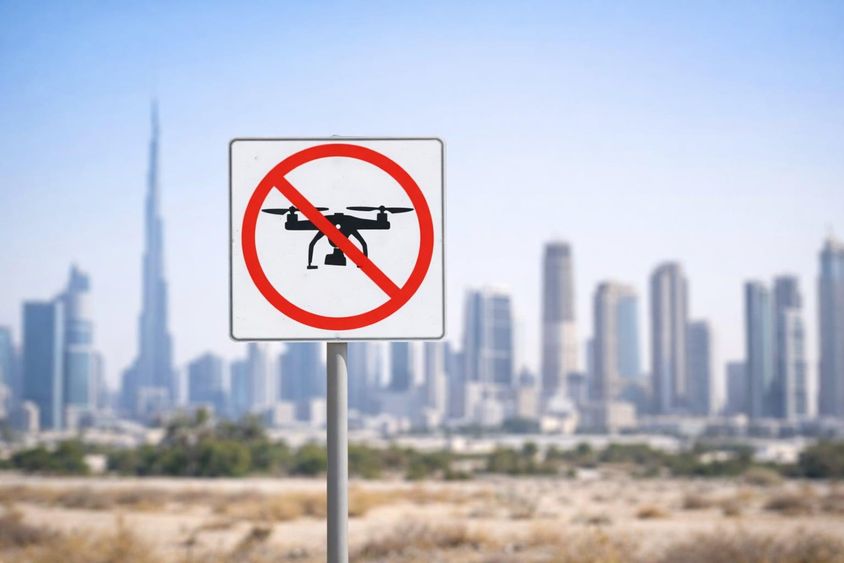
Complete Ban on Drones and Light Sports Aircraft in UAE
Airspace security in the United Arab Emirates has always been a matter of high priority, especially in a country that serves as one of the busiest aviation hubs in the world. Recently, the country's civil aviation authority announced a new measure: a complete ban on all drones and light sports aircraft across the entire territory of the country. The decision took immediate effect, aiming to strengthen public safety and protect the airspace under current conditions.
The authority clarified that the regulation applies to all types of equipment, whether hobby drones, sports aircraft, or other light aerial vehicles. Violating the rule could lead to serious legal consequences, so public and business cooperation is requested to ensure adherence to the regulations.
Background of the Decision
The UAE has seen rapid development in aviation technologies in recent years. The use of drones has become widespread, be it for media production, construction surveys, security surveillance, or even creating tourist content. Dubai, in particular, has become a global center for drone technology, where numerous innovative projects and experiments in autonomous flight have been launched.
However, parallel to this, the airspace has become increasingly crowded. Commercial airplanes, helicopters, drones, and various sports flying devices increasingly use the same airspace. In such an environment, even a minor error or irregularity can pose significant risks.
The newly announced ban is thus primarily a preventive safety measure. According to the authority, the current regional and security conditions justify heightened airspace protection; therefore, all non-essential flying activities have been temporarily suspended.
Previous Restrictions and Current Tightening
The current decision is not entirely unprecedented. It was already announced in early March that the permits for drones, gliders, and various hobby flying devices would be suspended for a week. At that time, the measure was presented as a temporary step aiming to assess the situation and strengthen safety protocols.
However, the current decision is much more comprehensive. The complete ban means no drones or light sports aircraft can operate in UAE airspace until further notice from the authority. This measure applies equally to individuals and businesses.
What This Means in Practice
The practical consequences of the ban could be significant, especially for those who regularly use drones in their work. The media industry, tourism marketing, construction surveys, and real estate showcases all rely heavily on drone technology.
Dubai, for example, is one of the most renowned cities in the world for breathtaking aerial footage. The city's skyscrapers, artificial islands, and futuristic districts often appear in drone videos, which are crucial tools for tourism and marketing. However, during the current restriction, such footage cannot be created.
The same holds for sports aviation. Light sports aircraft and gliders, popular in several regions of the UAE, primarily serve hobby and recreational purposes. These devices too cannot take to the skies during the ban.
Importance of Airspace Security
The airspace of the United Arab Emirates is an extremely important international transportation route. The country's airports serve tens of millions of passengers annually and represent one of the region's largest aviation hubs.
Dubai airport, for instance, has long been one of the busiest international airports in the world. With this level of traffic, maintaining airspace security is critically important. A drone flying irregularly or an unauthorized sports aircraft poses a significant risk to commercial airplanes.
Therefore, the authority emphasized that the current decision is primarily for prevention. Adhering to regulations is in the common interest of all residents and visitors.
Future of Technology in UAE
It is important to emphasize that the current ban does not mean that the country is turning away from drone technology. Quite the opposite: the UAE is one of the most active players in drone innovation and the development of autonomous air transportation.
Dubai, for example, has launched several projects in recent years aiming at future urban air mobility. These include drone-based logistics systems, air taxi concepts, and autonomous transportation solutions.
The current restriction should be viewed more as a temporary step aimed at stabilizing the security situation and strengthening control over the airspace.
Public Cooperation
The authority specifically called attention to the fact that public cooperation is crucial for complying with the rules. The use of drones has become extremely popular in recent years, with many considering it a hobby or a creative activity.
However, in the current situation, safety takes precedence over all other concerns. Violating the rules could not only lead to legal consequences but also endanger air travel and public safety.
Summary
The UAE's decision to temporarily ban the use of all drones and light sports aircraft clearly serves to enhance security. While the measure restricts the use of technology and the operation of certain industries in the short term, the goal is to maintain airspace stability and safety.
Dubai and the whole UAE remain a global center for technological innovation. The current step is more of a precaution, demonstrating that the country takes aviation safety seriously.
In the future, new regulations and more advanced airspace management systems are expected to emerge, allowing for the safe integration of drones and other new technologies into the aviation system. Until then, the most important message is clear: compliance with the rules is everyone’s shared responsibility for the safety of UAE's airspace.
If you find any errors on this page, please let us know via email.