UAE Aviation Soars: Over 250 Global Destinations
UAE Aviation Soars: Over 250 Global Destinations
The aviation sector of the United Arab Emirates has not only returned to its former level in recent years but has moved into an entirely new dimension. While many countries exhibit restrained operations due to geopolitical tensions and airspace restrictions affecting the region, UAE airlines continuously expand their networks regardless. Current data indicates that more than 250 cities are accessible directly or with a transfer, which is an outstanding performance on a global scale.
This growth cannot merely be measured in numbers. It is the result of strategic thinking that positions the country as one of the world's most important aviation hubs in the long term. Naturally, Dubai is at the core, but Abu Dhabi and other emirates are increasingly integrating into this ecosystem.
The Strategy Behind Global Connectivity
UAE airlines consciously build a network that connects Europe, Asia, Africa, and the Americas. This geographical advantage alone would not suffice without an aggressive yet flexible expansion strategy.
The concurrent operation of full-service and low-cost airlines is particularly effective. On one hand, long-haul flights are available for passengers seeking a premium experience, and on the other, shorter regional routes cater to price-sensitive travelers. This dual model allows almost every market segment to be covered.
The more than 250 destinations are not a static figure but a constantly changing network. The emergence of new destinations and the modification of seasonal flights demonstrate that UAE airlines are capable of quickly responding to changes in demand.
Strengthening Role of Africa and the Middle East
The African continent is becoming an increasingly important target for UAE airlines. Besides major cities, a growing number of emerging regions are being added to the network, which is significant both from a tourism and economic perspective.
The Middle East remains a fundamental pillar of operations. Short and medium-haul flights provide the stable traffic base upon which long-haul intercontinental flights are built. These connections are particularly important for trade, labor mobility, and business relationships.
Asia as a Key Growth Axis
Asia is one of the most dynamically developing regions in aviation, and UAE airlines recognize this precisely. India, Southeast Asia, and major cities in the Far East are all key destinations.
The density of flights and the number of destinations indicate that this market is not only currently important but will remain significant in the long run. Business travel, tourism, and diaspora traffic together ensure stable demand.
Europe Continues as a Fundamental Market
Europe is one of the most extensively covered regions for UAE airlines. Besides major capitals, more and more secondary cities are becoming accessible, which is particularly important for the diversification of tourism.
Cities like London, Paris, and Budapest are stable features of the network, but additionally, numerous smaller yet strategically significant destinations also appear. This means that the UAE is not only building on classic routes but is actively opening new markets as well.
America and Australia: Long-Term Connections
Flights directed towards the American continent are especially important in the premium segment. Besides major U.S. cities, Canada and South America are also increasingly connecting to the network.
Australia and Oceania are also stable parts of the system. These long-haul flights are significant not only because of passenger traffic but also from the perspective of global logistics chains.
Flexibility in an Uncertain Environment
Under the current circumstances, it is particularly remarkable that UAE airlines can maintain and even expand their networks. Despite regional conflicts and airspace restrictions, most flights continue to operate, albeit on modified routes in some cases.
This flexibility is crucial. For passengers, this means they can still rely on stable connections, even if the environment is unpredictable.
What This Means for Travelers
The more than 250 destinations are not just a figure. It is an opportunity for travelers to access almost anywhere through a single region. In this system, Dubai functions as a kind of global gateway where different parts of the world meet.
In addition to the expansion of travel options, awareness is also important. Schedules can change continuously, so it is always advisable to check current information directly with the airlines.
The Direction of the Future
UAE aviation is clearly moving in the direction of growth. New destinations, modern fleets, and ongoing developments all indicate that this trend may continue in the long term.
The question is no longer how many cities are accessible, but with what quality and efficiency the connections occur. In this regard, the UAE currently belongs to the forefront of the world.
Therefore, the more than 250 destinations are not just a milestone but a foundation upon which the future of global aviation can be built. With this strategy, Dubai and the entire region not only follow but shape international trends.
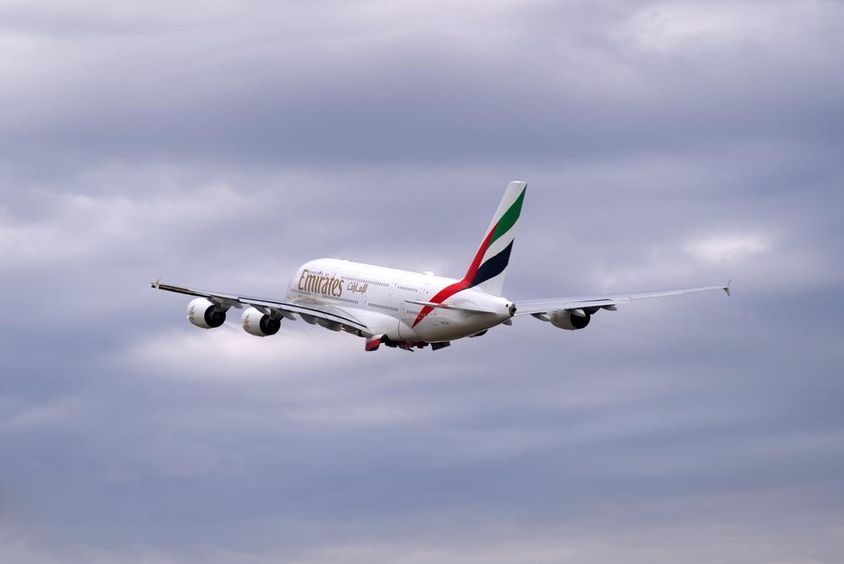
Source: Emirates Airbus A380
If you find any errors on this page, please let us know via email.


