UAE and India Forge Landmark Economic Partnership
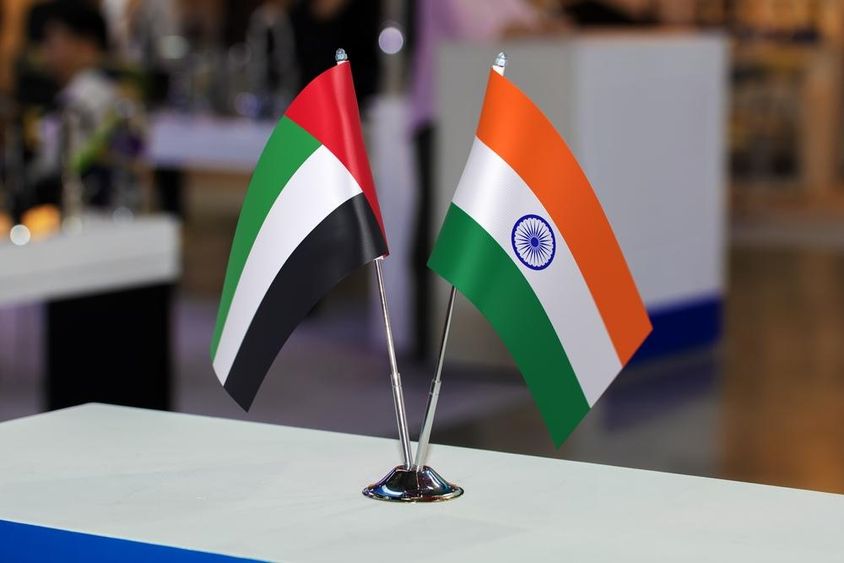
UAE and India Open New Economic Era: Billion-Dollar Investments, Strategic Partnerships, and Technological Collaboration
The relationship between the United Arab Emirates and India has undergone significant development in recent years, but the latest agreements have the potential to elevate cooperation between the two countries to a new level. In Abu Dhabi, strategic agreements have been made that could transform the energy sector, defense industry, technological developments, shipping, and infrastructure in the long term. At the center of these announcements is a massive $5 billion UAE investment package aimed at supporting India's economic growth, job creation, and modernization.
The meeting clearly indicated that the two countries no longer view each other just as trading partners, but as long-term strategic allies. The quantity and size of the collaborations also show that the economic relationship between the Gulf region and India is playing an increasingly important role in global economic power dynamics.
Abu Dhabi has become the center of diplomacy and business.
The talks took place in Abu Dhabi, where senior leaders and economic decision-makers participated in the discussions. The relationship between the two countries is further strengthened by the so-called Comprehensive Strategic Partnership and Comprehensive Economic Partnership Agreement, which have significantly increased bilateral trade in recent times.
The new agreements do not just carry political symbolism. They involve concrete financial and industrial collaborations that affect several sectors simultaneously. From energy supply to artificial intelligence and supercomputer development, the partnership is deepening across numerous areas.
For India, the UAE is one of the most important economic partners in the Middle East, while for the Emirates, India represents a huge consumer market, technological potential, and industrial capacity. Therefore, the relationship between the two countries now extends far beyond oil trade.
$5 Billion Investment Coming to India
The announcement that garnered the most attention was that the UAE will undertake investments worth a total of $5 billion in India across various sectors. The aim is not just financial return, but the creation of new jobs, infrastructure development, and support for India's economic growth.
This step clearly shows that the Emirates is thinking long-term regarding the Indian market. India's economy remains one of the fastest-growing in the world, and the country's digitalization and industrialization offer enormous investment opportunities.
The investments are expected to impact several strategic areas, including energy, financial services, infrastructure, and modern technologies. Such a volume of capital flow could significantly increase economic integration between India and the Gulf region.
Emirates NBD's Massive Banking Expansion in India
A historic agreement was also made in the financial sector. Dubai's largest bank, Emirates NBD, has signed a deal to acquire a 60% stake in India's RBL Bank.
The deal is valued at several billion dirhams, making it one of the largest UAE-origin financial investments in India. The banking acquisition indicates that Dubai's financial institutions are increasingly striving for a significant international role.
India's banking market has enormous growth potential. The country’s digital payment systems, fintech solutions, and rapidly growing middle class make the financial sector extremely attractive to foreign investors.
For Emirates NBD, this deal means not just expansion, but also a strategic presence in one of the world's largest and fastest-growing financial markets.
Energy and Supply Security Comes to the Fore
Energy cooperation between the two countries received a new impetus as well. An agreement was reached between the organization managing India's strategic oil reserves and ADNOC, aiming to strengthen India’s energy security.
The agreement could extend to developing storage capacities for liquefied natural gas and LPG in India. This is especially important in a time when the global energy market has become more unpredictable.
India's energy demand is continuously increasing, while the country aims to ensure supply stability and diversify its energy sources. For the UAE, India represents a long-term stable and highly large market.
The cooperation also shows that the Emirates aims to be present not just as an oil exporter but as a strategic energy partner.
Defense and Technological Cooperation Also Strengthen
In the modern geopolitical environment, defense cooperation plays a crucial role. The two countries have adopted a new strategic defense partnership framework that includes industrial collaboration, technological innovation, and knowledge sharing.
In recent years, the UAE has invested significant sums in developing and modernizing military technologies. India is also increasingly focusing on developing its domestic defense industry, so the two countries' interests meet in this area as well.
One of the most exciting elements of the technological partnership is the cooperation between G42 and India's development center to create an eight exaflop performance supercomputer cluster.
This could be a hugely significant project for artificial intelligence, data processing, scientific research, and national security systems. Exaflop-level computing performance is among the most advanced technological infrastructures in the world.
Shipping and Maritime Infrastructure Development
The two countries also announced serious plans in the shipping sector. In collaboration with the UAE, India might establish a ship repair cluster in the Vadinar region, strengthening the country's port and maritime infrastructure.
Due to India's geographical location, maritime commerce plays a vital role in the economy, making port developments strategically significant. The UAE possesses substantial experience in this area, as Dubai is one of the world's most renowned logistics and shipping centers.
The agreements include a training and skills development program to support the training of India's maritime workforce. This could increase India's competitiveness in the global shipping market in the long run.
Dubai and Abu Dhabi's Global Economic Role Continues to Grow
The new agreements clearly show that Dubai and Abu Dhabi are becoming increasingly significant global economic players. The Emirates today not only function as a regional financial center but also appear as active investors and strategic partners in one of the world's largest economies.
Such collaborations could help not just India's development in the long run but also strengthen the UAE’s international economic influence. The combined development of technology, energy, finance, and infrastructure could result in a partnership that might be decisive for the Asian and Middle Eastern region in the coming decades.
It has also become clear that the Emirates' economic strategy goes far beyond the oil industry. Artificial intelligence, supercomputers, financial services, and international infrastructure developments all indicate that the country is consciously building its future around modern technologies and global partnerships.
If you find any errors on this page, please let us know via email.


