Thick Fog Challenges UAE Commuters
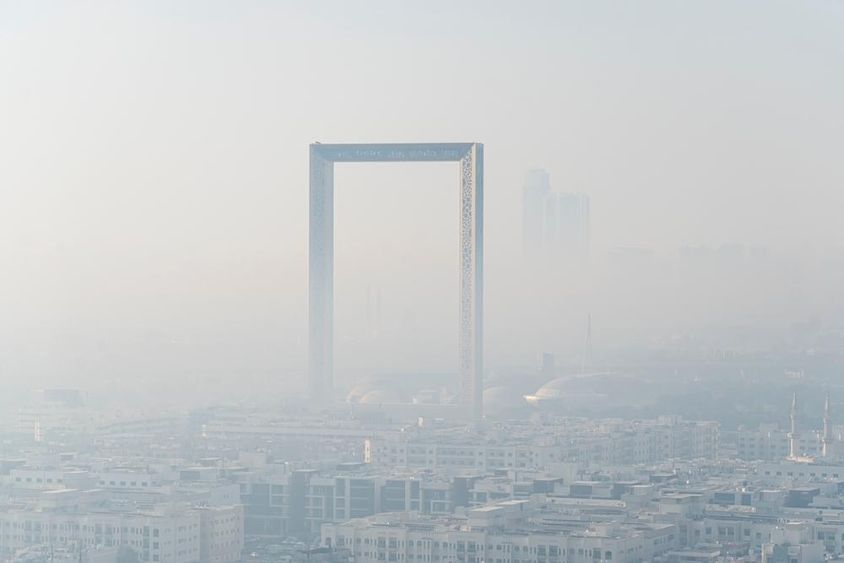
Thick Fog Covers UAE: Alert from Monday Night to Tuesday Morning
In recent days, navigating through dense, milky white fog has become a daily experience for many drivers in the United Arab Emirates. The significant reduction in visibility not only causes inconvenience but also presents serious road safety risks. The National Meteorological Center has issued a yellow alert from Monday evening until Tuesday morning, indicating that sustained and intense fog is expected in several regions of the country.
The warning is in effect from 10 PM on Monday to 10 AM on Tuesday and particularly affects the country's western coastline. Starting from the southern areas of Abu Dhabi, the fog may extend towards Dubai, Sharjah, and the northern emirates, all the way to the Ras Al Khaimah area. According to meteorological maps, some interior, inland regions might also be affected, meaning that the phenomenon does not only cause difficulties along the coast.
A Week in Fog – Daily Life on a Challenging Track
Residents have been commuting under foggy conditions almost continuously for a week. Morning commutes have become particularly burdensome as the dense layer of fog significantly shortens the visible road stretch. Instead of the usual fast-paced travel, many have been forced to proceed significantly slower, leading to congestion, delays, and increased stress.
Fog is not inherently a dangerous phenomenon; it becomes risky due to the associated reduced visibility. When horizontal visibility drastically decreases, driver reaction time becomes a critical factor. A sudden brake or lane change can easily trigger a chain reaction, especially on busy highways.
Recent experiences have highlighted that even a modern infrastructure with a high-quality road network cannot fully compensate for the risks posed by weather conditions. Ultimately, responsibility always remains with the driver.
What Does Yellow Alert Mean?
The yellow alert issued by the meteorological center indicates that fog and mist formation are expected in certain areas, which may affect traffic. This is not the most severe warning level, but it still requires significant attention. If the fog thickens further, the classification in some regions might be elevated to the red level, indicating extremely low visibility.
Authorities have indicated that visibility conditions may continue to deteriorate in the coming hours. In such situations, continuous updates and monitoring of official announcements are especially important.
Driving in Fog – The Role of Discipline
The police have provided clear guidelines for drivers. When horizontal visibility decreases, the maximum allowable speed is restricted to 80 km/h. This is not a recommendation but a mandatory rule aimed at preventing accidents.
Maintaining the proper following distance is crucial. In fog, brake lights and turn signals become visible later, so following too closely drastically increases the risk of collisions. Using a mobile phone while driving is particularly dangerous in these conditions, as any distracted attention can result in seconds of reaction delay.
The proper use of lighting is also a decisive factor. The use of low beam headlights is recommended, while the use of high beams should be avoided, as light reflects off the water droplets suspended in the fog, further impairing visibility.
The Question of Responsibility
Authorities emphasize that road safety is a shared responsibility. Following the guidelines is not just a legal obligation but also a moral duty. A single irresponsible decision can endanger not only one's own life but also others'.
Such periods serve as a reminder that despite technological advances and intelligent transportation systems, the human factor remains the most important safety element. Patience, foresight, and adaptability are the best protection against unpredictable weather conditions.
Weather Cycle or Lasting Trend?
In the UAE climate, fog formation during the early morning and night is not uncommon in the winter and early spring periods. The drop in temperature and rise in humidity create ideal conditions for dense fog formation, especially in coastal regions.
The intense fog patches over the past week highlight that the phenomenon might be more persistent than many would think. Although transportation infrastructure adapts, the regular morning and night fog significantly impacts the everyday routine of the population.
Awareness and Adaptation
The key to handling such weather conditions is awareness. It is essential for drivers to check the latest meteorological reports before departure and adjust departure times if necessary. Companies and institutions might consider offering more flexible work start times when visibility conditions significantly deteriorate.
Fog is not just a meteorological phenomenon but also has social and economic impacts. Delays, congestion, and potential accidents influence daily operations in a ripple effect.
Summary
The yellow alert in effect from Monday evening until Tuesday morning is a clear warning that increased caution is required in several regions of the UAE, including Dubai and the northern emirates. The dense fog presents a significant challenge for commuters, especially those who travel daily.
Following the rules, reducing speed, using proper lighting, and maintaining attention can save lives. Fog will eventually lift, but the consequences of reckless decisions can be lasting. Over the coming hours and days, the most important message is simple: drive slower, more consciously, and with greater caution.
If you find any errors on this page, please let us know via email.