The Silent Revolution in Luxury Economy
The Quiet Economy of Luxury: How the 'Quiet Flex Economy' Shapes the Future
The new language of luxury: when silence speaks
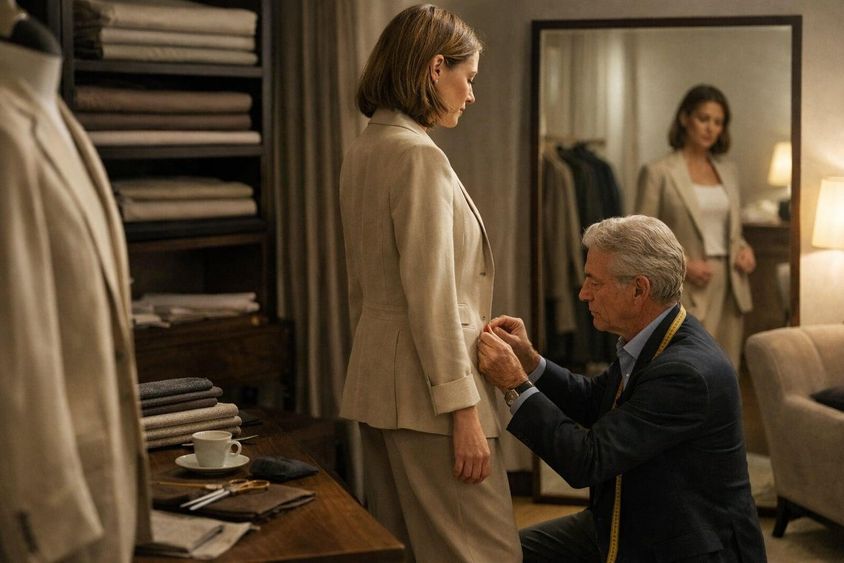
Everything begins in the silence of a Milanese workshop. There are no display windows, no lines of waiting customers, no influencers hunting for content. A subtle door chime, coffee served in porcelain cups, and fine fabric samples on the table. The tailor already knows the client's taste before they speak. Measurements are taken quickly, naturally, almost imperceptibly. Logos are nowhere to be seen. There is no need for them.
This is luxury in 2026. It is not loud. Not ostentatious. It does not seek validation from the outside world.
In past decades, wealth was flashy. Monogrammed bags, oversized logos, easily recognizable brand symbols signaled status. Social media amplified this visual competition. Today, however, this equation has reversed. The world's richest strata no longer seek value in visibility, but in accessibility, personal touch, and experience. Luxury has not vanished — it has turned inward.
Welcome to the quiet luxury economy.
Access over abundance
The new elite does not wish to impress strangers. It matters not whether a piece of clothing's brand can be recognized from the other end of the room. It matters much more if the tailor remembers the details of the previous order. Status today lives not in store windows but in relationships.
Access has become the number one currency. Private salons, invitation-only previews, collection showcases behind closed doors are replacing traditional retail. Personalized service is no longer an extra, but a principle. Some fashion houses hold trunk show events in penthouse apartments where guests can browse in a relaxed environment with a personal advisor. Others build trust through direct messages on digital channels.
Here, luxury is no longer about ownership, but access. It's not about what can be bought, but who can gain access.
Details known only to the wearer
The attention of the new customer base is on the invisible details. Hand-stitched inner linings, custom shoe lasts, hidden monograms, personalized scents. These are elements that are almost imperceptible from the outside, yet carry deep meaning for the owner.
Brands like Loro Piana, Brunello Cucinelli, The Row, or Zegna have become the uniform of this mindset. Their garments are not loud, yet instantly recognizable to those who understand quality. Cut, drape, and material choice communicate — but only softly.
A pristine shoe or a perfectly tailored jacket is a stronger status symbol today than any ostentatious logo. Quiet luxury does not seek attention, but confidently assumes it.
Waiting as a status symbol
We live in a fast world where most things are available instantly. In contrast, quiet luxury slows down. Waitlists, multiple fittings, hand-restorations — these are not inconveniences but parts of the system.
The Hermès model illustrates this philosophy well: rarity is not a marketing gimmick but a strategic principle. Long waits are not a disadvantage but a privilege. Those who gain access purchase not just a product, but entry into a carefully guarded circle.
The situation is similar with Patek Philippe. A watch is not simply an object, but a story that stretches across generations. Time here is not only measurable but interpretable.
Waiting, therefore, becomes a 'flex'. Patience has become the true symbol of status.
The psychology: why luxury turned inward
Today's ultra-wealthy class largely comes from technological, financial, and entrepreneurial backgrounds. They did not inherit their wealth; they built it. Their relationship with money is more pragmatic, less theatrical.
Additionally, there is a sense of cultural fatigue. Excessive sharing, constant online presence, and conspicuous consumption have worn out audiences. Discretion has become valuable again. Privacy has become a luxury item.
Brands like Loewe or the Maison Margiela Artisanal line reinforce this subtle, intellectual approach. The focus is on craftsmanship, storytelling, and cultural depth, not on creating noise.
Dubai as a center of quiet luxury
The shift is visibly notable in the Dubai environment too. The city was once synonymous with flashy, grandiose luxury. But today, restrained elegance is increasingly gaining ground.
Private shopping suites at the Mall of the Emirates, invitation-only collection showcases, and closed events held in five-star residences clearly indicate the shift in direction. Personal stylists curate entire wardrobes away from the public eye.
Dubai is no longer just about spectacular skyscrapers, but also about those spaces behind closed doors where real decisions and purchases happen. Status resides not in the shop windows, but in the circles of trust.
The future: smaller displays, deeper connections
2026 and the years that follow will continue to strengthen this direction. More and more brands are reducing the size of their physical stores while increasing the number of private salons. Instead of spending on campaigns, they invest in craft workshops and material research.
Artificial intelligence will work in the background: analyzing customer preferences, refining patterns, predicting needs. Not in a spectacular way, but quietly, discreetly.
Product launches will be less frequent, but more enduring. Fewer collections, longer lifespans, deeper connections with the customer.
The true 'flex' in 2026
Luxury today is not about what others see on us. It is about what we know about ourselves. The material of the inner lining. The hand stitching on the shoe sole. The ingredients of a personalized scent.
The quiet luxury economy does not erase status, but transforms it. It turns down the volume and amplifies the meaning.
In 2026, true power lies not in visibility but in familiarity. In being known by the artisan. In being seen as a person, not a crowd by the brand.
The greatest 'flex' today is not what everyone sees. But what only we know about ourselves.
If you find any errors on this page, please let us know via email.


